
TOPS PLASTICS · ENGINEERING REVIEW
Plastic Prototype Machining for Functional Design Validation
Plastic prototype machining creates drawing-based parts from stock material without first building a dedicated injection mold. It supports fit, assembly and functional evaluation when you need to review a design before committing to a larger production route.
Upload Drawing & Get a Quote →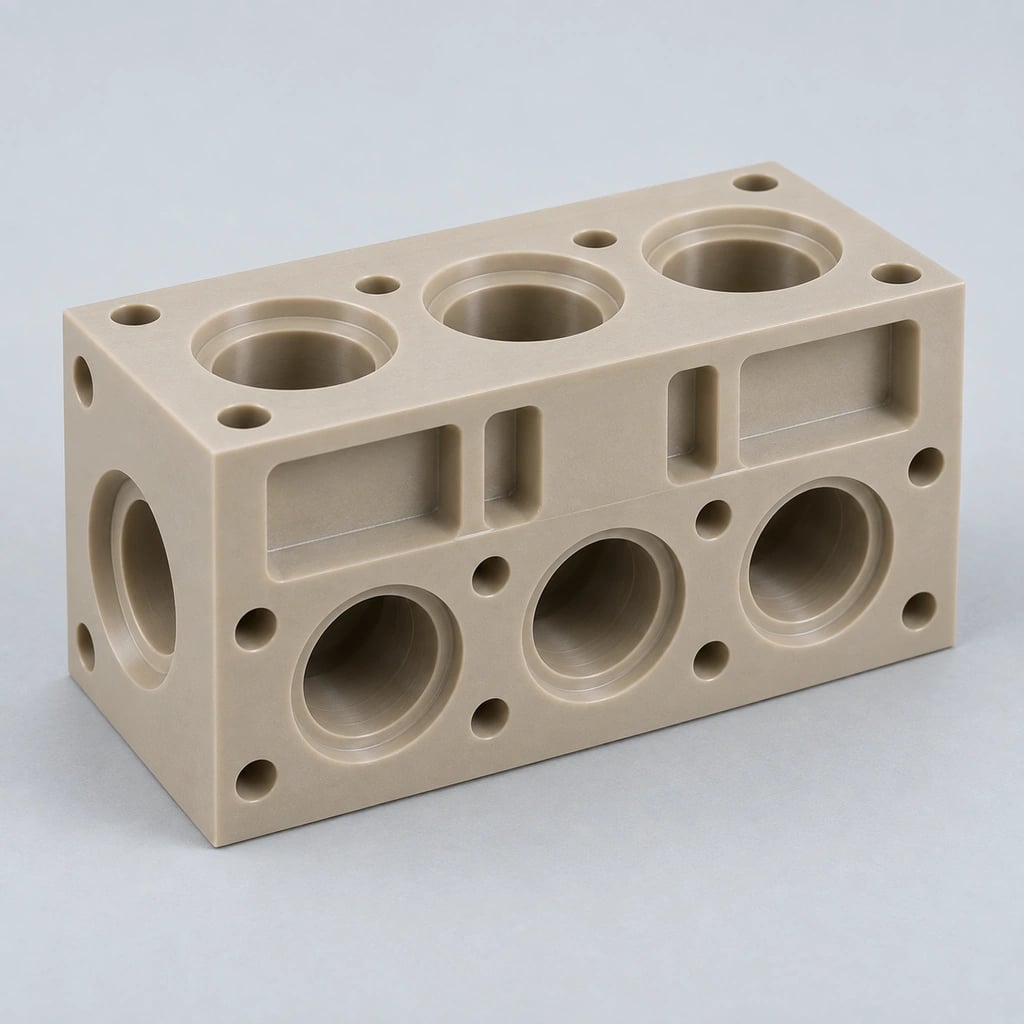
Define the prototype objective
A prototype may be intended to validate a mechanical interface, test a fluid passage or assess an assembly sequence. State what the part must demonstrate. Appearance-only samples and functional test components can have different material, finish and dimensional requirements.
Use a suitable material grade
A machined prototype can use an engineering plastic close to the specified service material, subject to stock availability. Generic substitutions may change stiffness, wear or chemical behavior. If a substitute is acceptable, identify which properties must be representative and which are only needed for an initial fit check.
Control drawing revisions
Keep the model and drawing revision aligned as features change. Identify critical fits and document the changes needed after testing. Share any mating-part measurements or installation constraints; these often explain why a nominal dimension alone is insufficient for prototype review.
Plan the production transition
Machining and injection molding create different material histories and design constraints. A successful machined prototype does not automatically validate mold shrinkage, knit lines or molded-part stress. Discuss draft, wall thickness and acceptance requirements if the eventual product is intended for molding.
Prepare the prototype RFQ
Send your model, drawing, quantity, grade, critical tolerances, finish, application and target timing. Describe the intended factory testing or product application without assuming a test has already been performed. The quotation will define the manufacturing and inspection scope for the requested sample.
Send your requirements for engineering review
Include material, quantity, critical dimensions, surface requirements and the intended application. Use the complete CNC machining form to attach your CAD model or drawing.
Request a Drawing-Based Quote →