No Mold Tooling Justification
The expected quantity does not support the investment and maintenance of dedicated injection-molding tooling.

PILOT / BRIDGE / REPEAT PRODUCTION
TOPS Plastics manufactures custom plastic parts in low quantities using CNC milling, turning and multi-axis machining. From pilot runs and engineering validation batches to bridge production and repeat small-batch orders, we machine engineering-plastic components directly from CAD without dedicated mold tooling.
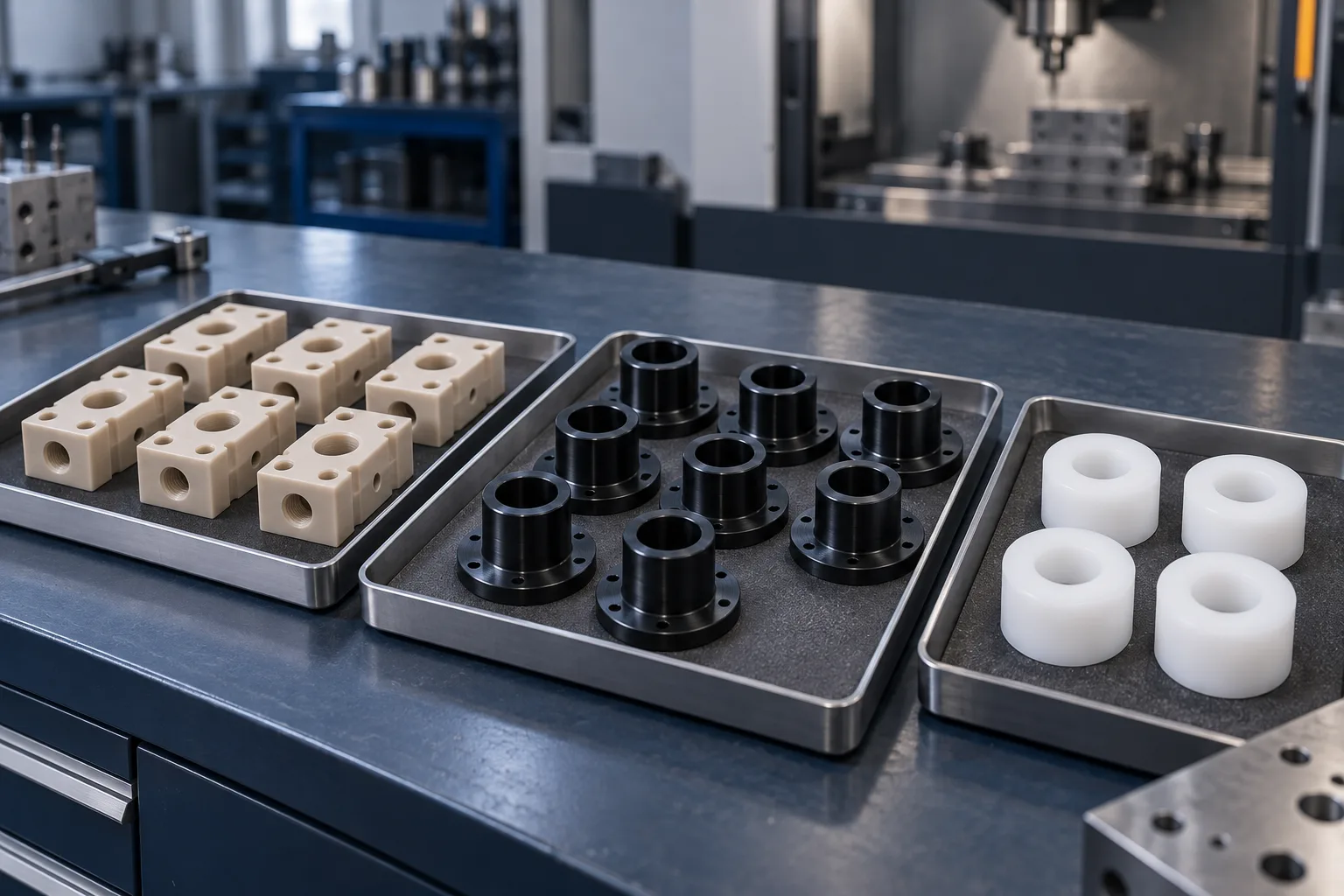
Production quantities and the machining route are reviewed against your part, material and repeat demand.
| Capability | TOPS Plastics |
|---|---|
| Production type | Small-batch / low-volume CNC machining |
| Processes | Milling, turning, drilling, tapping and 5-axis machining |
| Quantity | Project-dependent; reviewed against geometry, cycle time and tooling economics |
| Materials | PEEK, POM, PTFE, Nylon, UHMW, PC, PMMA, ABS, PVC, PP, PEI, PVDF, PPS and Torlon / PAI |
| Part types | Functional components, housings, bushings, fixtures and manifolds |
| Input | CAD files, 2D drawings and reference samples; samples require an agreed dimensional specification |
| Files | STEP, STP, IGES, X_T, DWG, DXF and PDF; ZIP packages accepted |
| Inspection | First article and dimensional inspection to the agreed drawing and plan |
Low volume plastic machining produces custom CNC plastic components in quantities where dedicated molding tools may be difficult to justify, while the order still needs repeatable setups and controlled inspection.
It commonly serves engineering trials, pilot production, specialized equipment, replacement parts, bridge production and recurring small-volume OEM orders. A low-volume order is defined by the economics and requirements of the part, rather than a universal quantity cutoff.
Machining directly from CAD avoids a dedicated injection mold. Programming, workholding, cutting tools and inspection still involve preparation costs that should be included in the quotation.
Choose the process around the production requirement, the maturity of the design and the cost of committing to tooling.
The expected quantity does not support the investment and maintenance of dedicated injection-molding tooling.
The design may change between batches. CNC programs and fixtures can be reviewed against each new revision.
You need the specified stock polymer and grade, rather than assuming a printed material will behave the same way.
Usable parts are needed while tooling, qualification or another manufacturing route is being prepared.
Specialized industrial, medical and laboratory equipment may need modest quantities throughout its service life.
Small runs of several configurations can avoid committing to a separate mold for each version.
Prototype machining focuses on proving a design. Low-volume machining also needs a controlled process that supplies usable production parts.
| Stage | Primary goal | Manufacturing focus |
|---|---|---|
| Prototype | Validate design, fit and function | Iteration and learning; prototype parts may not be production-qualified |
| Engineering batch | Validate function and process | Critical dimensions, testing and representative material |
| Low volume | Supply usable production parts | Repeatability, acceptance criteria and batch economics |
| Bridge production | Supply parts before the final production route is ready | Continuity, qualification and transition planning |
| Repeat production | Supply recurring batches | Stable specifications, revision control and inspection |
CNC can make a practical starting point for functional small-batch parts when cutter access and material stock suit the geometry.
Avoid dedicated mold investment, while allowing for programming, fixtures and machining setup.
Select a documented stock grade appropriate for your application. Stock and molded forms still require separate validation.
Review CAD changes between batches without modifying an injection mold; changed geometry may still need new workholding.
Bores, pockets, threads, sealing interfaces and datum faces can be machined and inspected to agreed requirements.
Review engineering and high-performance polymers against temperature, chemicals, wear and dimensional needs.
An approved program and setup record can support repeat orders, subject to material and revision confirmation.
Combine processes according to the part geometry and the features that need to remain related to the same datums.
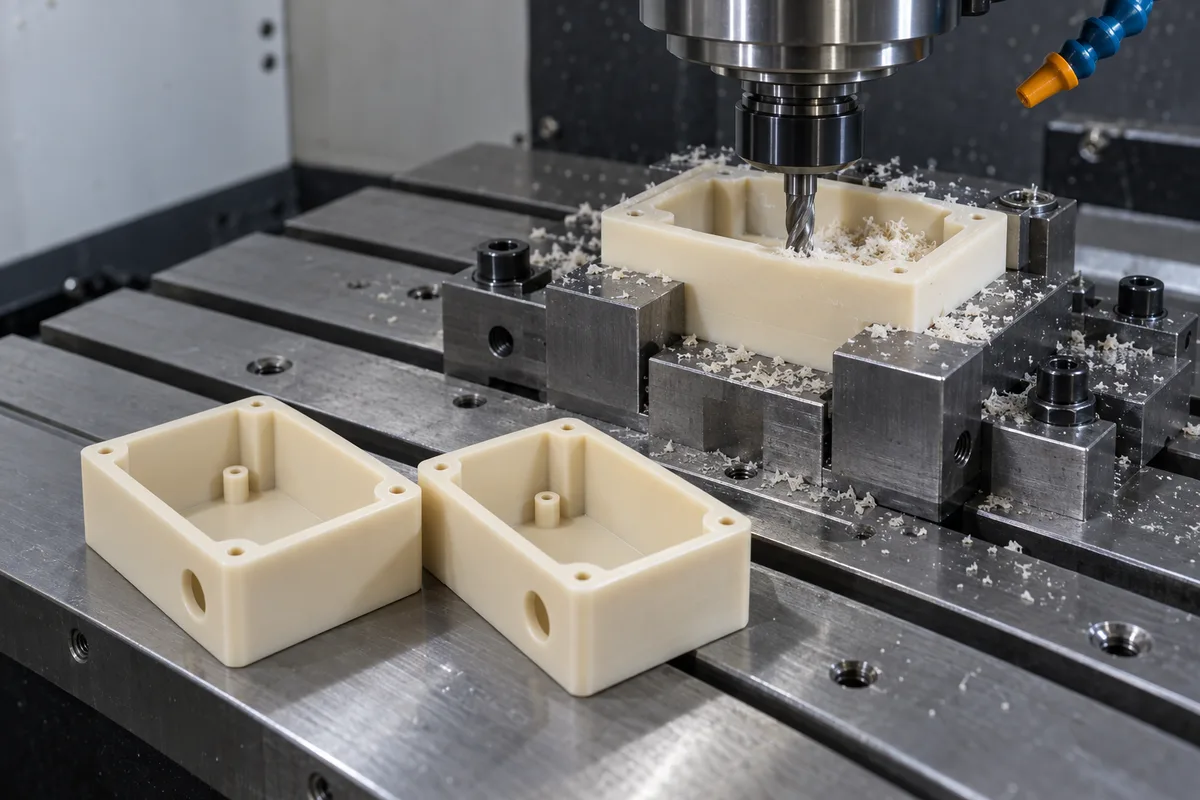
For housings, fixtures, manifolds, brackets, plates and complex components with pockets, profiles and features on several faces.
Explore the process →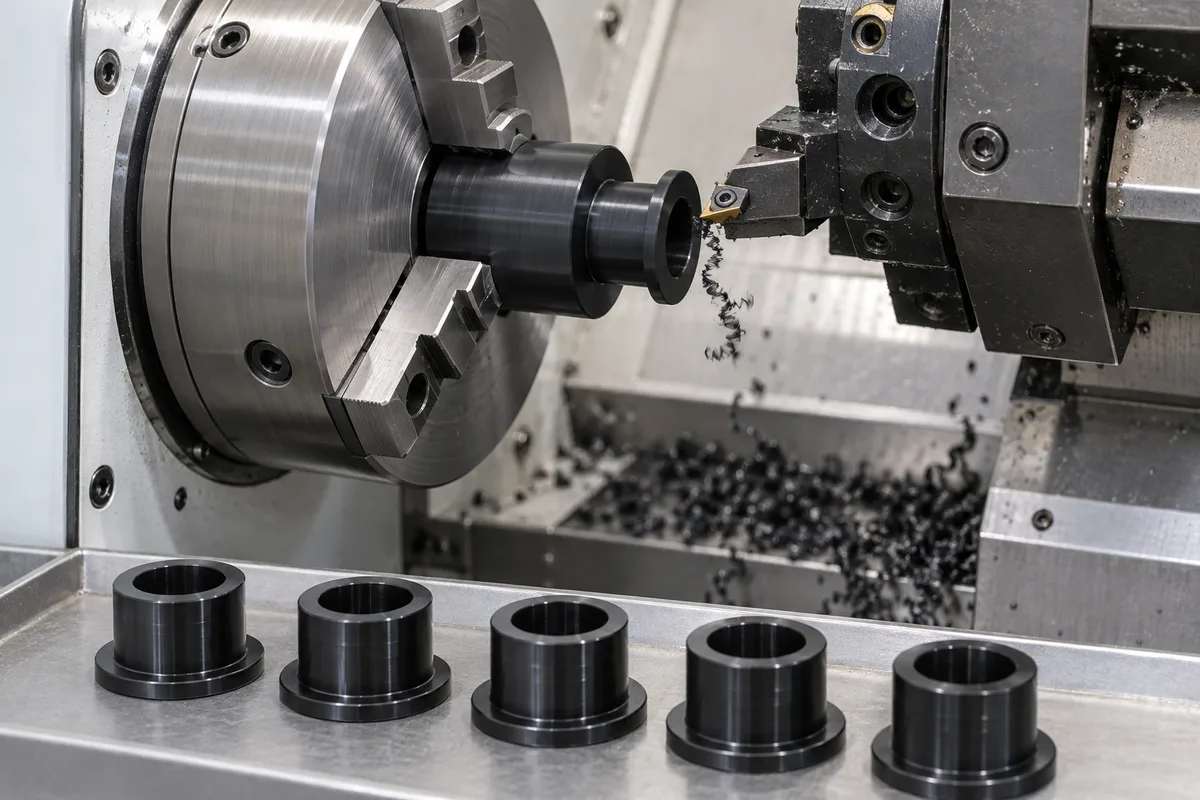
For bushings, sleeves, rollers, spacers, rings and threaded parts. Review chuck contact, wall thickness and released dimensions.
Explore the process →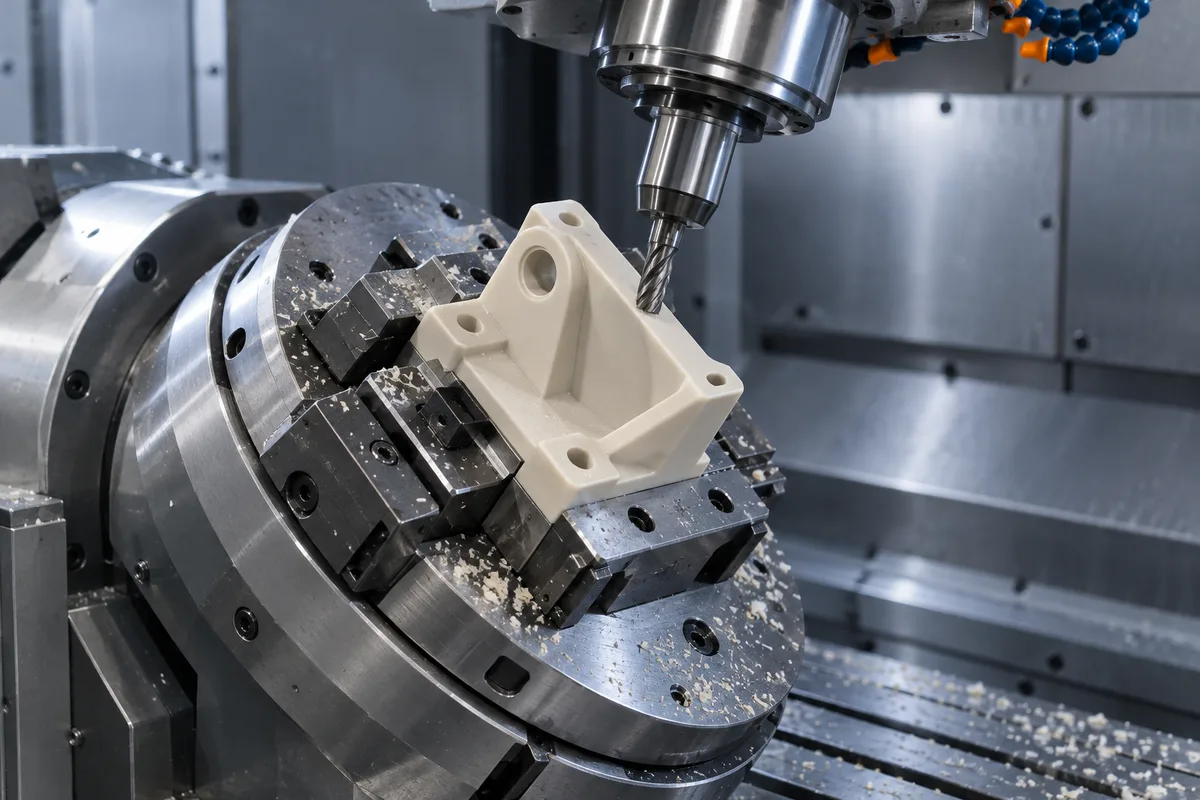
For multi-face parts, compound angles and high-value geometry where tool access or fewer repositionings justify the process.
Explore the process →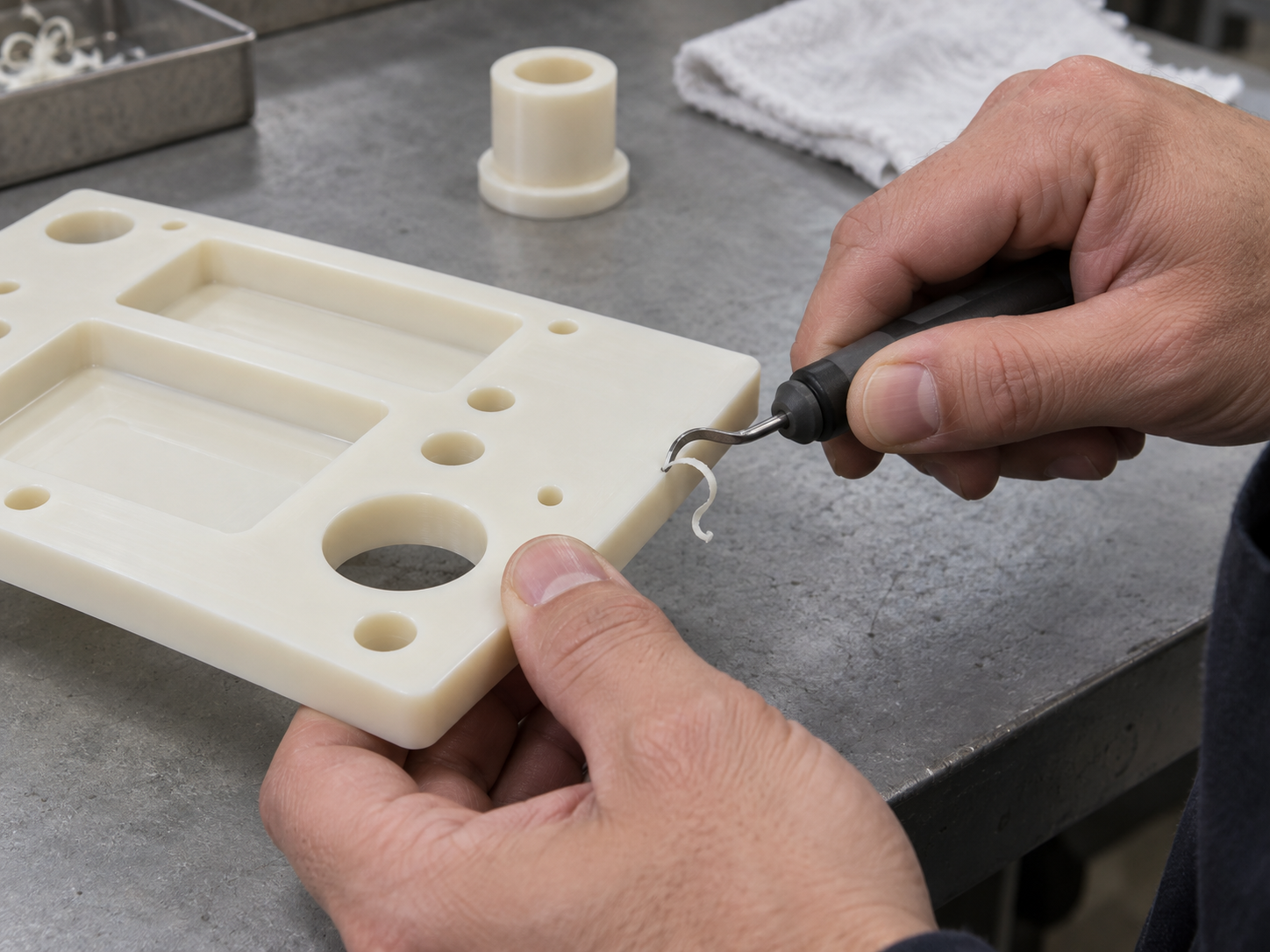
Discuss drilling, tapping, inserts, deburring, polishing, engraving and assembly where appropriate for the polymer and drawing.
Explore the process →Choose material for the service environment before comparing machining cost. ABS, PVC, HDPE and polypropylene are also available for project review.
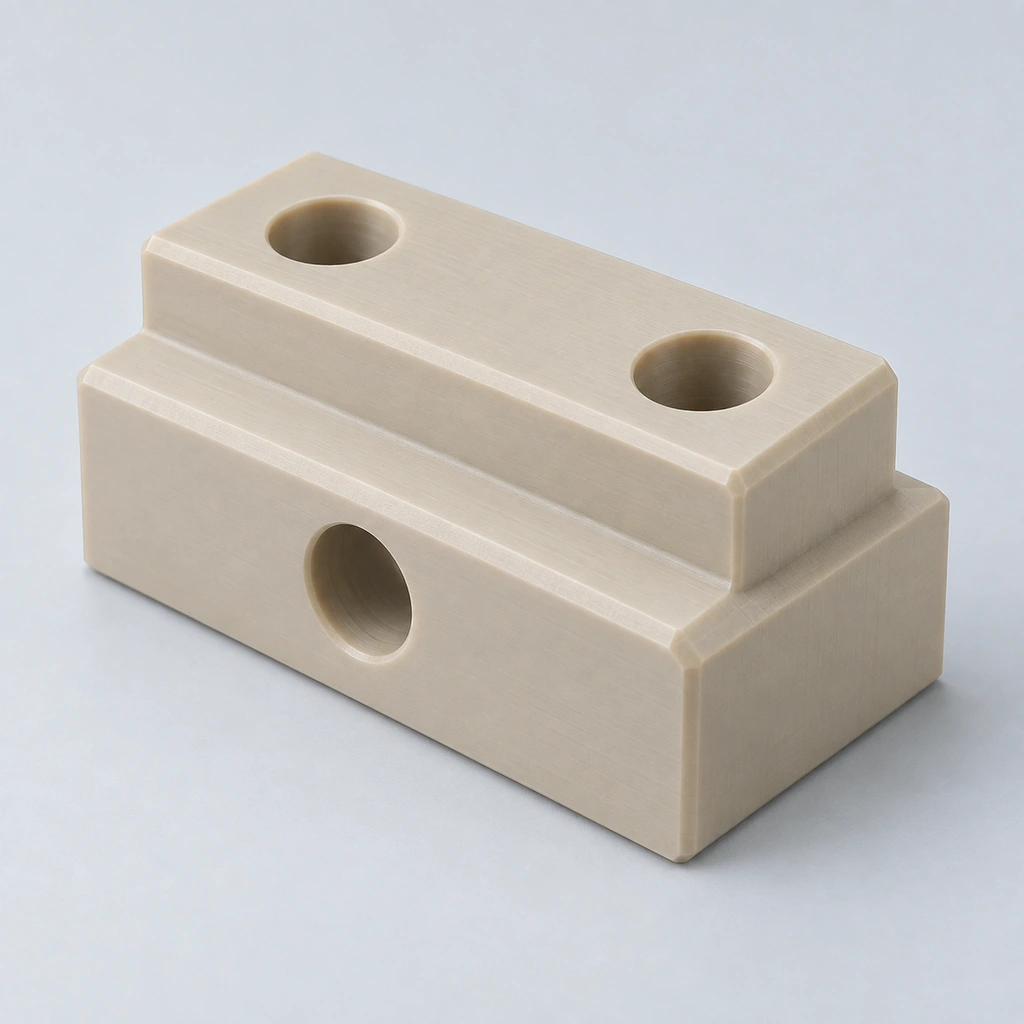
High-value technical parts with demanding thermal and mechanical requirements. Confirm the exact grade.
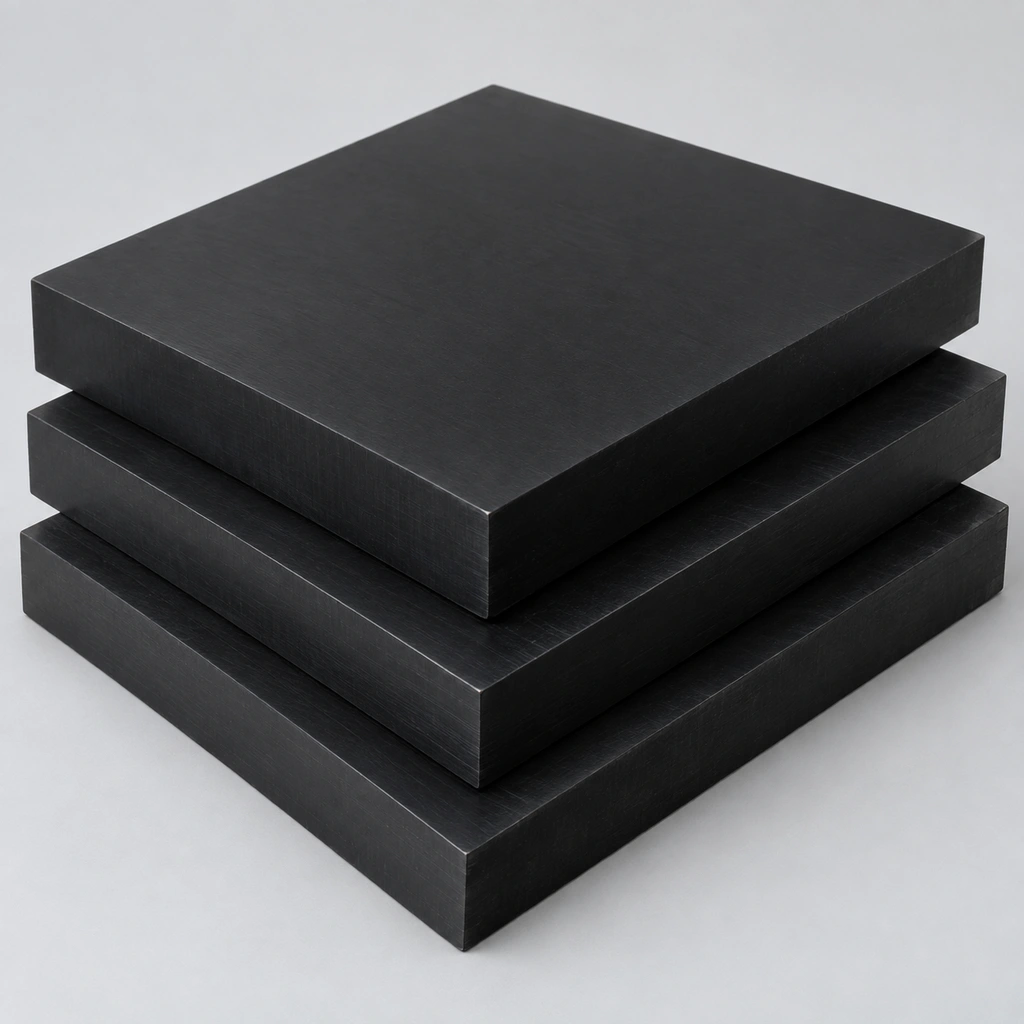
Gears, bushings and mechanical components where low friction and dimensional control matter.
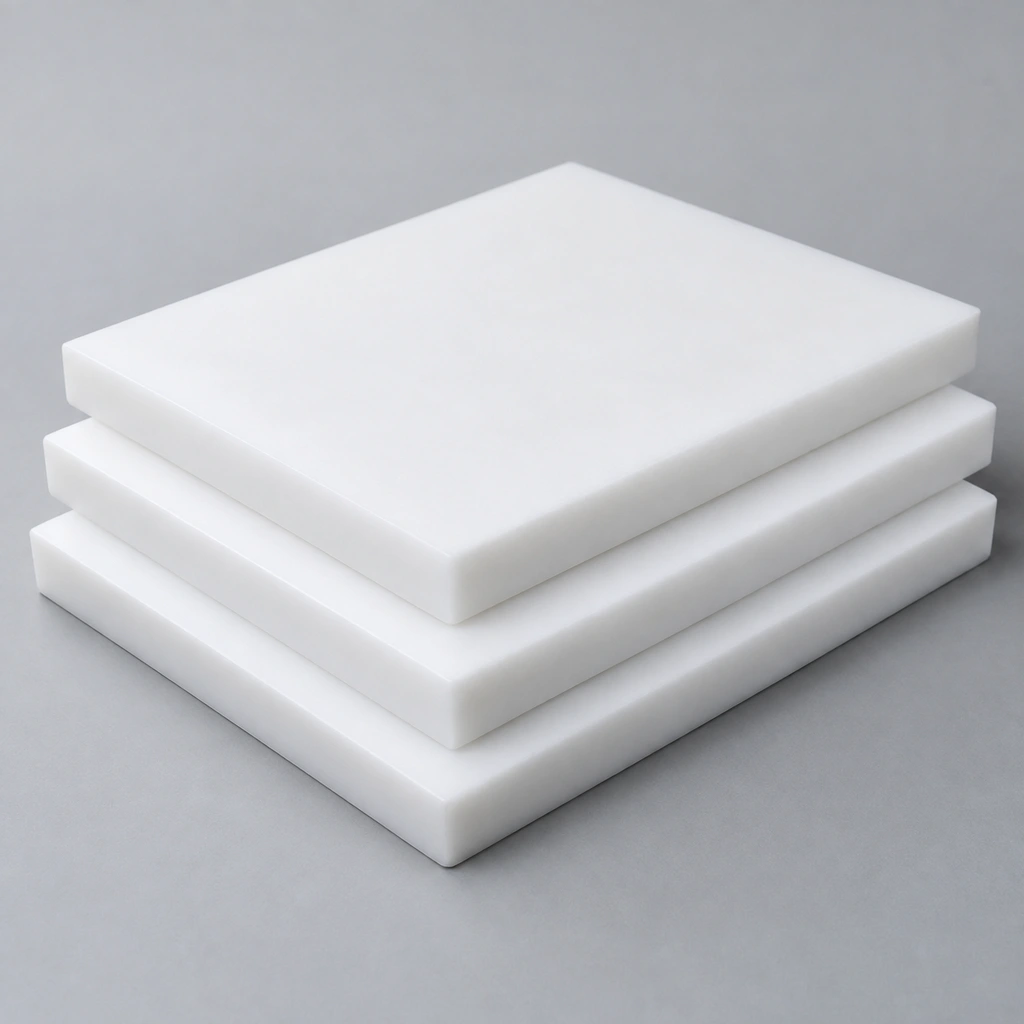
Seals, insulators and compatible chemical-handling parts; review creep, loads and inspection conditions.
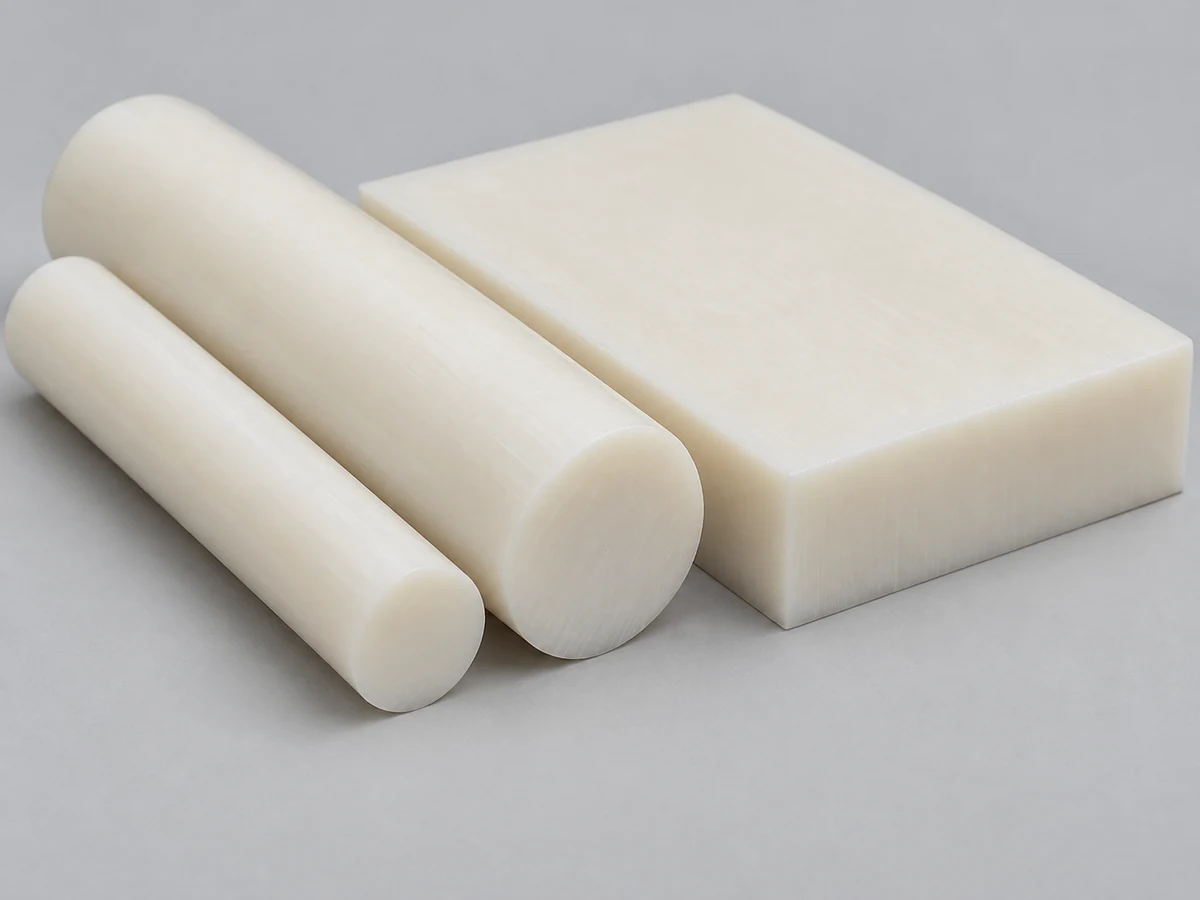
Rollers, gears and bushings; agree moisture conditioning and the dimensional acceptance state.
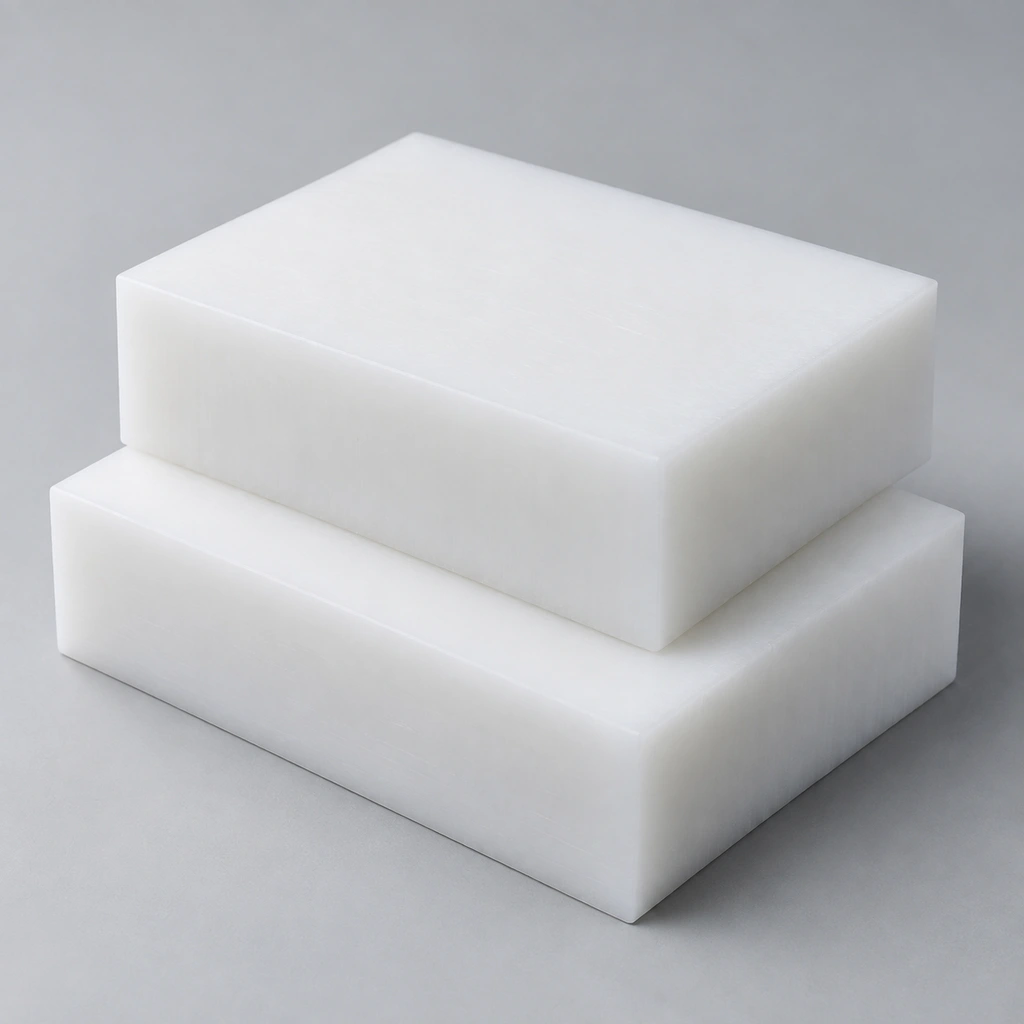
Guides, liners and wear parts; review deflection and avoid unnecessary precision requirements.
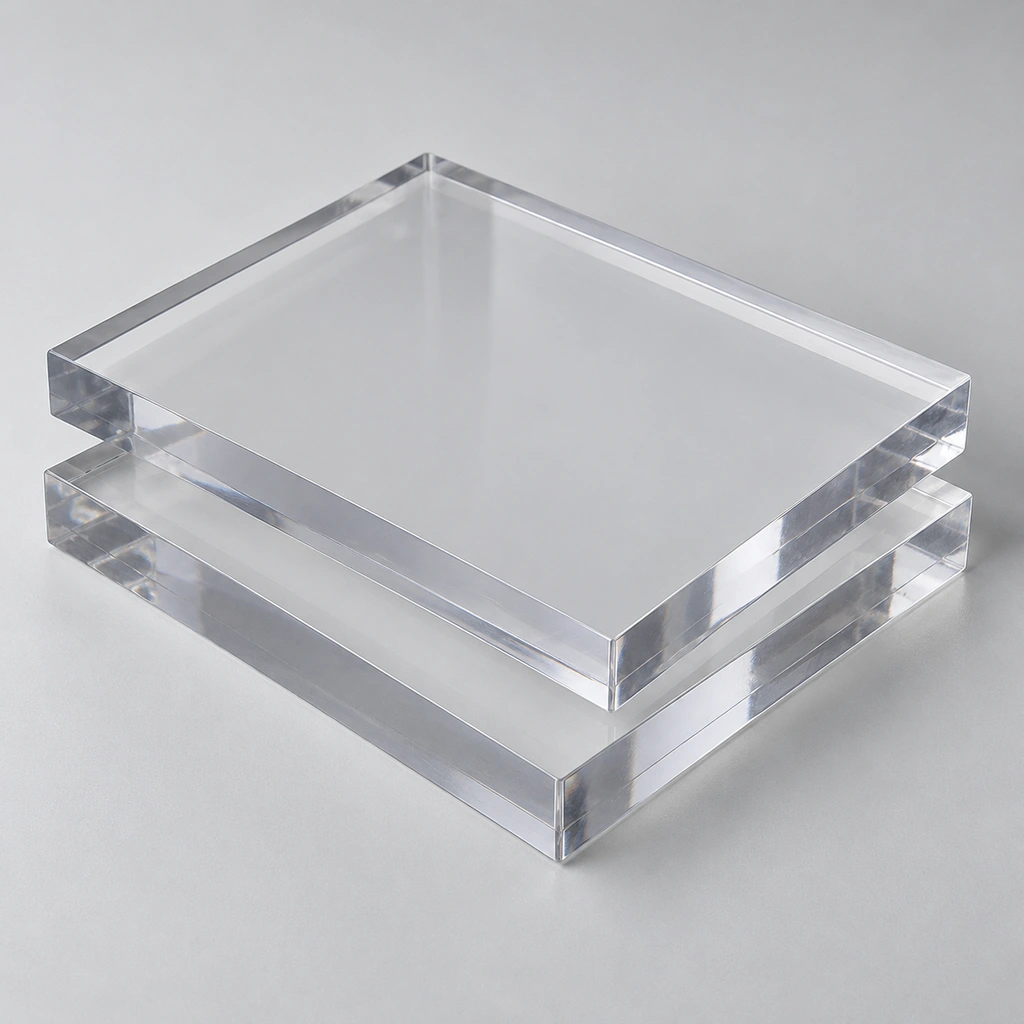
Transparent housings and guards; specify impact, appearance and chemical exposure requirements.
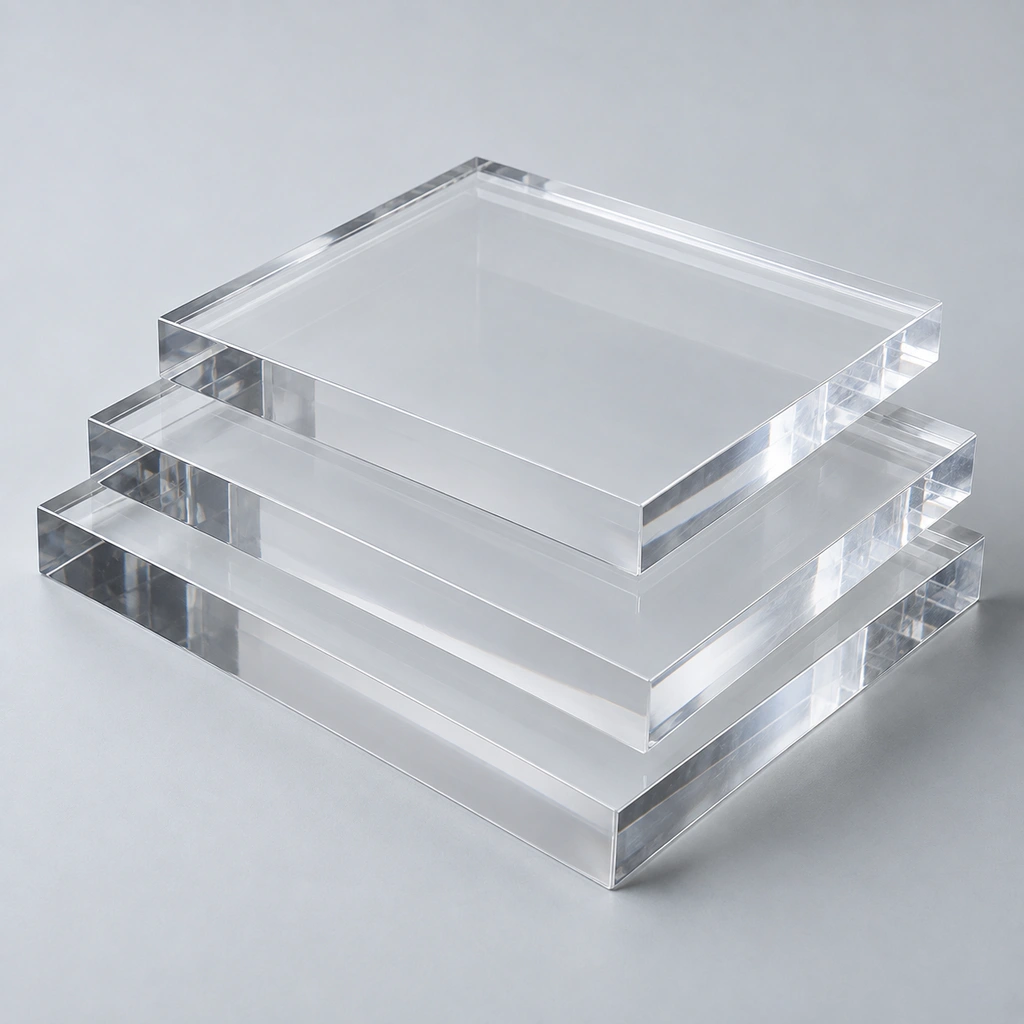
Clear components where appearance and edge finish matter; confirm any optical acceptance criteria.
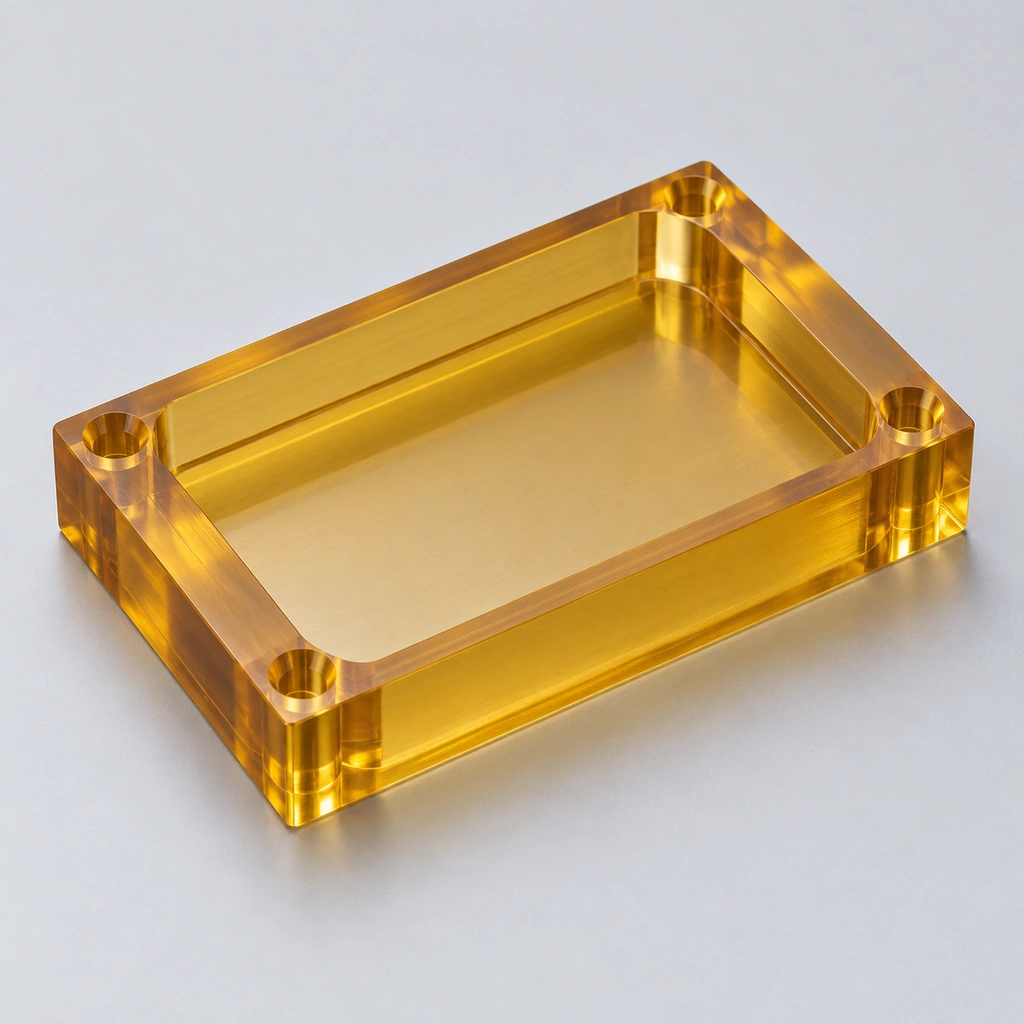
Electrical and thermal applications requiring a specified unfilled or reinforced PEI grade.
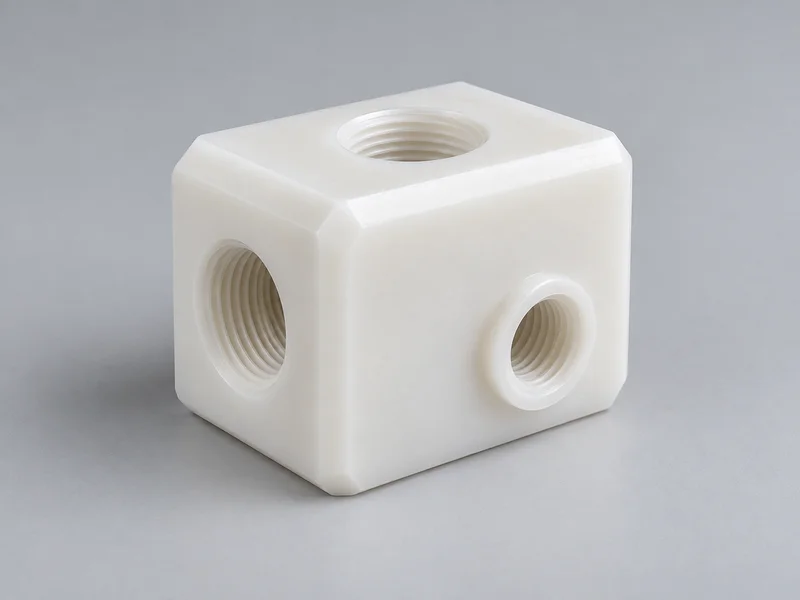
Compatible fluid and chemical-process parts; purity requirements depend on the grade and documentation.
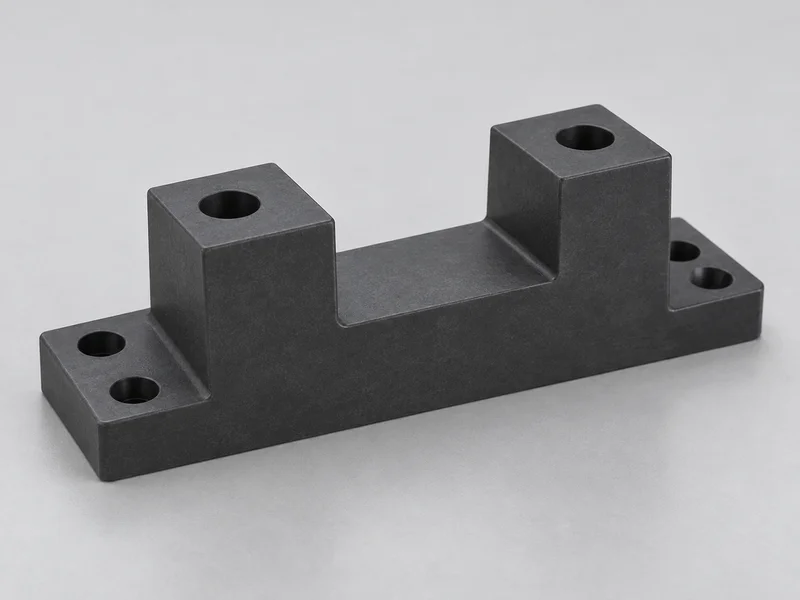
Specialized rigid components; select the reinforcement and grade before tolerance review.
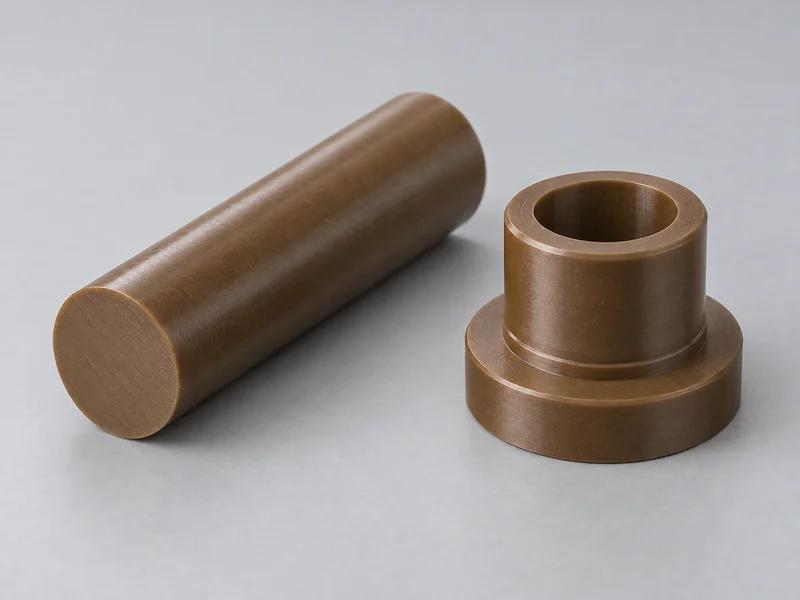
High-performance bearing and insulating parts; stock condition and post-processing need grade-specific review.
Specify the supplier grade, fillers, stock form and any required documentation. Machined stock and molded resin of the same polymer family should not be assumed to provide identical properties or qualification evidence.
Functional parts for equipment builders, purchasing teams and maintenance requirements.
Flanged and sleeve parts for controlled shaft interfaces.
Custom mechanical geometry for an agreed load and environment.
Rotating handling and guide components.
Fluid blocks with defined bores and connection features.
Equipment bodies, covers and interface components.
Electrical spacers and supports in specified grades.
Assembly, handling and test tooling for specialized equipment.
Defined standoffs, rings and separating components.
Sliding and locating elements for handling systems.
Fixtures and process parts subject to application-specific cleanliness requirements.
Equipment components with drawing-based acceptance and customer qualification.
Small runs when existing tooling is unavailable; confirm geometry, ownership and acceptance requirements.
Material grade, program revision, workholding and inspection criteria need to stay controlled so each part is evaluated against the same requirements.
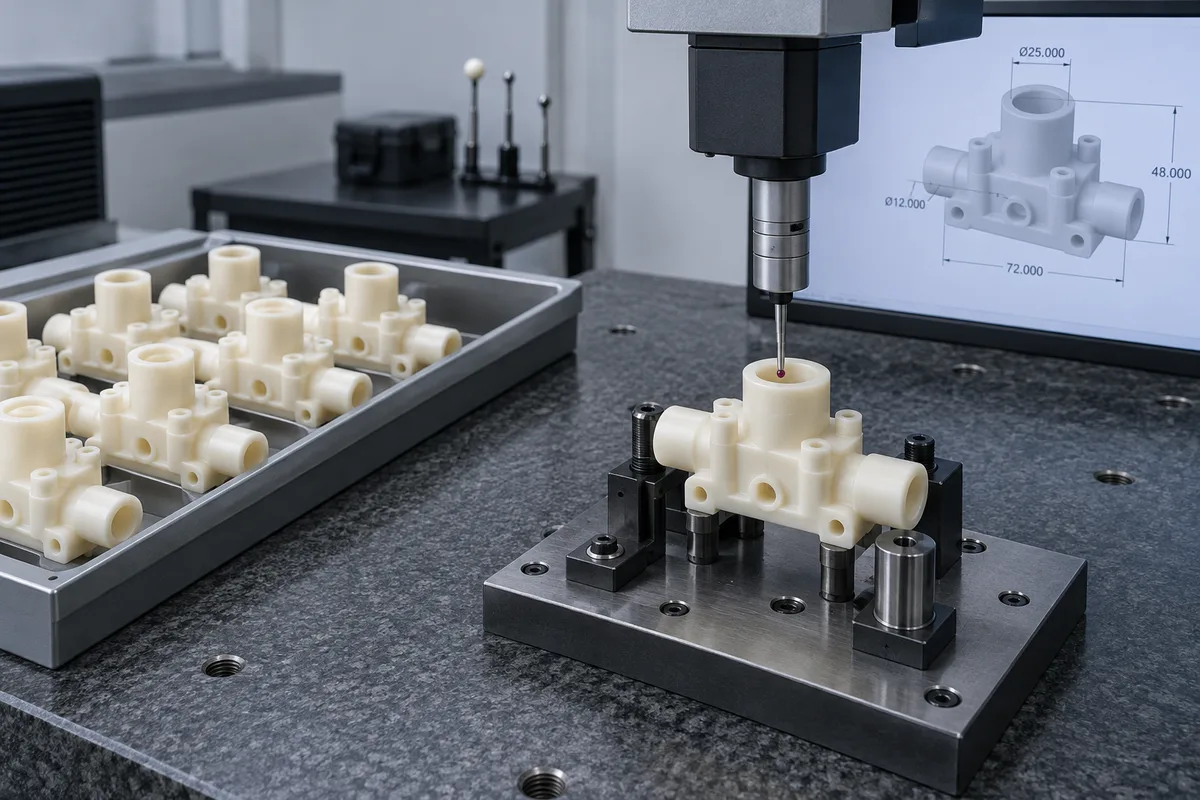
Confirm the polymer, reinforcement, stock specification and required batch documents.
Associate the approved machining program and parameters with the correct drawing revision.
Define supported surfaces, datums, clamping conditions and machining sequence.
Check the first part against agreed critical features before continuing the batch.
Monitor selected dimensions and tool condition at the agreed frequency.
Apply the agreed sampling or full-inspection plan before release and shipment.
Define what records are required before the order: first-article results, dimensional reports, material documentation and traceability are project-specific deliverables. Agree how a nonconforming part or drawing change will be handled.
Tolerance the function rather than applying the tightest possible limit to every dimension. Grade, wall thickness, geometry and inspection conditions affect both repeatability and cost.
| Requirement | Recommended approach |
|---|---|
| General geometry | Agree the machining tolerance on the quotation and drawing |
| Critical fit | Tighten only the functional features and define datums |
| Bearing / bore | Define fit, mating part and measurement method |
| Large plastic part | Specify relevant inspection temperature and stabilization |
| Thin wall | Review clamping and released-shape deformation |
| Recurring batch | Use repeatable inspection criteria and conditions |
| Multiple revisions | Lock the drawing revision for each batch |
Thermal expansion, residual stress and moisture can affect measured dimensions. Nylon conditioning and flexible PTFE or UHMW parts need particular attention. Confirm achievable tolerances after reviewing the actual design; no universal tight-tolerance claim applies to every polymer.
Prepare a tolerance and inspection plan →A focused drawing review can reduce repeated setup, machining and inspection work.
Keep close limits on functional dimensions; use agreed general tolerances elsewhere.
Review tool pressure, support and deflection before freezing the geometry.
Consistent hole sizes, threads and practical internal radii simplify tooling and checks.
Compare chemical exposure, temperature, wear, load and moisture rather than material price alone.
Mark critical-to-quality features, datum relationships and acceptance methods clearly.
If molding is likely later, review draft, wall uniformity and resin choice separately.
Approve one drawing revision for a production run and isolate superseded files.
Bridge production supplies usable CNC parts while a mold, production line or final manufacturing process is still being developed or restored.
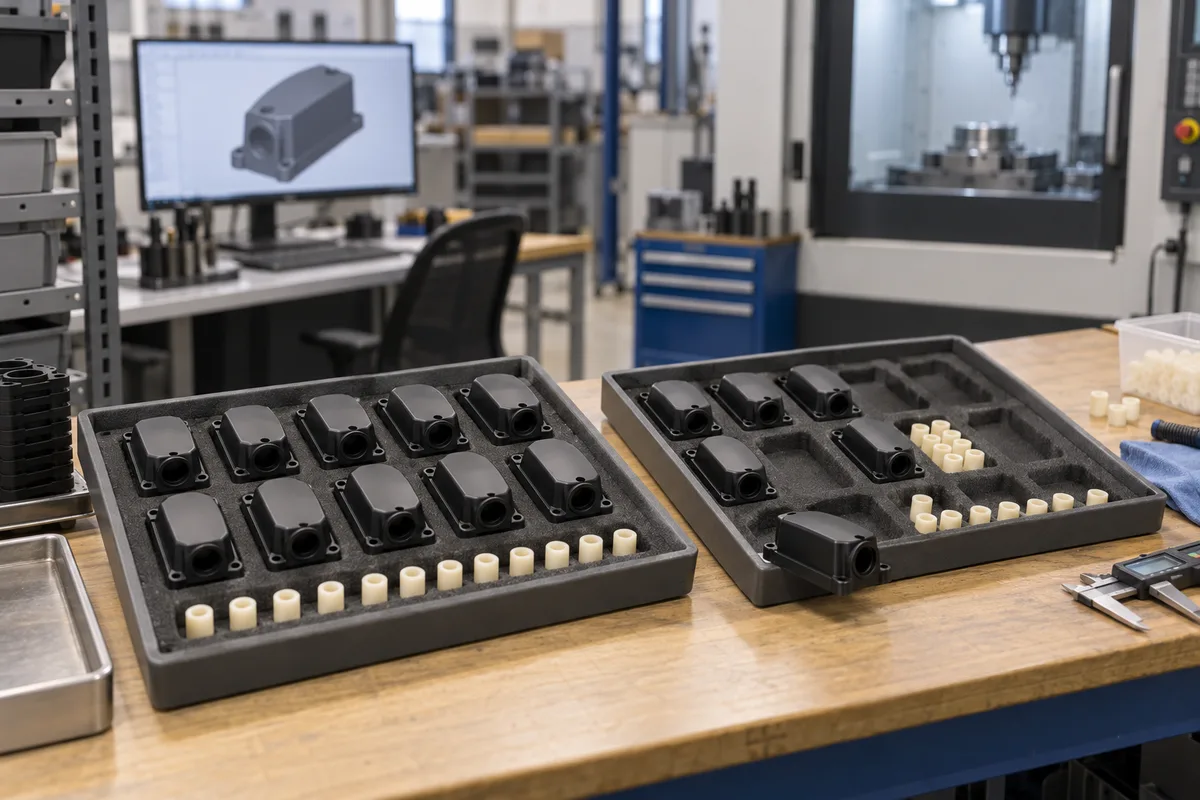
Supply parts while an injection mold is being built or repaired.
Support customer qualification, an initial market launch or a design that is not fully frozen.
Discuss supplier transfer, unexpected demand or an interruption to the established route.
Define the bridge quantity, required date, accepted material and the planned changeover before production. Machined and molded parts may differ in stress, appearance, properties and dimensional behavior; qualify the final route rather than assuming the bridge batch transfers approval automatically.
Yes. Recurring small-batch machining can be practical when demand and part economics do not justify dedicated tooling.
Agree the quantity per batch, expected annual demand and reorder frequency. Reconfirm the revision, material source and required documents at each release; an earlier purchase order does not automatically approve a substituted grade.
Retained program and setup information can reduce repeated preparation, but lead time and price still depend on stock availability, machine loading, inspection scope and any engineering changes. Specify record-retention needs in the order.
Compare the complete cost and qualification path. There is no single break-even quantity that works for every plastic part.
| Factor | CNC machining | Injection molding |
|---|---|---|
| Tooling | No dedicated mold; programming and fixtures may be required | Dedicated mold and process setup required |
| Initial investment | Often lower for accessible small-batch geometry | Tooling investment can be substantial |
| Design changes | Program and setup reviewed for the revision | Tool modification or replacement may be required |
| Small batches | Often practical; cycle time and waste still matter | Can be viable with suitable tooling and repeat demand |
| Production-grade material | Specified stock grades | Specified moldable resin grades |
| Complex molded features | Limited by cutter and workholding access | Suitable geometry can be integrated in the mold |
| Recurring high volume | Machining cycle remains a cost driver | Tooling can be amortized over demand |
| Lead time to first parts | Depends on stock, setup and inspection | Includes tooling and process qualification |
| Material range | Available stock shapes and grades | Available moldable compounds and validated processing |
Choose low-volume CNC when demand is limited, the design may change or mold investment is difficult to justify. Review injection molding when a stable design and recurring demand can absorb the tooling and qualification cost.
Include tooling, fixtures, setup, stock utilization, cycle time, finishing, inspection, freight and expected revisions in the comparison. Molding is not automatically uneconomical for every small order.
Compare CNC machining and injection molding →Small-batch production can serve specialized equipment where engineering requirements are high and annual demand is modest.
Fixtures, manifolds and process components with customer-defined cleanliness and material requirements.
Validation batches and recurring equipment components; regulatory and application qualification remain customer-specific.
Custom fixtures, guides, rollers and handling mechanisms.
High-performance polymer components with drawing and documentation requirements agreed before manufacture.
Replacement parts, jigs, housings and wear components.
Insulators, test fixtures and equipment housings.
Manifolds, fluidic parts and custom instrument components.
A small production order needs more than additional prototypes: it needs an agreed material, revision, machining route and acceptance plan.
Discuss the behavior of the polymer together with the geometry.
Manufacture from stock without committing to injection-mold tooling.
Select the combination of processes that fits the drawing.
Review general engineering and high-performance grades.
Agree the features, methods, frequency and reports before production.
Identify practical cost and repeatability improvements before cutting.
Use lessons from the first batch to define later releases.
Keep the approved drawing and revision central to acceptance.
Define the release criteria before machining, then carry the same drawing and inspection requirements through the batch.
Share the model and dimensioned drawing, revision and batch demand.
Agree the exact stock specification and quantity for this release.
Review machinability, setup cost and dimensional acceptance.
Identify critical-to-quality features and their inspection method.
Prepare the approved route, datums and support strategy.
Machine the initial part using the planned production setup.
Check agreed features and resolve any discrepancy before the run.
Produce the released quantity to the approved revision.
Monitor critical features and record checks as agreed.
Verify the finished batch against the acceptance plan.
Protect parts and identify the drawing revision and required shipment documents.
It is CNC manufacture of custom plastic parts in small batches, with material, setup and inspection controlled for the intended production use. It commonly serves pilot runs, bridge supply and repeat OEM orders.
Low volume depends on geometry, material, cycle time and tooling economics. Send the quantity per batch and estimated annual demand so we can review the route; there is no universal cutoff or published quantity guarantee.
It can be, because a dedicated mold is not needed. The quotation still needs to include programming, workholding, stock, machining, finishing and inspection. Geometry and repeat demand determine the result.
A prototype primarily tests design, fit and function. A production batch must also meet agreed material, revision, consistency and inspection requirements for its intended use. A successful prototype is not automatically a qualified production part.
Yes, when the geometry, material and schedule suit machining. Define the temporary supply quantity and acceptance requirements while tooling or the final route is being prepared. Qualify molded parts separately if the route later changes.
There is no best material for every part. Review PEEK, Delrin / POM, PTFE, Nylon, UHMW, PC, PMMA, ABS, PEI, PVDF, PPS and Torlon against load, temperature, chemicals, moisture and dimensional requirements.
Agree the material grade, drawing revision, program, workholding and inspection plan. Confirm these at each release and specify the reports or traceability required for your order.
Often for limited demand, but not always. Compare complete machining cost with mold investment, molded unit cost, qualification, revision risk and expected lifetime volume. Low-volume molding can also be practical for suitable projects.
Yes. Issue a new drawing revision and identify the changes before the next release. The revised design needs a manufacturability, price and inspection review, and may need updated fixtures or a new first article.
Potentially. Review molded geometry, draft, wall uniformity, resin availability, shrinkage and qualification requirements early. The machined stock grade and molded resin should not be assumed to behave identically.
ONE DRAWING. A CONTROLLED BATCH.
Upload your CAD model and engineering drawing and share the plastic grade, quantity per batch and critical tolerances. Our team can review whether CNC machining fits your low-volume requirement and identify practical ways to reduce cost without compromising function.
For repeat or bridge supply, include estimated annual demand, order frequency, current production stage, inspection requirements, application and any future injection-molding plan in your drawing package or email. Company, name, email and phone are required. Country, part number, quantity and drawing upload are optional.
info@tops-precision.comSTEP / STP / IGES / X_T / DWG / DXF / PDF or ZIP, maximum 10 MB. Larger files can be shared by email. Agree confidential-file handling before sending sensitive drawings.