CNC plastic machining and injection molding suit different purchasing situations. Machining offers flexibility without a production mold. Molding can become attractive for stable, repeatable demand. The right choice depends on geometry, material, revisions and total project cost—not a universal quantity threshold.
What Is The Main Difference?
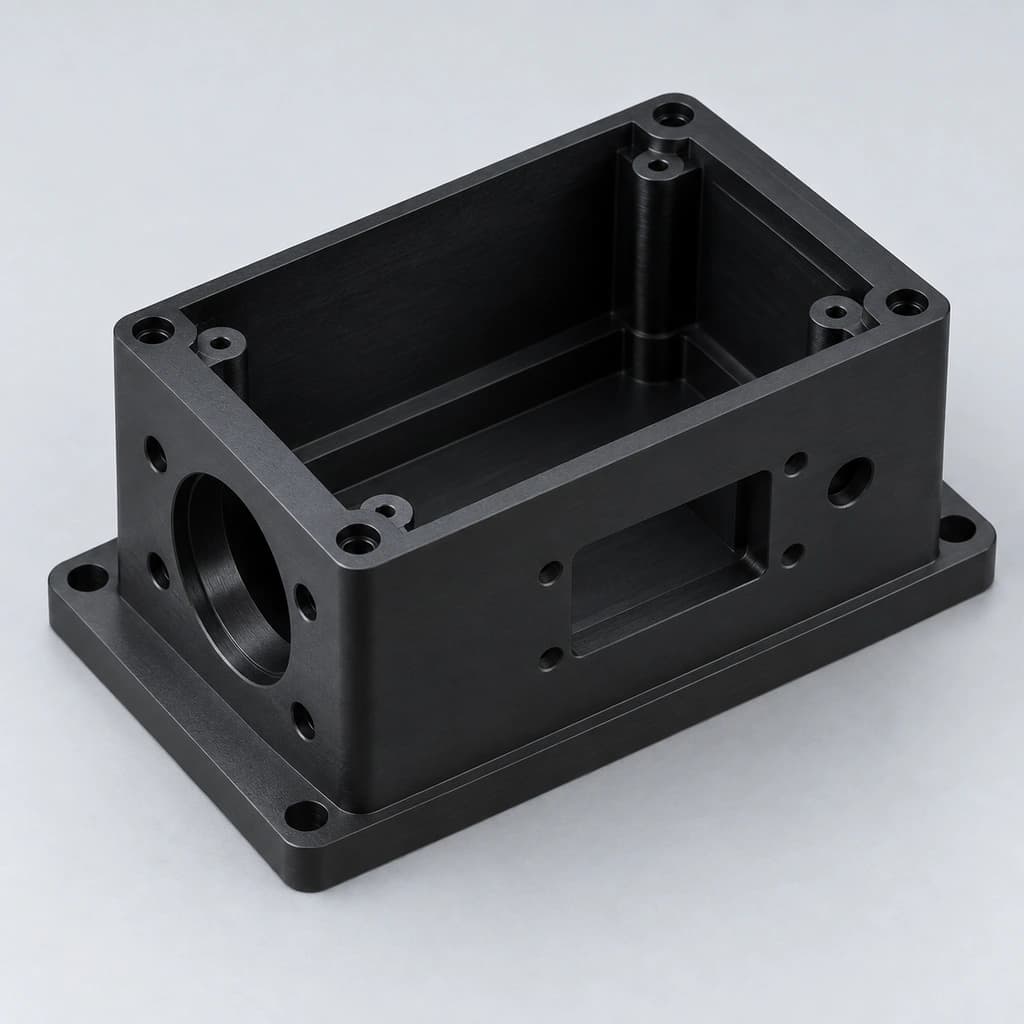
CNC machining removes material from stock, while injection molding forms a component inside a mold.
Machining generally starts with a rod, plate or block. A programmed toolpath produces the required features. Injection molding melts a suitable resin and fills a designed cavity.
Both methods can produce functional plastic parts. However, they create different manufacturing constraints and cost structures.
For machining, review tool access, workholding and material removal. For molding, review filling, cooling, ejection and tooling complexity.
Your decision should connect these constraints with your purchasing plan. An attractive unit price means little if the design changes before the batch is used.
| Decision Factor | CNC Plastic Machining | Injection Molding |
|---|---|---|
| Initial commitment | Programming, setup, stock and fixtures | Tooling, development, trials and production setup |
| Design revisions | Often addressed through updated machining plans | May require mold modification or replacement |
| Demand pattern | Useful to evaluate for prototypes and variable orders | Useful to evaluate for stable repeat demand |
| Geometry review | Tool access and support are important | Wall design, draft and ejection are important |
| Material identity | Specify a suitable stock-shape grade | Specify a suitable molding grade |
| Validation | Inspect and test the machined component | Inspect and test parts from the intended molding process |
These are decision categories, not guarantees of cost or performance.
When Should You Start With CNC Machining?
CNC machining is worth evaluating when flexibility, limited demand or unresolved design details dominate your project.
An early assembly may need several revisions. You might change a bore, mounting location or wall section after testing. Machining can help you evaluate those changes without committing to a production mold.
It can also suit spare parts and equipment-specific components. Demand may be irregular, and the part may need to match an existing assembly.
Another reason is stock material availability. A particular polymer grade may be available in a useful rod or plate size. Confirm that the stock grade meets the intended application.
Machining should still receive a manufacturability review. Deep internal features or enclosed cavities may require redesign, multiple pieces or another process.
Prototypes Need A Defined Purpose
Decide whether the prototype tests shape, assembly or service performance. Each purpose demands different evidence.
A visual model may only need to demonstrate packaging and layout. A functional bushing needs relevant material, fits and operating tests.
Avoid calling every prototype "production-equivalent." Explain which questions the prototype answers and which remain open.
Low Demand Does Not Automatically Mean Low Cost
A complex machined component can require substantial setup and inspection. Expensive stock and high material removal can increase cost.
Request a quotation against the actual drawing. Ask which features dominate time and whether practical changes could simplify production.
When Should You Evaluate Injection Molding?
Injection molding deserves evaluation when the design is stable and repeat demand can justify tooling development.
The tool creates a recurring manufacturing route. This can be valuable when many parts share the same geometry and material.
However, the mold is part of the product development investment. Include design review, trials, corrections and acceptance before comparing prices.
The part must also suit molding. Thick sections, difficult ejection and complex undercuts can change tooling requirements.
Material shrinkage needs consideration during tool design and process validation. It should not be treated as a single constant independent of geometry and processing. Delrin's molding guide discusses thickness, temperature and other influences on shrinkage. Delrin Molding Guide
Use an accessible, current grade-specific molding guide before final tool approval. A general overview cannot replace the molding supplier's review.
Stable Demand Matters More Than An Optimistic Forecast
Separate confirmed orders from sales forecasts. Identify the quantity likely to be purchased before the next design revision.
A large forecast can justify tooling only if the underlying assumptions are credible. Review customer approval, product lifecycle and revision risk.
For purchasing, staged commitments may be more useful than one optimistic annual volume. Compare sample approval, initial production and repeat-order scenarios separately.
Is There A Universal Break-Even Quantity?
No universal quantity determines when injection molding becomes cheaper than CNC machining.
Break-even depends on tooling investment and the difference between comparable variable costs. Geometry, grade, inspection and batch size influence those costs.
Define a simple starting model:
Machining total cost = machining fixed cost + quantity × machining variable cost.
Molding total cost = molding fixed cost + quantity × molding variable cost.
If molding variable cost is lower, the simplified break-even quantity is:
Break-even quantity = (molding fixed cost − machining fixed cost) / (machining variable cost − molding variable cost).
Use costs in the same currency and against the same specifications. The result is a planning estimate, not a manufacturing rule.
If the denominator is zero or negative, this model does not establish a positive molding advantage. Other requirements may still influence the decision.
What Does The Simple Formula Leave Out?
The formula leaves out several commercial risks unless you add them explicitly.
Include freight, inspection, packaging, inventory carrying and expected rejects where relevant. Also consider tool maintenance, storage and change costs.
Lead-time risk can matter when equipment cannot operate without the part. Avoid assigning an invented downtime value. Use your organization's actual exposure or evaluate it qualitatively.
A process decision should remain understandable to engineering and purchasing. Show assumptions rather than presenting an unexplained spreadsheet result.
How Do Design Revisions Change The Economics?
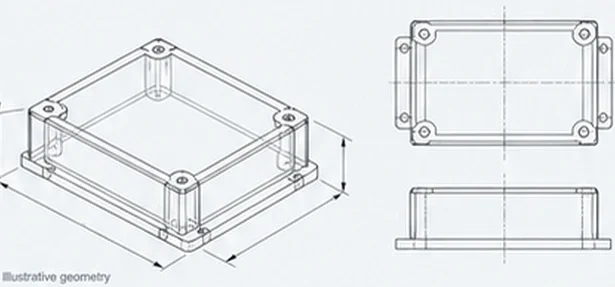
Revisions can reduce the quantity available to recover a molding investment.
Suppose a project expects a long production run, but the mounting interface remains unresolved. Tooling before interface approval may create avoidable modification costs.
Machined samples can support early installation preparation. You can check access, fasteners and mating components before freezing the design.
This does not mean machining eliminates all revision costs. Updated programming, fixtures and stock may still be needed. Ask what changes affect the quotation.
For either process, manage revisions clearly. State the drawing number, revision and release date. Retire superseded files from the purchasing package.
Establish A Design Freeze Gate
Use a documented approval gate before irreversible manufacturing commitments.
At that gate, confirm geometry, material, critical dimensions and appearance requirements. Record unresolved exceptions and who can approve them.
For molding, confirm how future changes will be evaluated and priced. For machining, confirm how revised files replace earlier production instructions.
Can A Machined Prototype Predict Molded-Part Performance?
A machined prototype can answer useful questions, but it does not automatically validate a molded production part.
Stock shapes and molded components can differ in material grade and processing history. Reinforced materials may also behave differently depending on fiber orientation.
Geometry can change during molding preparation. Draft, ribs, gates and parting lines may affect the finished component.
Use the machined prototype to test the questions it can answer. Then validate parts from the intended molding route before releasing production.
Delrin's design guide identifies environmental and dimensional considerations for molded components. It also advises using current technical data for specific grades. Delrin Design Guide
Keep A Prototype-To-Production Comparison Record
Record what changes between the prototype and production plan.
Include grade, reinforcement, geometry, finish and manufacturing method. Identify tests that must be repeated because of those changes.
A successful assembly check may remain useful. A fatigue or chemical-exposure test may need repetition using the intended production component.
This record prevents a convenient sample from becoming unsupported evidence of production performance.
How Does Geometry Influence The Decision?
Geometry determines which manufacturing constraints deserve attention before you compare quotations.
For machining, identify features that require long tools or multiple setups. Check thin sections, internal corners and access to deep bores.
For molding, review how the component fills and releases from the tool. Consider wall transitions, ribs, bosses and undercuts.
Do not redesign the part solely to reduce quoted cost. Preserve function, assembly and inspection access.
Ask each supplier to explain proposed changes. Record whether a change is essential for manufacturing or simply a cost option.
Can A Hybrid Route Be Better?
A hybrid route can be useful when most geometry is molded but selected features need secondary processing.
For example, a critical interface may receive additional machining. Evaluate the complete process, including handling and inspection between operations.
Secondary machining introduces its own variability and cost. It should appear in the quotation and acceptance plan.
Do not assume a near-net component is cheaper until the entire route has been evaluated.
How Should You Compare Material Options?
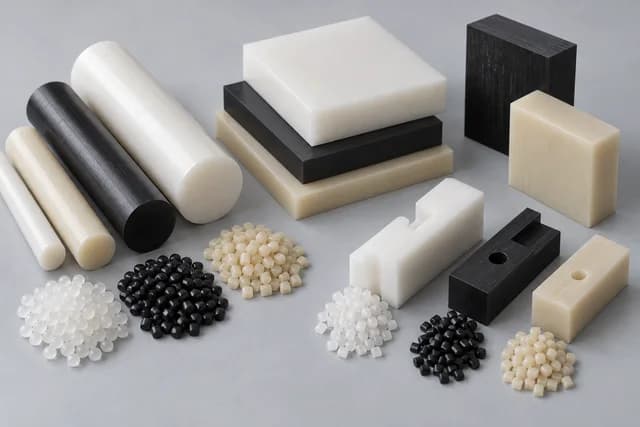
Compare exact grades suitable for each process, rather than matching only broad polymer names.
POM, nylon and PEEK each include multiple grades. Filled materials can create different requirements for tooling, machining and application testing.
If the specification permits alternatives, ask suppliers to identify them before quoting. Require approval before production.
For machining, verify stock size and availability. For molding, verify resin sourcing and processing suitability.
Do not use a stock-shape datasheet as automatic proof of molded-part performance. Likewise, do not assume molding resin data describes every machined stock product.
Use the TOPS Plastics materials overview to structure your initial application discussion.
What Belongs In A Comparable Quotation?
A comparable quotation states the same drawing, material, quantity and acceptance requirements for both processes.
Ask for fixed and variable costs separately. Identify tooling, setup, sampling, inspection and packaging charges.
State whether freight and taxes are included. Define delivery terms and destination so landed-cost comparisons remain meaningful.
For a mold, clarify ownership, storage, maintenance and access. Ask what happens if production moves to another supplier.
For machining, clarify whether fixtures or dedicated inspection tools are chargeable. Confirm whether those items affect repeat orders.
Also specify quotation validity and material substitution rules. A lower price based on a different grade is not an equivalent offer.
Discuss Your Manufacturing Route
Send TOPS Plastics your drawing, sample quantity and expected repeat demand. Explain revision risk and critical requirements. Ask whether CNC plastic machining is a practical route for your current project stage.
How Should You Compare Lead Times?
Compare the complete path to usable, approved parts instead of comparing production time alone.
For machining, include stock procurement, programming, fixtures, inspection and shipment. For molding, include tool development, trials, corrections and sample approval.
The timeline can change when material is unavailable or customer approval is delayed. Identify dependencies before accepting a delivery promise.
Separate the sample delivery date from the production delivery date. A first sample is not the same as an approved production shipment.
Ask when the schedule begins. Is it after payment, drawing approval, material receipt or another event?
Your purchasing plan should also include incoming inspection and installation preparation. Parts sitting unopened in receiving are not yet supporting the application.
What Inspection Evidence Should You Request?
Request inspection evidence that demonstrates conformity to the agreed component requirements.
Define critical dimensions and measurement conditions. Specify first-article inspection where it serves the project's risk level.
For molded parts, ask how samples represent cavities and the intended production process. For machined parts, ask how setup and batch differences are addressed.
Avoid requiring documents that no one will evaluate. A focused report on critical interfaces can be more useful than an unstructured data export.
Functional testing may be necessary alongside dimensional inspection. A component can meet dimensions while failing under load or exposure.
Record factory testing and customer testing responsibilities separately. Confirm test scope, acceptance criteria and reporting before placing the order.
How Do Packaging And Inventory Affect The Choice?
Packaging and inventory influence the practical cost of obtaining usable parts.
A large molded batch may reduce unit cost while increasing storage and obsolescence exposure. A smaller machined batch may support a changing assembly schedule.
Compare delivery frequency with your actual consumption. Include the cost of holding parts that might become obsolete after a revision.
For either route, agree packing requirements. Protect thin features, sealing surfaces and appearance-critical faces.
State labeling requirements by part number, revision and quantity. If material traceability matters, define how it connects to shipment records.
Shipment inspection should verify the agreed quantities and packing condition. It does not replace application testing or establish future service life.
A Practical Buyer Decision Sequence
Choose a process through staged decisions that reduce uncertainty before major spending.
First, define function and mandatory requirements. Second, establish design maturity and the expected quantity before the next revision.
Third, request manufacturability feedback for relevant processes. Fourth, compare quotations using matching specifications and transparent cost assumptions.
Fifth, approve representative samples and required tests. Finally, release production with a controlled drawing package and inspection plan.
Consider an illustrative equipment housing with an evolving connector layout. Early machined samples could support fit checks. After design stabilization, the buyer could reassess molding using confirmed demand.
That scenario describes a decision method. It is not a TOPS customer project or a claim that molding is always preferable later.
Frequently Asked Questions
Is CNC Machining Always Cheaper For Small Quantities?
No. It often avoids mold investment, but geometry, stock cost and inspection can make machining expensive. Compare quotations for your actual part and quantity.
At What Quantity Should I Switch To Injection Molding?
There is no universal switching point. Calculate project-specific costs, then evaluate demand certainty, revisions and validation requirements.
Can Both Processes Use The Same Plastic?
They may use the same polymer family, but the suitable grades can differ. Confirm material identity and process-specific performance evidence.
Will A Machined Prototype Guarantee A Successful Molded Part?
No. It can validate selected aspects of design and assembly. Confirm the intended molded component through its own inspection and application tests.
Can Injection-Molded Parts Be Machined Afterwards?
Yes, where the material and geometry permit. Include secondary machining, handling and inspection in the complete process quotation.
Should I Buy The Lowest Unit Price?
Compare landed cost and project risk. Tooling, inventory, quality requirements and revision exposure can outweigh a small unit-price difference.
Conclusion
Choose CNC machining or injection molding around design maturity, real demand and verified requirements. Compare complete costs and approval timelines. Validate the intended production route before treating prototype success as production evidence.
Review Your CNC Plastic Part Requirements
Share your current drawing, preferred material, sample quantity and production expectations with TOPS Plastics. Identify critical fits and your required delivery stage. Request a project-specific machining review and quotation.