Choosing an unfilled or reinforced PEEK grade
PEEK grades are not interchangeable. Unfilled, glass-filled, carbon-filled and bearing grades can differ in stiffness, wear behavior, dimensional movement and suitability for a mating surface. Include continuous and peak temperature, chemical concentration, exposure duration and sustained load in your RFQ. A polymer family name alone does not establish medical, food-contact or other regulatory suitability. Confirm the exact stock grade and the documentation required for your intended use.
Designing machined PEEK parts for service
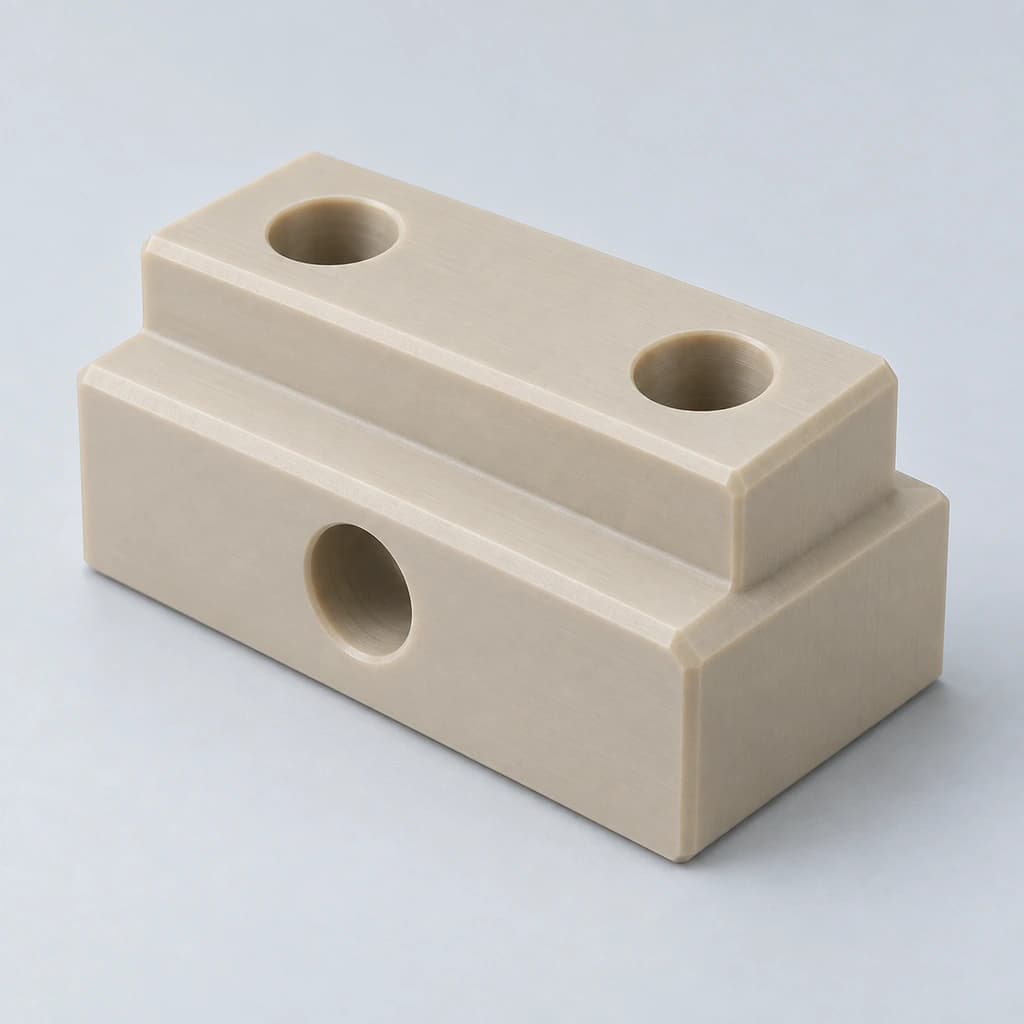
Candidate applications include insulating components, fixtures, bushings and fluid-system parts, subject to grade and design review. Reinforcement can change machining behavior and thermal expansion by direction. Thin walls, tight fits and long unsupported sections deserve particular review. Set tolerances on functional features rather than tightening every dimension. Consider the effect of temperature, sustained loading and assembly forces on the working fit; room-temperature inspection alone does not establish performance in service.
Tolerances and dimensional inspection
Mark critical dimensions, datums and acceptance limits on the drawing. Plastic dimensions can respond to temperature, humidity, conditioning and the time since machining. Agree the measurement method, part condition and sampling plan before placing the order. Discuss first-article results for features that control assembly; inspection reports and material documents should be specified in the quotation when required. No universal tolerance value is promised here because feasibility depends on material, geometry and the inspection conditions.
From an RFQ to protected delivery
Provide quantity, repeat demand, delivery destination and any packaging requirements alongside your CAD and drawing. Identify delicate edges, transparent surfaces or features that require individual protection. Discuss how the parts will be identified, separated and checked before packing. Lead time, shipment inspection and document scope should be agreed for the particular order. An image on this page illustrates a manufacturing context and is not evidence that a customer shipment has been completed.
Engineering review before production
Share assembly conditions and the features that matter most to function. Ask for a review of material availability, tool access, residual stress, fastening and inspection feasibility. Where a prototype is used to validate a design, record what was tested and what remains unverified before ordering a larger batch. TOPS Plastics handles project discussions through the inquiry form and company contact details below; project-specific capability and documentation are confirmed during quotation.