01
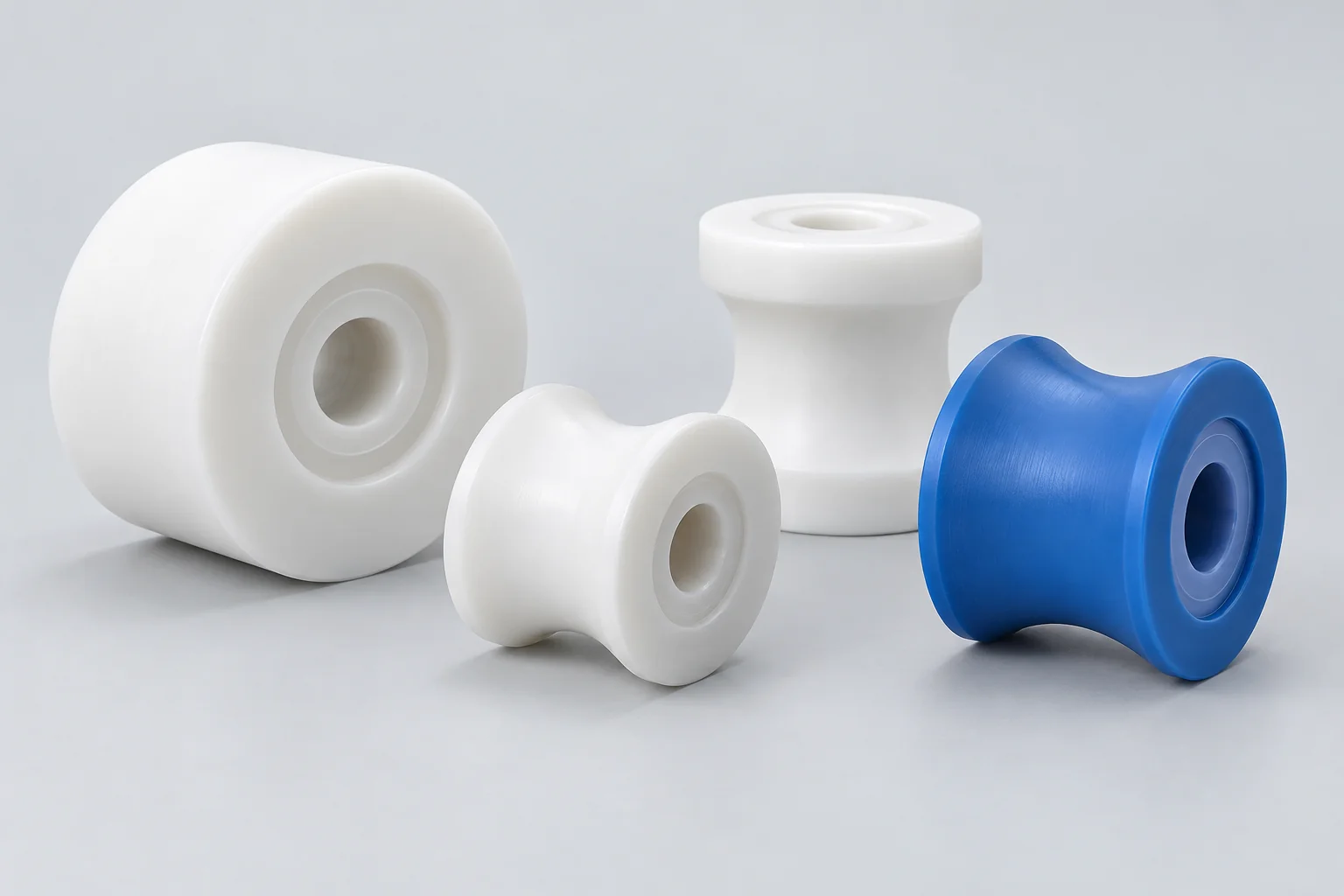
Plastic Rollers
Guide and idler rollers for conveyors, packaging machines and food-handling lines, with specified bores, profiles and runout.
Explore component details →
PRODUCTION DUTY · CLEANING CYCLE · EXACT GRADE
TOPS Plastics manufactures custom CNC machined plastic components for food processing machinery, packaging systems, conveyors, filling equipment and industrial food-production lines. We machine UHMW-PE, POM/Delrin, Nylon, PTFE, PEEK, HDPE and other engineering plastics according to customer drawings, equipment requirements and application conditions.
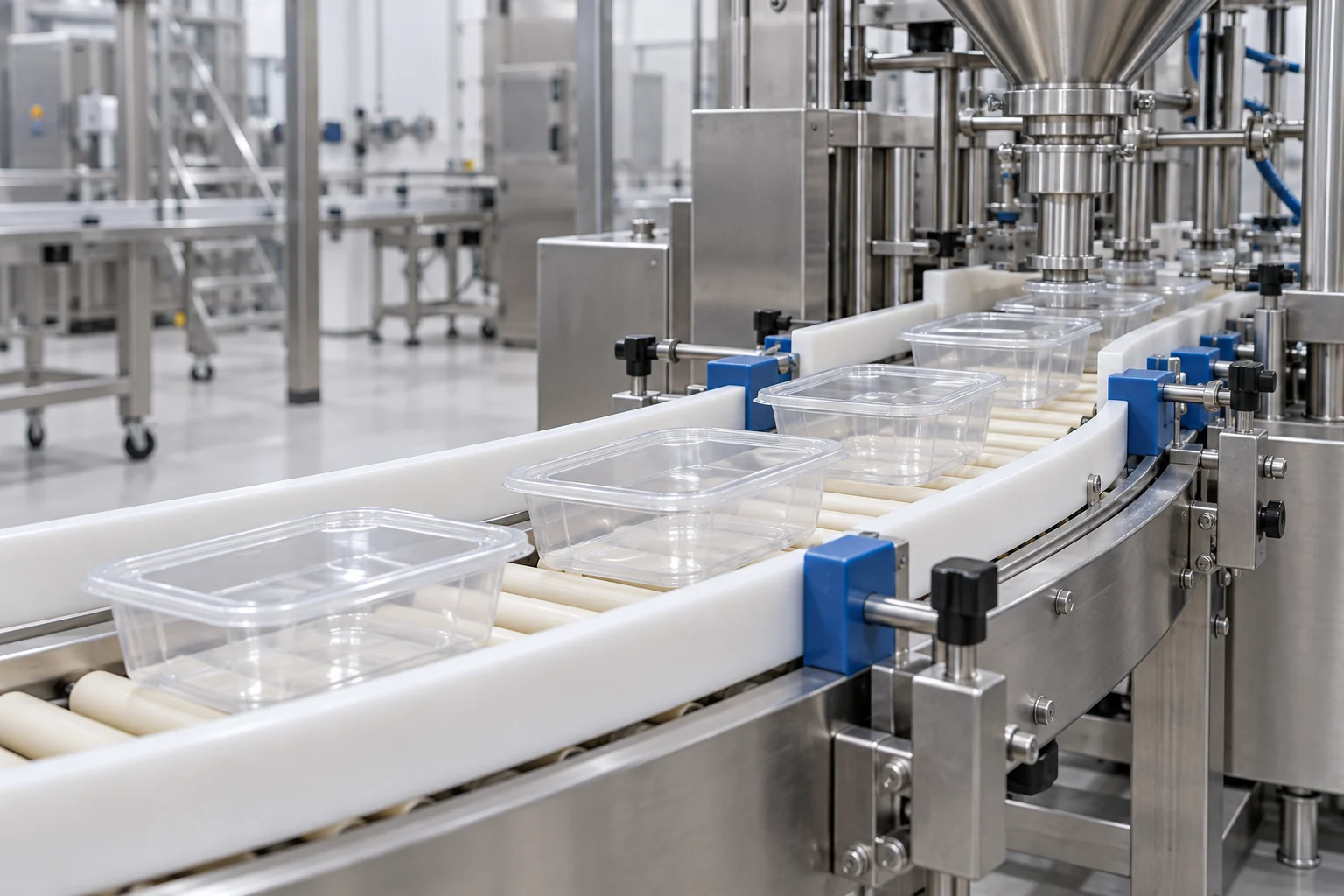
Connect the component to its production duty, cleaning cycle and material-documentation requirements before choosing the process.
| Capability | TOPS Plastics |
|---|---|
| Typical parts | Wear strips, guides, rollers, bushings, housings and manifolds |
| Materials | UHMW, POM, Nylon, PTFE, PEEK, HDPE and specified grades |
| Processes | CNC milling, turning, routing, drilling and tapping |
| Key requirements | Hygiene-related geometry, wear, low friction and corrosion resistance |
| Production | Replacement parts, prototype, low-volume and repeat production |
| Input | STEP, CAD, 2D drawings and reference samples |
| Inspection | Drawing-based dimensional inspection |
| Documentation | Material documentation where specified and available |
Select a component family, then define contact areas, operating duty, sanitation conditions and required documentation.
Guide and idler rollers for conveyors, packaging machines and food-handling lines, with specified bores, profiles and runout.
Explore component details →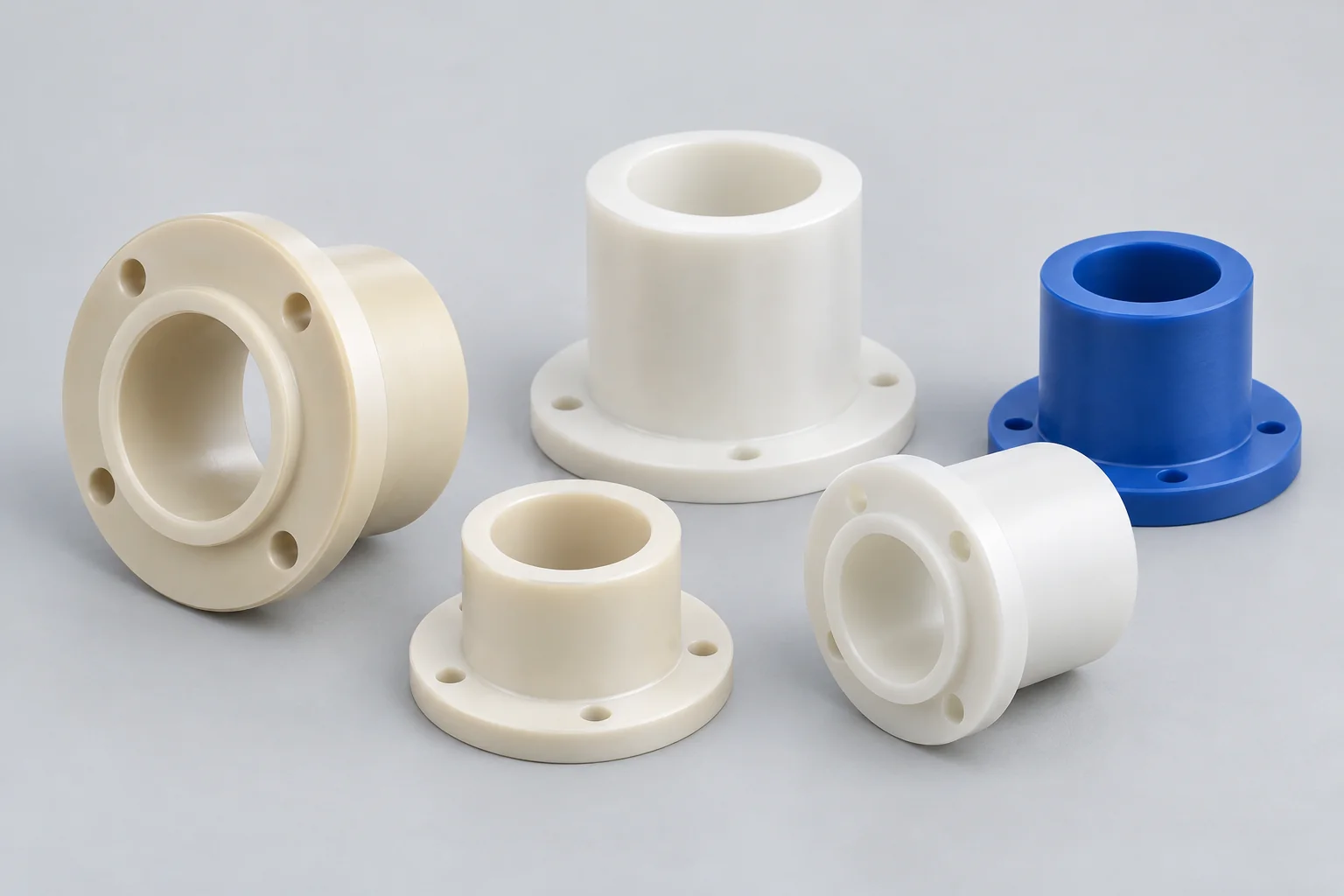
Sleeves and flanged bushings for shafts, pivots and guided motion, reviewed for water, cleaning and installed clearance.
Explore component details →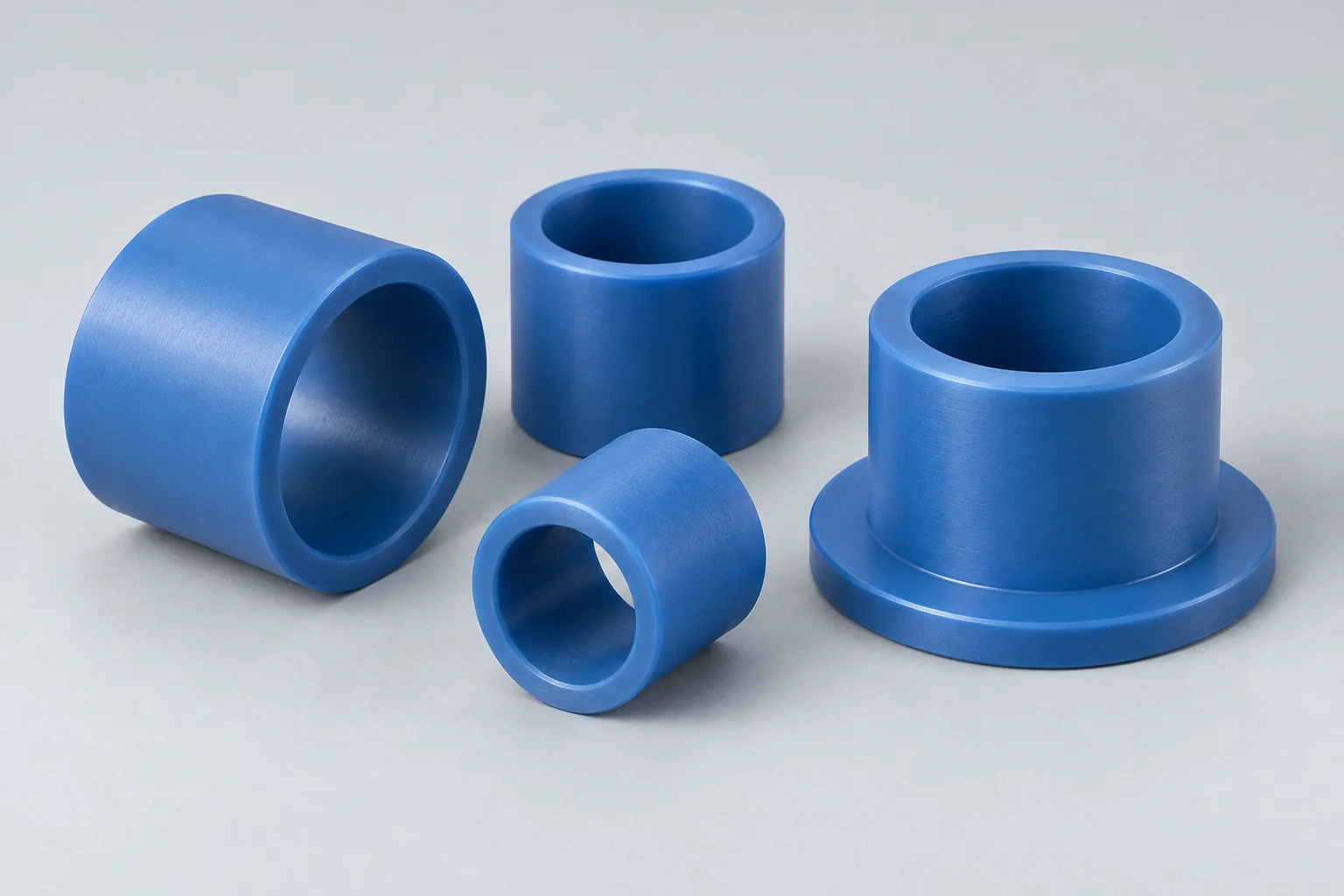
Plain bearings for rotating and sliding assemblies, selected around load, shaft, speed and lubrication conditions.
Explore component details →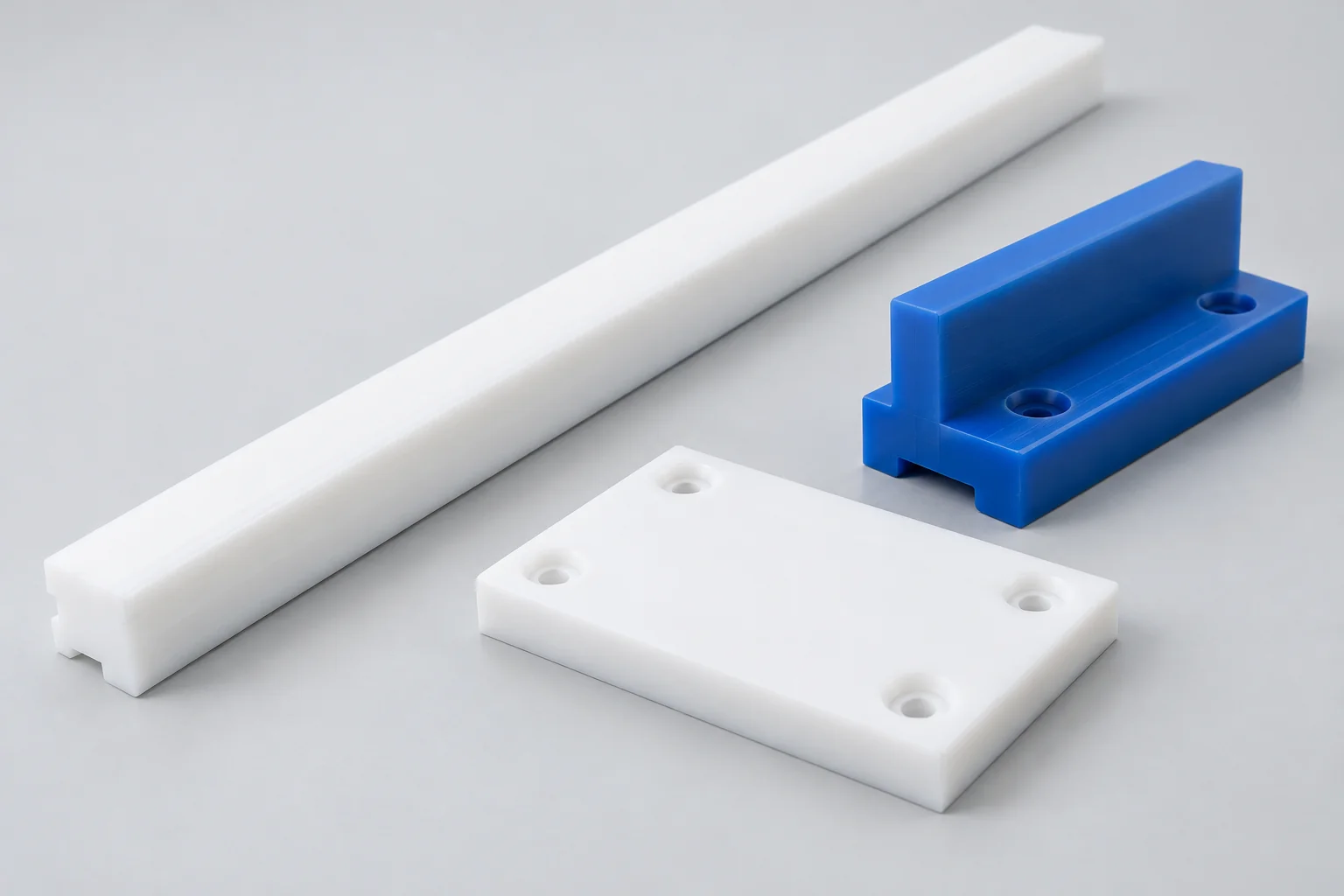
Conveyor slides, guide rails and replaceable machine wear surfaces with defined support, thickness and fastener recess.
Explore component details →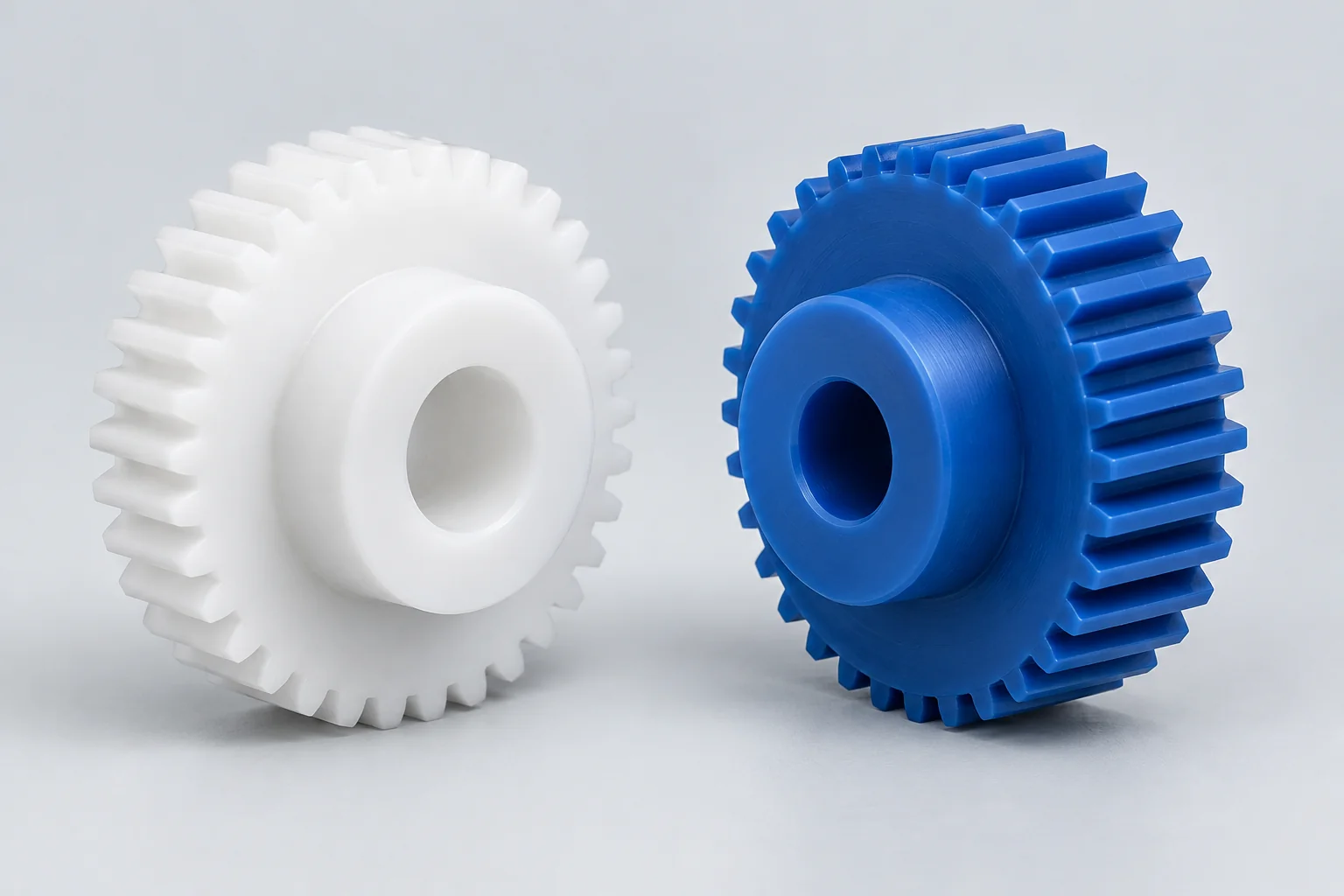
Timing and transmission parts for packaging machinery, with released tooth geometry, torque and mating interfaces.
Explore component details →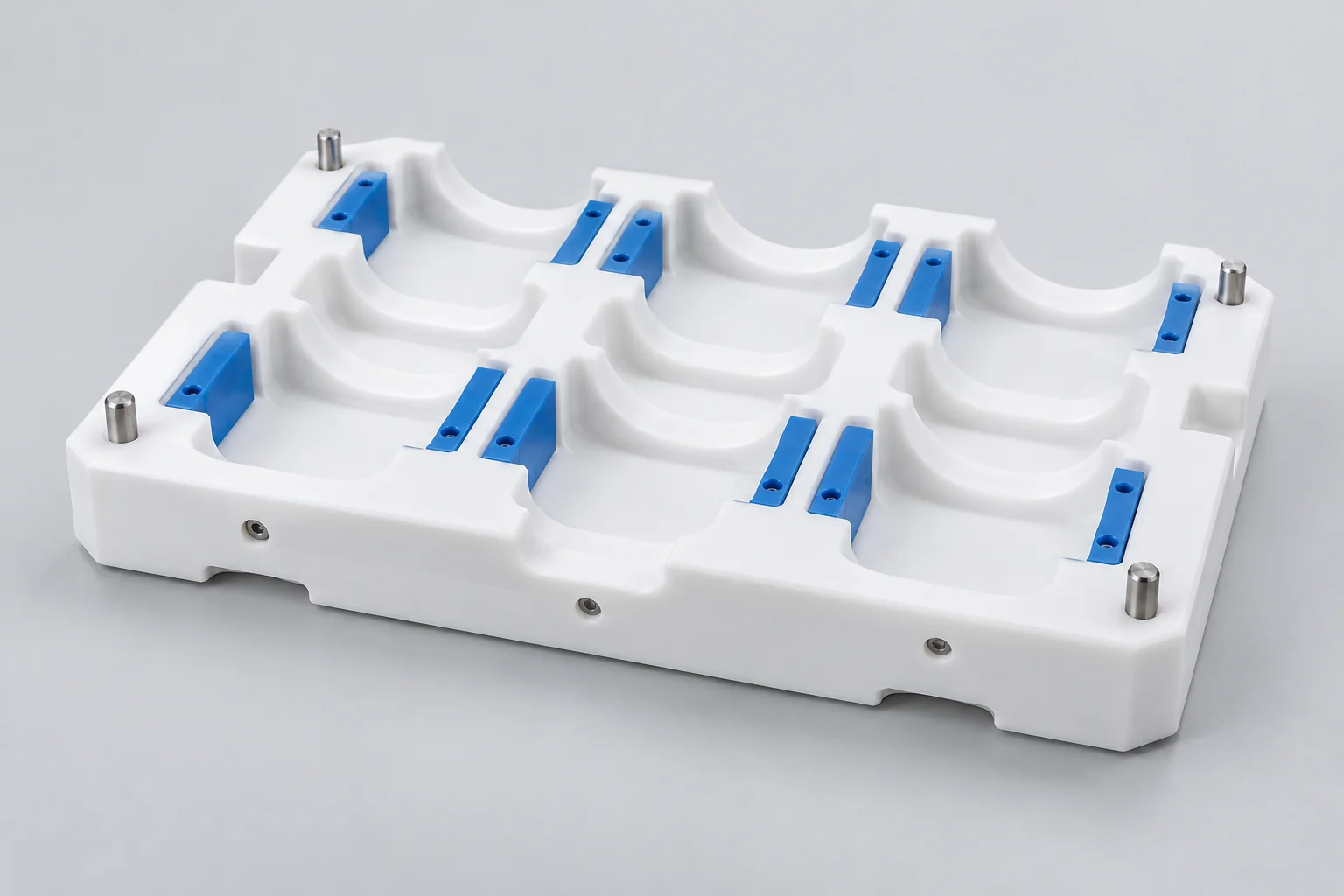
Assembly, inspection, positioning and production-line tooling with accessible locating and replaceable contact features.
Explore component details →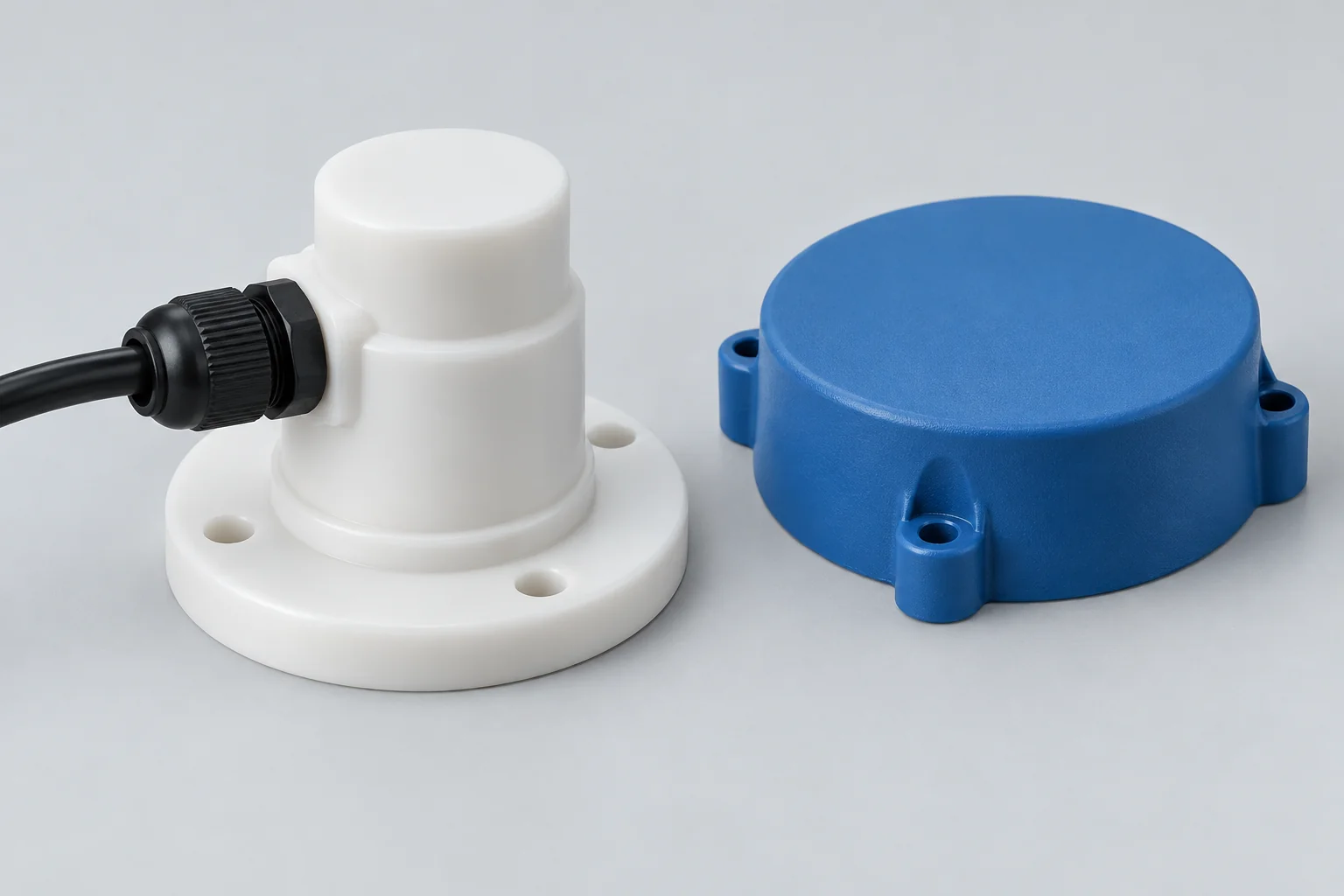
Sensor, control and process-equipment housings with defined mounting, cable access and environmental requirements.
Explore component details →Plastic Enclosures →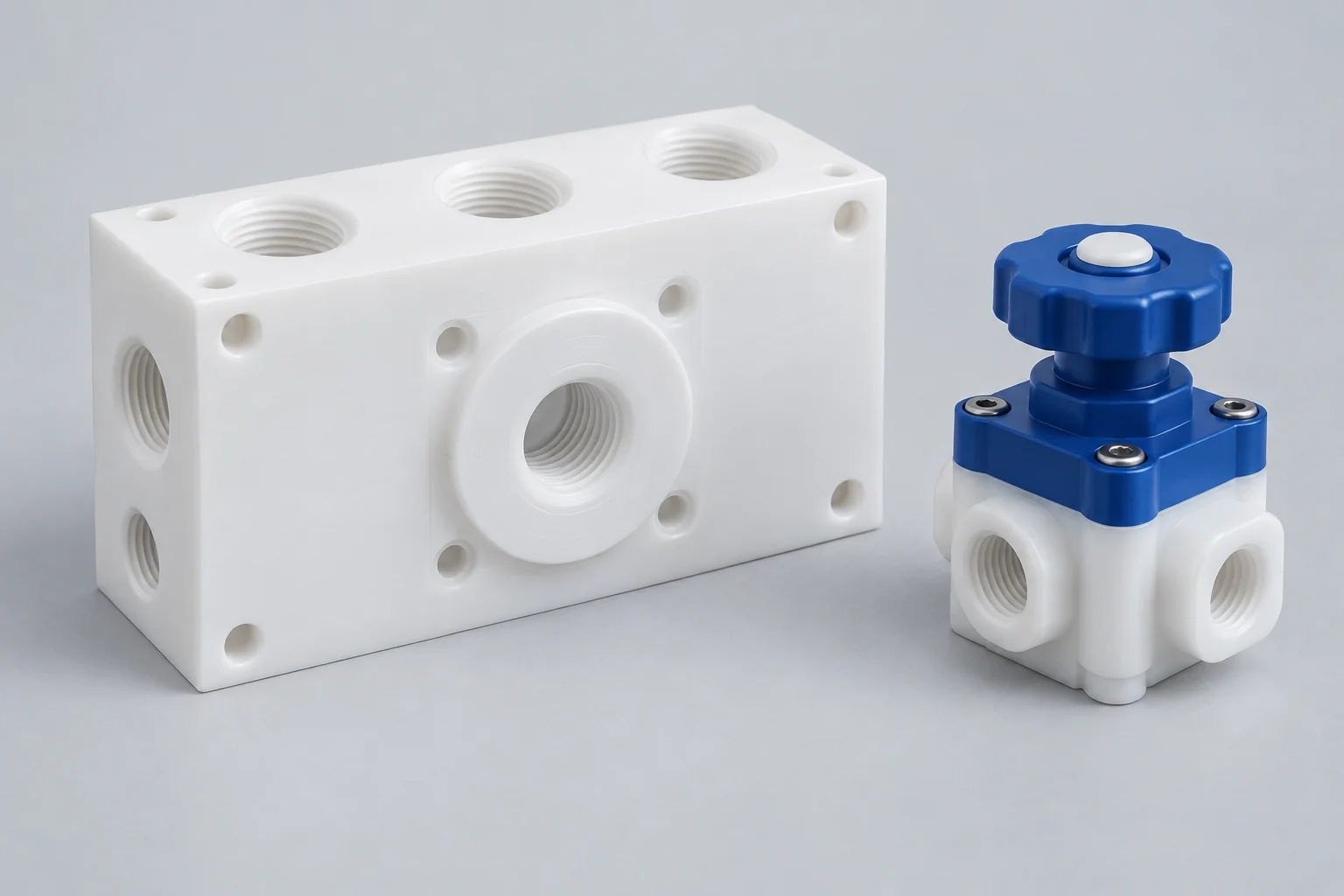
Fluid-distribution, cleaning-system and pneumatic-control blocks with specified media, ports and sealing geometry.
Explore component details →Equipment type, part function and engineering requirement belong together. Define direct food contact separately from general machine use.
Wear strips, chain guides, rollers, side guides and slide blocks manage repeated product movement. Review friction, abrasion, noise, cleaning access and retained debris.
Rollers, gears, guide blocks, bushings and fixtures operate through repeated cycles. Speed, repeatability, product protection and acceptable wear set the duty.
Manifolds, valve components, bushings, guides and housings need fluid compatibility, cleanability, chemical resistance and dimensional control.
Guides, support blocks, wear components and fixtures locate or support the process. Define contact areas, cleaning chemistry and stable geometry.
Guides, rollers, spacers and covers face moisture and sanitation cycles. Review drainage, material compatibility and sustained mounting loads.
Housings, brackets, custom blocks, supports and machine guards connect equipment assemblies. Specify operating environment, interfaces and any product-contact requirement.
There is no single best plastic. UHMW is a starting candidate for conveyor wear, POM for precision mechanical parts, Nylon for tough loaded parts and PEEK for demanding heat or chemicals.
| Material | Main advantage | Typical food-equipment use |
|---|---|---|
| UHMW-PE | Low friction, wear and impact performance | Conveyor guides and wear strips |
| POM / Delrin | Dimensional stability and machinability | Precision guides, gears and fixtures |
| Nylon | Toughness and wear performance | Bushings, rollers and loaded components |
| PTFE | Low friction and chemical compatibility | Sliding and sealing interfaces |
| PEEK | Temperature, strength and chemical performance | High-performance machine parts |
| HDPE | Chemical resistance and toughness | General food-handling components |
| PET-P | Low moisture uptake and dimensional stability | Precision mechanical parts |
| PP | Chemical resistance | Fluid and washdown components |
Food-contact suitability must be confirmed for the exact resin grade, additives, supplier documentation and defined use. Polymer family, white or blue color and a general material description do not establish compliance. Compare moisture, creep, stiffness and wear alongside the documentation requirement.
Chain guides, wear strips, side rails, guide blocks, slide pads and liner plates provide controlled, replaceable contact through long conveyor runs.
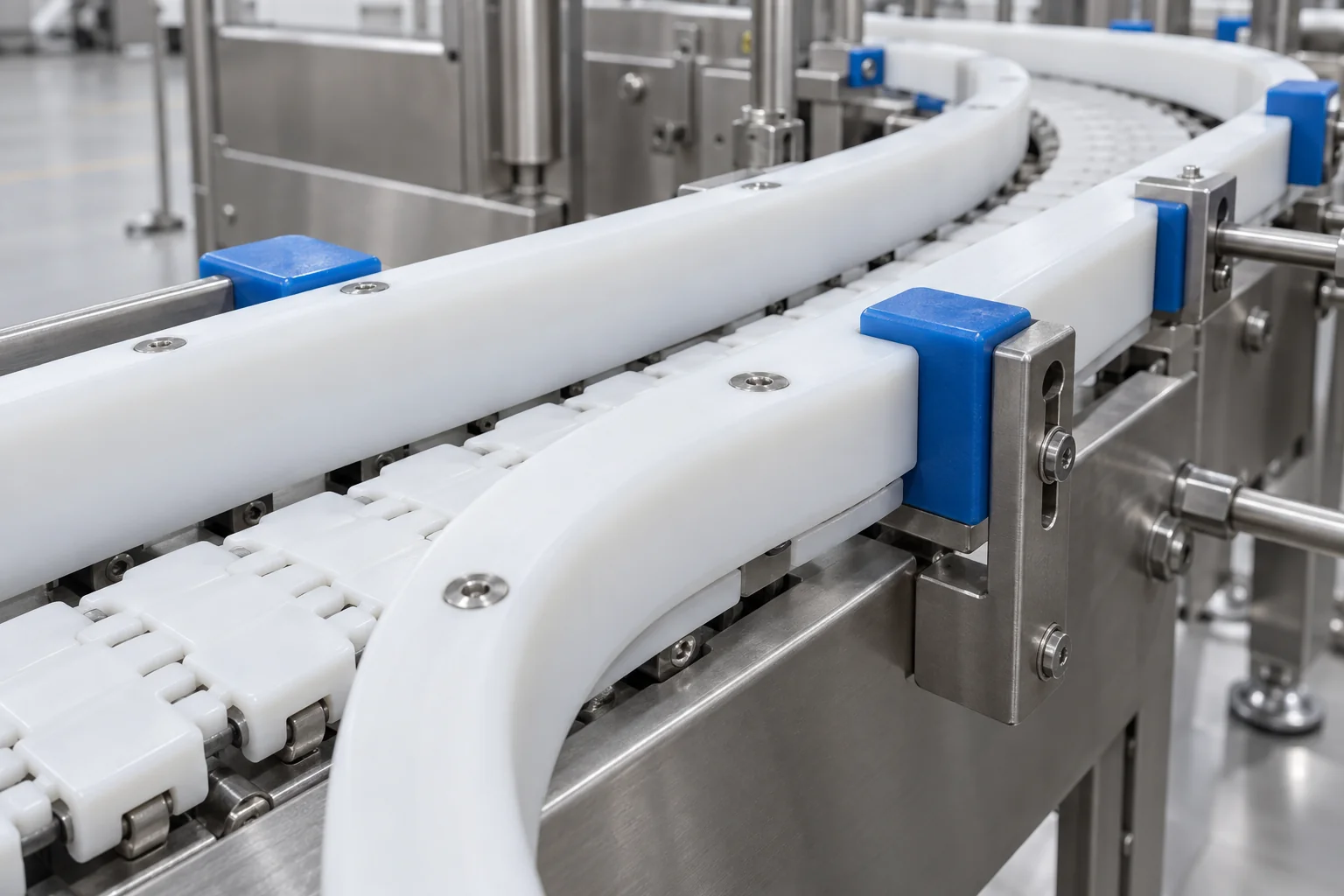
Long-running conveyors need an agreed wear allowance and replacement limit. Include abrasive product fragments and the mating surface.
Suitable grades can reduce drag. Check load, speed, support, contact finish and lubrication rather than selecting hardness alone.
Smooth, suitable contact surfaces can reduce unwanted metal-to-product contact. Identify contact pressure, edge radii and retained debris.
Allow for thermal movement on long strips and guides. Recess fasteners without leaving unsupported or difficult-to-clean features.
Provide access to contact faces and mounting areas. Avoid unnecessary debris traps and define removal or inspection during sanitation.
Conveyor wear components should be designed around friction, wear, washdown, contamination control, mounting and thermal movement together. Define operating hours, acceptable clearance change and the minimum remaining section above hardware so replacement can be planned.
Guide rollers, idlers, sleeve and flanged bushings and plain bearings connect motion requirements to the cleaning environment.
Specify shaft material, finish, hardness, radial or axial load and any misalignment. Contact pressure depends on support as well as force.
Include rotation, sliding, starts and reversals. Dry, grease or oil conditions affect heat and wear; dry-running capability is grade- and duty-dependent.
Moisture, detergents and sanitizers can change fit or surface behavior. Review the process and cleaning media separately.
Allow for frictional heat, washdown temperature and material expansion. Nylon moisture uptake can alter a running fit.
Select food-machinery motion parts using load, speed, shaft material, moisture, cleaning chemicals and lubrication together. Validate demanding service with representative machine trials; a low friction coefficient alone does not establish maintenance-free operation.
Timing gears, rollers, appropriate star-wheel-type components, guides, spacers, housings and sensor mounts must follow the machine sequence accurately.
Provide speed, cycle rate, starts and dwell. Include impact during product transfer and wear at locating surfaces.
Control the positions and clearances that set timing, alignment and sensor detection. Release mating-part geometry with the drawing.
Suitable polymers may help reduce contact noise and protect packaging. Check torque, stiffness, product variation and edge condition.
Identify whether a part contacts food, packaging or only the machine. Specify cleaning compatibility and the documentation required for that use.
Tooling and machine parts should be reviewed with the actual container, closure or product geometry. Replacement timing components need the intended original fit rather than a copy of a worn tooth, bore or contact surface.
Manifolds, valve blocks, fittings, pump housings and fluid-distribution plates need defined flow, sealing and sanitation requirements.
State product or process media, concentration, contact time and any direct food-contact requirement. Include oils, fats or acidic media where relevant.
List detergents, acids, alkalis and sanitizers separately. A polymer that tolerates the product may respond differently during sanitation.
Include steady and peak pressure, cycling, process temperature and cleaning excursions. Material compatibility does not establish a universal pressure rating.
Specify seal type, grooves, flatness, port threads and installation loads. Agree leak or pressure testing when required.
Material selection must consider both process fluid and cleaning chemistry. Define internal passages, drainability and cleaning access with the equipment designer. Dimensional inspection does not replace a validated cleaning procedure or a separately agreed fluid-system test.
Design for sanitation conditions as well as production. Chemical exposure, hot water, steam, moisture and geometry all affect long-term function.
Product contact · load · speed · wear · process temperature
Chemistry · concentration · heat · exposure time · drainage
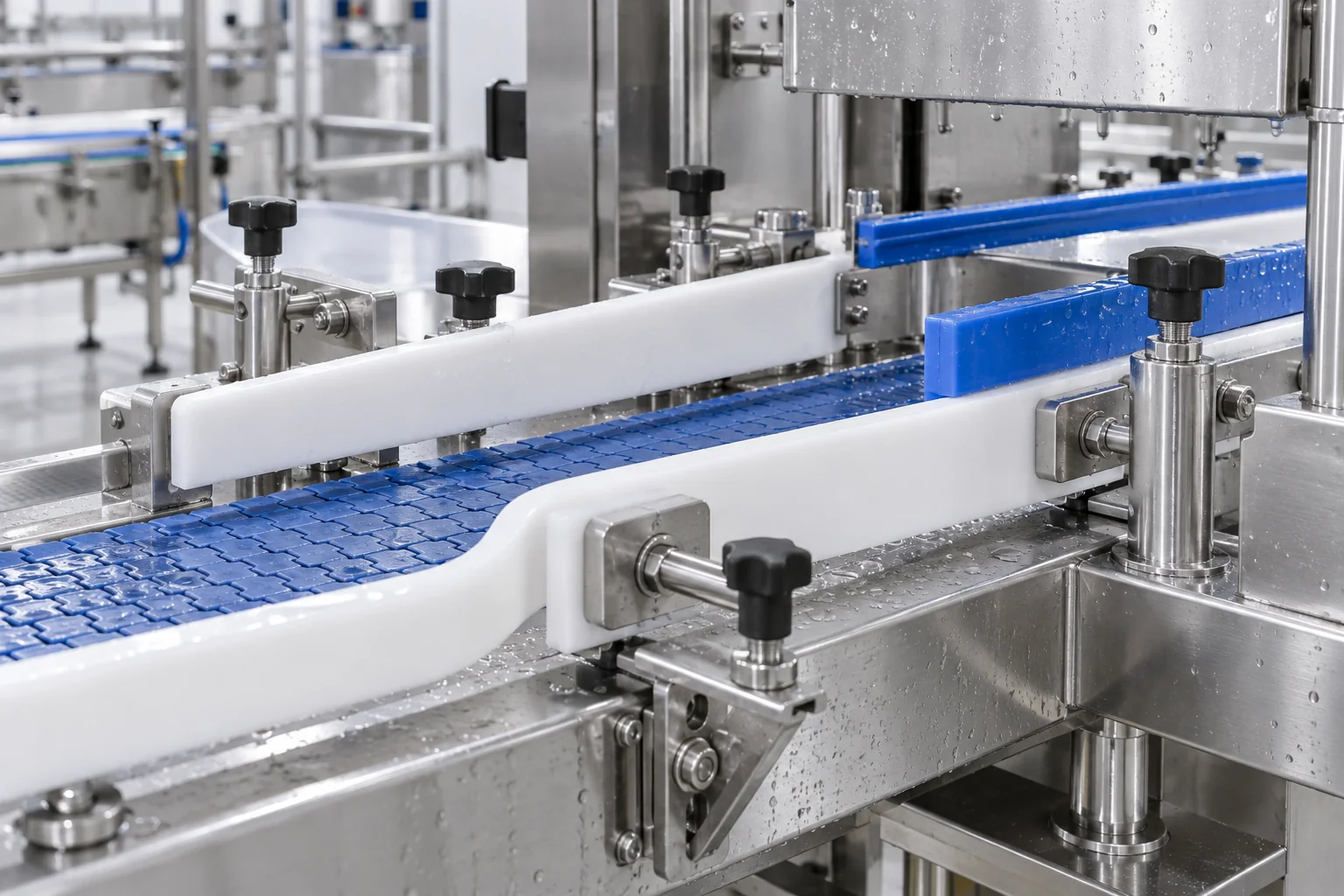
Alkaline cleaners, acids, sanitizers, alcohols and oxidizers behave differently. Specify concentration, temperature, contact duration and rinse conditions.
Temperature and pressure can affect strength, expansion and retained fits. Repeated exposure needs exact grade and application validation.
Nylon can absorb moisture and change dimensions. Review conditioning and the wet operating fit rather than only dry inspection dimensions.
Avoid pockets that retain water or food debris. Consider installed orientation, access and any need to remove the part for cleaning.
Reduce unnecessary crevices and inaccessible recesses. Smooth transitions and suitable mounting details can improve cleaning access.
Provide the complete sanitation cycle, frequency and acceptance criteria. CIP/SIP suitability and steam exposure cannot be assumed across all grades or finished designs. Machine cleaning validation remains an application-specific requirement.
“Food grade” is not a universal property of a polymer family. It usually describes a specific grade with documented food-contact suitability or compliance under defined conditions.
Identify the exact material, supplier and intended conditions of use. A generic FDA-related statement does not establish suitability for every food or temperature.
Request the applicable declaration and supporting conditions for the material or article. Intended food type, contact conditions and relevant restrictions matter.
Match grade, stock form and supplier statement to the actual material ordered. Confirm any limitations before selecting it.
Agree requested material identification and the linkage to supplied stock where available and included in the order.
Pigments, fillers and additives can change the documentation scope. Color alone does not prove food-contact, detectable or antimicrobial behavior.
Customer-specified food-contact, cleaning, material, inspection and documentation requirements can be reviewed during quotation. Confirmation must be based on the exact grade, supplier evidence and intended finished use. General UHMW or POM labels do not establish food-contact compliance.
Parts must remain functional through production and cleaning cycles, so wear, moisture, temperature and chemical exposure must be assessed together.
Conveyor guides can run for long periods. Provide contact load, speed, counterface and acceptable wear.
Production and washdown temperatures can shift clearances and mounting relationships.
Wet exposure can affect Nylon dimensions and mechanical behavior. Specify the conditioned state.
Repeated chemical and thermal exposure can change material performance over time.
Long guides and wear strips can flex. Review support spacing, fastening and residual thickness.
Different thermal expansion can affect mounting, clamping and retained alignment. Allow practical movement.
Burrs, sharp edges and difficult-to-clean recesses can affect machine performance and hygiene. Functional surface condition matters alongside dimensional accuracy.
Remove interfering burrs and define edge breaks without changing critical contact or sealing geometry.
Identify product-contact guides and fluid-path changes where abrupt steps or tool marks matter.
Review counterbores, slots and enclosed recesses with the cleaning method. A visually smooth exterior does not make an inaccessible passage cleanable.
Specify accessible inspection, surface condition and seal requirements. Agree any additional cleaning or verification scope.
Provide room for cleaning, drainage and inspection in the installed assembly or define a removal procedure.
Match finish to function: product-contact areas, guides, fluid paths, sealing faces and conveyor surfaces may need different criteria. Avoid unnecessary polishing of unrelated surfaces; a finish specification alone does not demonstrate microbiological cleanliness.
Prioritize motion, sealing, guiding and assembly interfaces. Apply practical limits to noncritical geometry.
| Feature | Why it matters |
|---|---|
| Roller runout | Smooth conveying and contact |
| Bore diameter | Shaft and bearing fit |
| Wear strip thickness | Guide clearance and replacement allowance |
| Hole position | Machine assembly and mounting |
| Gear geometry | Timing and transmission |
| Manifold port position | Fluid connection and sealing |
| Housing interface | Sensor and equipment fit |
| Flatness | Mounting and sealing stability |
Define datums, GD&T, operating and inspection temperature, conditioning and free or restrained state where relevant. Discuss the effect of cleaning cycles and moisture on the assembled fit. A dimensionally correct part still needs an appropriate grade and application acceptance.
Release production duty, sanitation conditions and contact areas as part of the same component specification.
Confirm documented suitability for the defined food-contact use where required.
Avoid unnecessary crevices, trapped debris and inaccessible mounting details.
Long guides and wear strips need movement allowance across production and cleaning temperatures.
Review Nylon conditioning and wet clearances in particular.
Protect product flow and wear surfaces while preserving support and cleaning access.
Make conveyor contact pads and guides practical to inspect and renew.
Define critical surfaces and avoid unnecessary polishing of noncritical areas.
Mark direct-contact zones to align material, documentation and inspection requirements.
Choose a process around stock form, functional interfaces and the agreed surface and documentation requirements.
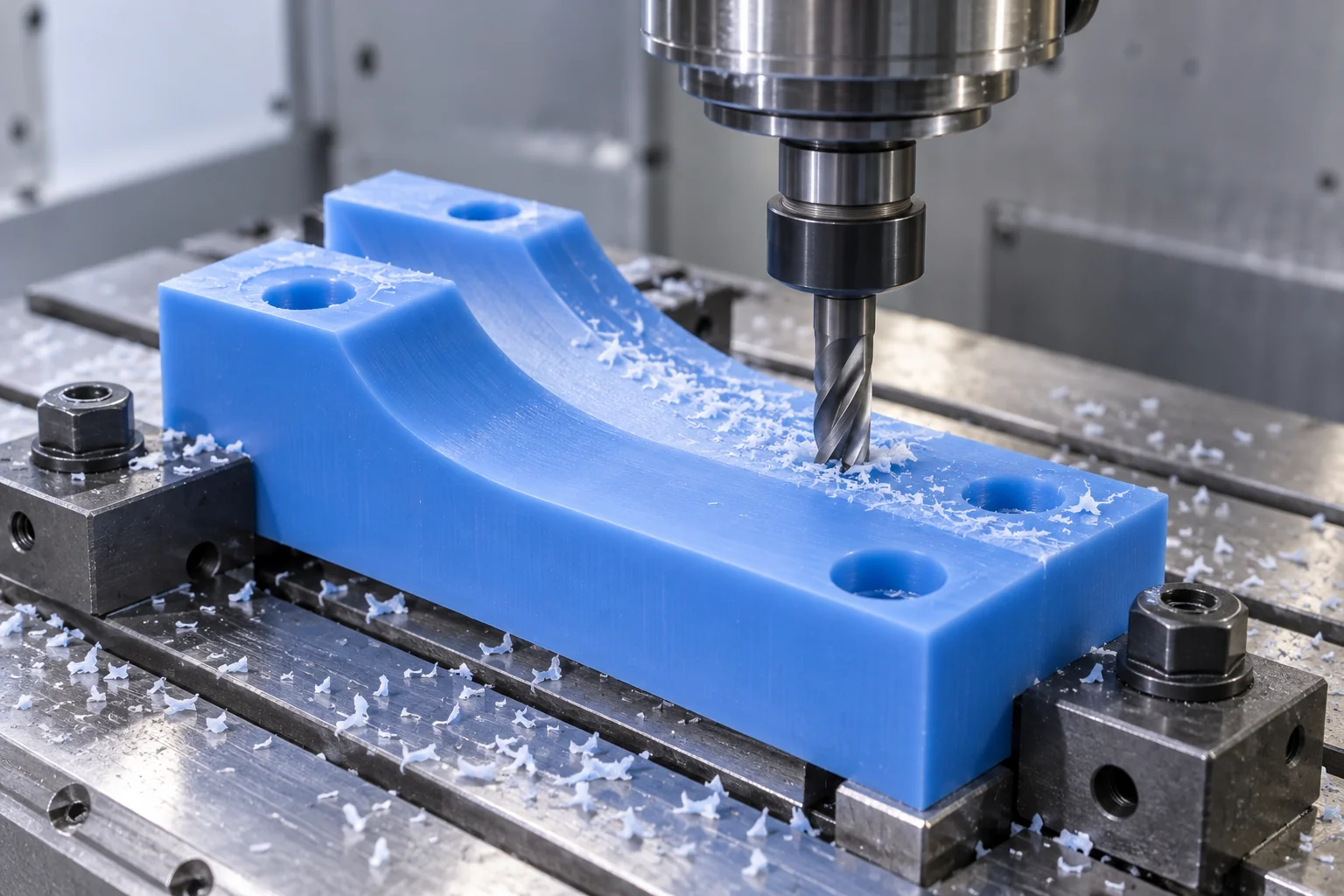
Machine guides, wear blocks, housings and fixtures with defined contact and mounting faces.
Produce rollers, bushings, bearings and spacers around concentric functional interfaces.
Profile long wear strips and sheet-based components, subject to geometry and process review.
Create released mounting and hardware features with specified thread and edge conditions.
Review selected multi-part components, inserts and hardware under an agreed assembly scope.
Verify critical dimensions, surface condition and any agreed material documentation.
Yes, where the intended original geometry can be established reliably. Drawings, CAD, sketches or physical samples can support replacement-part review.
Worn conveyor guides, damaged rollers, obsolete bushings, old wear strips, discontinued spacers and machine blocks.
Use unworn surfaces, mating components and known clearances. Do not copy damaged or swollen dimensions blindly.
A previous part’s appearance does not establish its grade or food-contact status. Release the required material and evidence.
Approve reconstructed dimensions before manufacture, then confirm fit, wear and cleaning behavior in the intended machine.
Provide failure observations, photographs, sample information and the maintenance requirement. Preserve the approved drawing revision and grade for repeat spare-part supply; urgent replacement should still follow an agreed release process.
Agree acceptance features and documentation scope before manufacture, including product-contact surfaces and any special handling requirements.
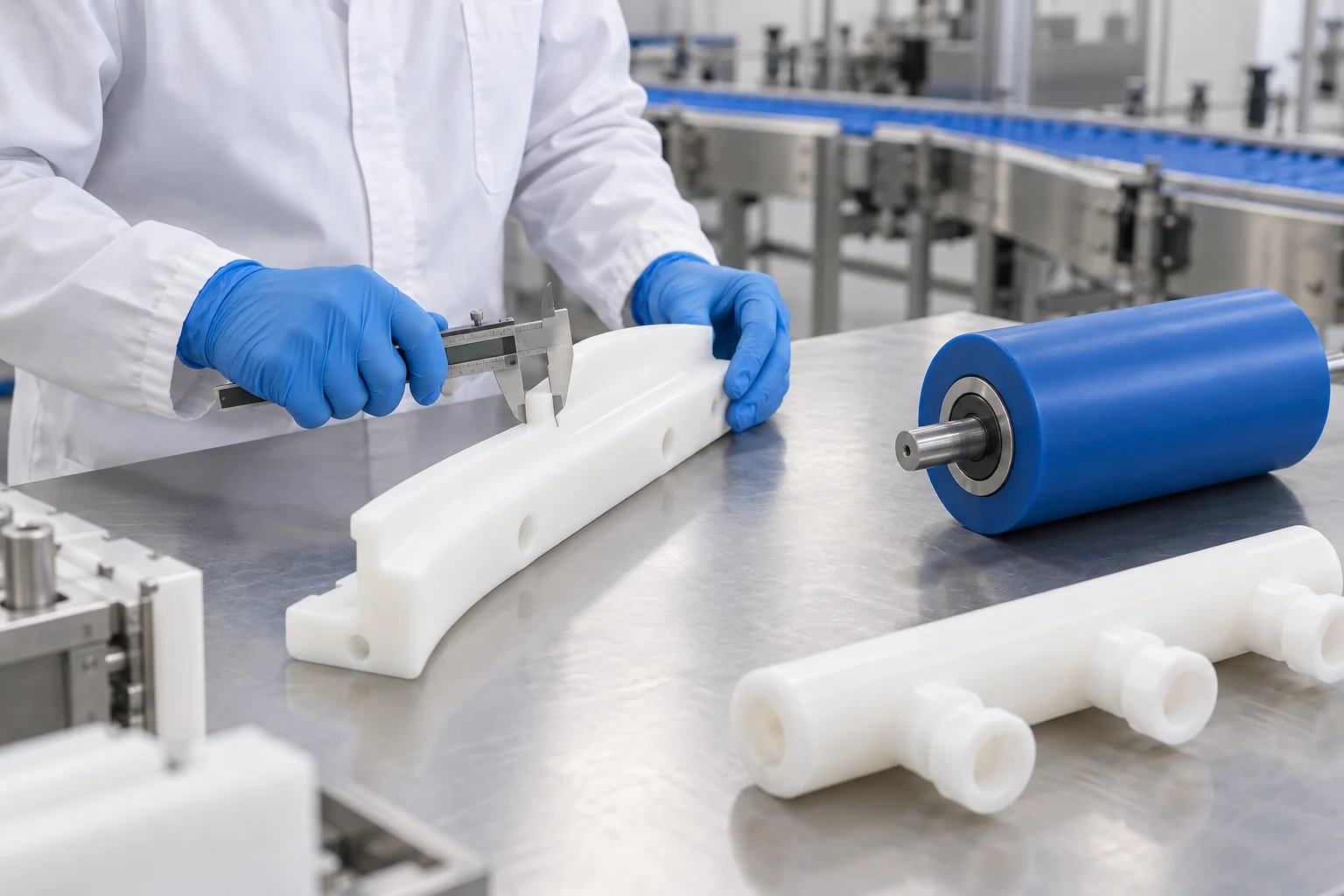
Confirm the specified polymer, exact grade and requested supplier evidence.
Check critical motion, mounting, guiding and sealing features to the released drawing.
Inspect edge condition and specified contact surfaces, including accessible cleanability-related features.
Review requested food-contact and material documents where specified and available for the supplied grade.
Confirm the required linkage between stock, machining lot and delivery documents before order acceptance.
Specify surface protection, handling and packaging needed for the component’s intended use.
Material documentation and dimensional inspection do not establish a certified food-production facility or a certified sanitary machine. Any specific finished-part, sanitation or regulatory verification needs an agreed evidence and testing scope.
Control the grade and geometry through both machine development and recurring maintenance supply.
Validate fit and initial machine function with the intended mating components.
Assess wear, running clearance and cleaning behavior under representative production and sanitation cycles.
Supply specialized equipment builds and planned replacement requirements.
Maintain exact grade, drawing revision, machining program, inspection criteria and required documentation.
Review product contact, cleaning chemicals, temperature, moisture, friction, wear and documentation together before production.
Guides, wear strips, rollers and bushings tied to their operating interfaces.
Review UHMW, POM, Nylon, PTFE, PEEK and other specified grades for the complete application.
Processes for long wear components, shaped guides and rotational machine parts.
Review customer CAD, drawings or samples to establish the intended geometry.
Support OEM machine builders and maintenance teams through controlled releases and recurring orders.
Agree critical features, surface condition and available documentation for the defined scope.
Move from application requirements to the detailed product page for geometry, interfaces and drawing preparation.
Direct answers about exact grades, food contact, washdown, replacement parts, tolerances and documentation.
UHMW, POM, Nylon, PTFE, PEEK, HDPE, PET-P and PP are candidates for different functions. Confirm the exact grade against food contact, cleaning, load, wear and temperature requirements.
It generally describes a specific grade with documented food-contact suitability or compliance under defined conditions. The polymer family alone does not establish that status.
UHMW is often considered for conveyor guides because of its friction, wear and impact behavior. Confirm the exact grade documentation, temperature, support and thermal movement.
POM can be useful for precision guides, gears and fixtures. Exact grade, intended contact, cleaning compatibility and supplier evidence must be reviewed.
In suitable applications, yes. Moisture absorption and repeated chemical or thermal exposure can change fit and properties, so grade and installed clearances need review.
There is no universal choice. Compare the exact grade against each detergent, acid, alkali or sanitizer at the stated concentration, temperature and exposure time.
Yes, drawing-based guides, rollers, wear pads and related components can be reviewed. Supply intended dimensions, grade, cleaning conditions and documentation requirements.
Control runout, bores, guide thickness, timing geometry, sealing faces and mounting relationships. Define inspection state and the effect of cleaning and moisture.
Often yes, if intended geometry can be reconstructed reliably. Correct wear or damage using mating dimensions and approve the specification before machining.
Specify market and intended use, exact grade, food type, contact conditions and required supplier declarations or certificates. Availability and scope must be confirmed for the material and finished use.
FOOD CONTACT. CLEANING CHEMISTRY. OPERATING DUTY.
Upload your component drawing, CAD model or sample information and specify the exact material grade, quantity, equipment type, product-contact requirement, cleaning chemicals, operating temperature, load, speed and critical tolerances. TOPS Plastics can review the geometry and machining feasibility before quotation.
Company, name, email and phone are required. Country, part number, quantity and drawing upload are optional. Include technical requirements in the drawing or email; combine CAD and supporting files into one ZIP if useful.
info@tops-precision.comSTEP / STP / IGES / X_T / DWG / DXF / PDF or ZIP, maximum 10 MB. Larger packages can be shared by email. Agree confidential-file handling before sending sensitive drawings.