TOPS PLASTICS · ENGINEERING REVIEW
Nylon Machining for Custom Gears, Rollers & Bushings
Nylon machining supports custom mechanical and wear components such as gears, rollers, guides and bushings. Moisture absorption and grade differences are important when setting fits and comparing inspection dimensions with the conditions in which a component will operate.
Upload Drawing & Get a Quote →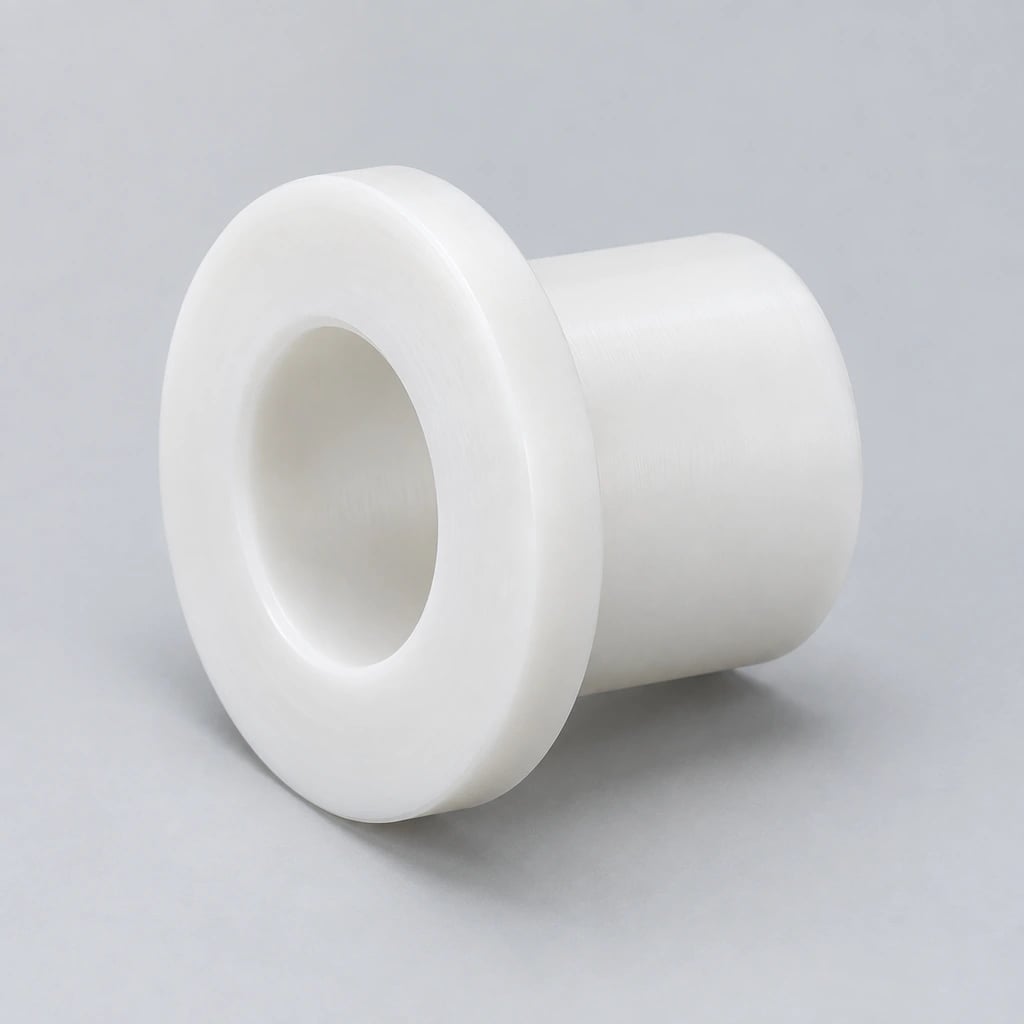
Select the Nylon grade
Nylon is a polymer family rather than a single specification. Grade, stock manufacturing method, fillers and conditioning can affect performance and machinability. State the required material or describe the application; do not substitute a generic Nylon label for an identified drawing requirement.
Moisture and dimensional control
Nylon can absorb environmental moisture, changing dimensions and properties. Agree whether inspection is performed on dry stock, conditioned parts or another defined state. For critical fits, supply the intended humidity and temperature conditions where known and identify the mating component.
Mechanical and wear applications
Gears, guides, rollers and bushings are common starting points, but load, speed, friction and lubrication determine suitability. Thermal movement and wear can affect clearances during use. Include duty cycle and assembly constraints so material selection and geometry can be reviewed together.
Manufacturing and inspection review
Milling and turning can produce pockets, bores, faces and rotational features. Workholding should support the component without unnecessary distortion. Inspect critical dimensions using the agreed method and conditions; a stable machine setup alone does not eliminate environmental dimensional change.
What to provide for quotation
Send the CAD model, drawing revision, Nylon grade, quantity, required fits, surface requirements and application. Identify any conditioning or documentation requirement. If the grade is still open, supply enough working-condition information to compare suitable stock materials rather than selecting only by color.
Send your requirements for engineering review
Include material, quantity, critical dimensions, surface requirements and the intended application. Use the complete CNC machining form to attach your CAD model or drawing.
Request a Drawing-Based Quote →