Excellent Machinability
Suitable tooling and chip evacuation can produce clean cuts and well-defined features. Machinability still depends on grade, tool condition, support and heat control.
PRECISION ACETAL COMPONENTS · MATERIAL-GRADE CONTROL
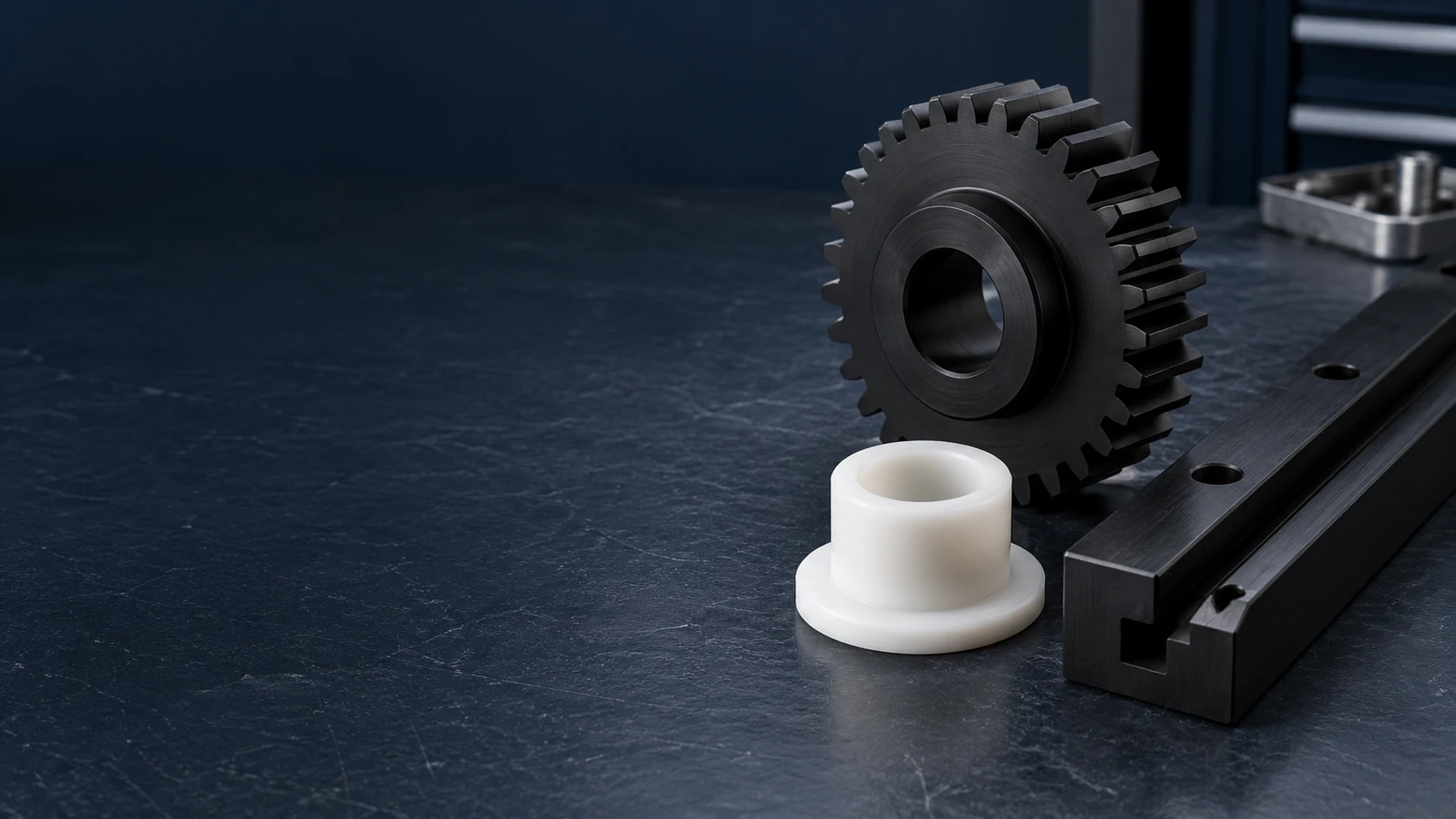
TOPS Plastics provides precision CNC machining of Delrin, POM and specified acetal grades for custom mechanical components requiring low friction, dimensional stability, wear resistance and clean machined features. We manufacture gears, bushings, rollers, guides, spacers, insulators, housings and other custom parts from drawings and CAD files.
Confirm POM-H or POM-C, actual supplier grade and critical fits. Our team reviews thermal movement, chip control, stock condition and inspection before quotation. Material availability, numerical tolerances and delivery are agreed per project.
Custom acetal machining starts with the actual grade, functional fits and inspection conditions. The quotation confirms material availability, process scope, quantity and delivery.
| Capability | TOPS Plastics project scope |
|---|---|
| Material Family | POM / acetal; exact supplier grade to be specified. |
| Common Names | Polyoxymethylene and acetal; Delrin is an acetal homopolymer brand. |
| Processes | CNC milling, turning, drilling, tapping and boring; selected multi-axis work after review. |
| Grades | POM-H, POM-C and filled or modified grades subject to availability and approval. |
| Typical Parts | Gears, bushings, rollers, guides, spacers, insulators and drawing-based components. |
| Production | Prototype, low-volume and repeat production. |
| Input | CAD and drawings; samples can support review but need defined acceptance dimensions. |
| Files | STEP / STP, IGES / IGS, X_T, DWG, DXF, PDF or ZIP. |
| Inspection | Dimensional inspection to drawing with agreed reporting scope. |
POM, or polyoxymethylene, is the polymer family commonly called acetal. Delrin is a well-known acetal homopolymer brand. Other POM materials include copolymers and modified formulations.
These names are often used interchangeably in an RFQ, but a controlled specification should identify the actual supplier grade. POM-H describes homopolymer acetal; POM-C describes copolymer acetal. A generic POM-H stock is not necessarily Delrin-branded material.
If the drawing calls for Delrin, confirm whether the brand is mandatory or an approved equivalent is acceptable. Specify the supplier designation, stock form, color and required records. Color alone does not establish grade, filler content, food-contact status or medical suitability.
Technical references: Delrin design guide
Both families are readily machinable. Their differences matter when load, chemistry, stock section or documentation drives the material decision.
| Factor | POM-H | POM-C |
|---|---|---|
| Structure | Acetal homopolymer. | Acetal copolymer. |
| Familiar example | Delrin resin family; confirm actual supplied stock. | Supplier-specific acetal copolymer grades. |
| Stiffness | Often higher in comparable unfilled grades. | Often somewhat lower; compare actual grade data. |
| Strength | Often higher in comparable unfilled grades. | Grade-dependent; assess the required property. |
| Chemical resistance | Review medium, concentration and temperature. | Can be advantageous in selected chemical environments; not universally resistant. |
| Center-line porosity | Stock processing can create core porosity, particularly in larger sections. | Generally a lower tendency; supplier and stock condition still matter. |
| Dimensional behavior | Good when stock, temperature and loading are controlled. | Good when stock, temperature and loading are controlled. |
| Machinability | Generally excellent for suitable geometry and setup. | Generally excellent for suitable geometry and setup. |
Choose using mechanical load, service environment, section size, finish, inspection and supplier data. Filled, lubricated or other modified grades can change the comparison; do not apply unfilled-material expectations to every formulation.
For a sealing component or a part with a bore through the stock center, discuss stock integrity and any acceptance requirement for porosity. Do not assume a finished surface appearance proves that the core meets the requirement. No grade substitution should be made without approval.
Technical references: Ensinger POM-H stock material data
Acetal is a practical candidate for precision mechanical components where machinability, sliding behavior and moderate service conditions are important.
Suitable tooling and chip evacuation can produce clean cuts and well-defined features. Machinability still depends on grade, tool condition, support and heat control.
POM is widely used for fitted mechanical parts. Confirm stock condition and the released-part measurement state; thermal movement remains relevant.
Sliding and rotating interfaces can benefit from low friction. Review counterface, load, speed and lubrication rather than assuming every application can run dry.
Consider gears, bushings, guides and rollers with an appropriate grade. Wear life depends on operating conditions and needs representative evaluation.
Acetal generally absorbs less moisture than Nylon, which can help retain fit across changing humidity. Uptake is not zero; compare exact grades and exposure.
POM offers useful rigidity for many functional polymer parts. Recheck deflection, fastening and creep before substituting for a metal component.
Select the operation for the geometry, datum relationships and supported final inspection state.
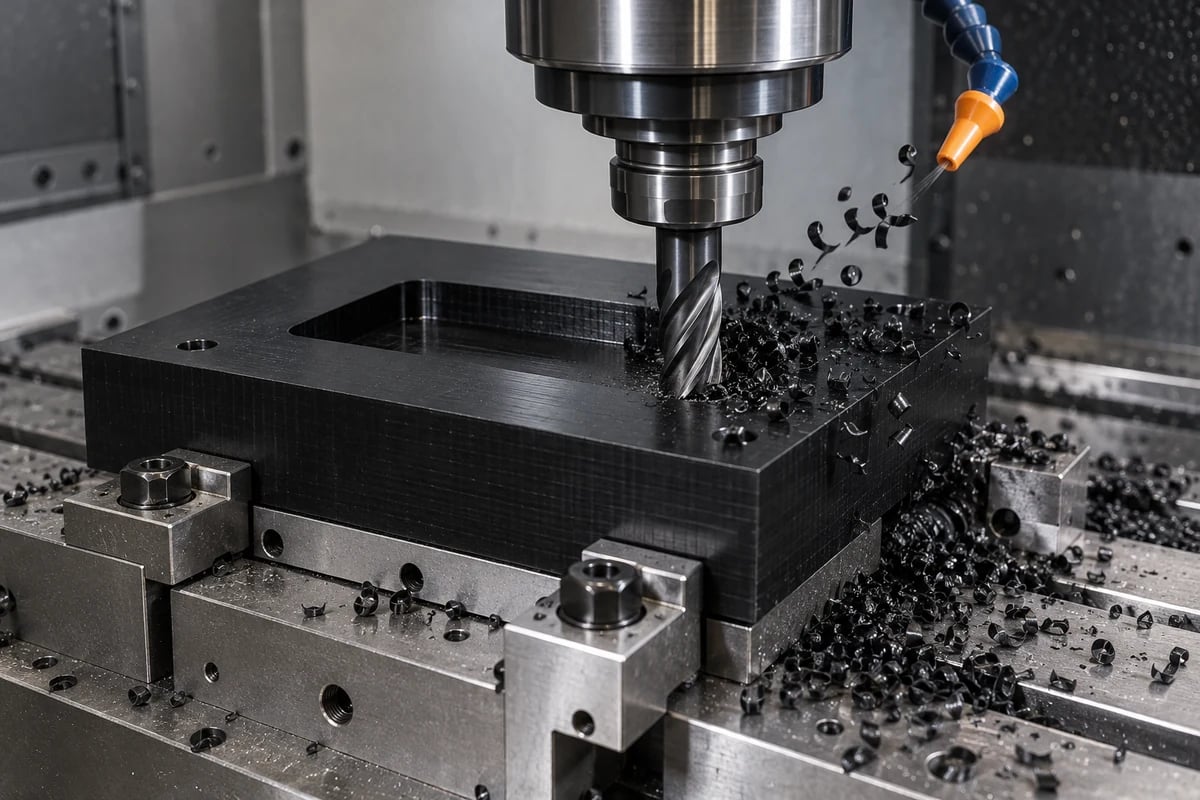
For plates, housings, fixtures, gears, guides, blocks, manifolds and multi-face parts. Review pocket depth, corner radii, stock removal and clamping.
Learn more →For bushings, sleeves, rollers, rings, spacers, bearing components and threaded cylinders. Define OD-to-ID relationships, runout and the datum axis.
Learn more →Review compound angles, contours and features across multiple faces. Fewer setups may help feature relationships, but tool and holder access still govern feasibility.
Learn more →Create precision holes, bores, threads, counterbores and bearing seats. Agree engagement, edge condition and verification for functional fits.
Learn more →POM combines useful stiffness, favorable cutting behavior and relatively low moisture uptake. These qualities make it a common choice for machined mechanical parts.
A suitable sharp tool and engagement can form manageable chips. Chip shape varies with operation and grade; confirm evacuation rather than assuming all chips break automatically.
Controlled cutting and chip removal support consistent surface appearance. Recutting, rubbing or dull tooling can still mark the surface.
Supported stock can hold local features well. Thin walls and unsupported spans remain vulnerable to deflection.
Rotational geometry suits controlled OD, bore and face operations. Excess chuck pressure can distort the released part.
Pockets, grooves, holes and locating surfaces can be machined effectively with suitable tool access and workholding.
Moisture effects are generally lower than Nylon, but grade, exposure and inspection state still need review for tight fits.
Good machinability helps process selection; it does not remove the need for controlled manufacturing. First-article evidence can reveal burrs, movement or an unsuitable setup before a repeat run.
The main risks are heat, deformation, chip control, stock stress, burrs and temperature-related size change. These become more important as sections thin and fits tighten.
Excess heat can affect dimensions and finish. Review cutting engagement, sharp tools, evacuation and compatible cooling before compensating with offsets.
High fixture or chuck pressure can compress or distort plastic. Support the part without forcing it into a temporary shape; verify after release.
Poor evacuation can drag chips across surfaces and generate additional heat. Deep pockets and bores need an appropriate removal strategy.
Stock history and uneven material removal can cause movement. Evaluate roughing sequence and released shape before completing tight features.
Fine burrs can remain on sharp edges, threads and intersecting holes. Specify edge breaks and protect functional geometry during deburring.
POM expands more than common metals. A warm shop-floor measurement may differ from the service fit or a cooled final inspection.
There is no single tolerance suitable for every POM part. Size, walls, geometry, stock condition, clamping, temperature and measurement method determine what can be held and verified.
| Feature | Main consideration |
|---|---|
| Outside diameter | Heat, cutting pressure and released-part size. |
| Bore | Wall thickness, finishing method and clamping distortion. |
| Flatness | Residual stress, support and removal sequence. |
| Thin wall | Deflection during machining and after release. |
| Long part | Thermal expansion and support during measurement. |
| Gear tooth | Tooth specification, tool path and an appropriate inspection method. |
| Thread | Engagement, material strength and mating hardware. |
| Precision fit | Temperature, mating-part tolerances and assembly conditions. |
Identify the critical fits, datums and units on the drawing. Numerical capability is reviewed for the actual feature and grade; competitor tolerance claims are not a basis for a TOPS quotation. A small supported bore and a large thin plate present different risks.
Agree whether you need selected-feature measurements, first-article reporting or a full dimensional report. Contact force, temperature and restraint can affect readings. Inspection must represent the accepted part state, not merely its shape while clamped.
Send Your Drawing for a Tolerance Review →POM generally has lower moisture uptake than Nylon, but dimensions still change with temperature and loading. Tight fits should account for inspection and service conditions.
Expansion is typically greater than steel or aluminum. Review the actual grade coefficient, part length, mating material and temperature range. Define the agreed reference temperature for acceptance.
Lower uptake than Nylon can help dimensional consistency across humidity changes. It is not zero absorption; confirm grade and exposure where long-term fit matters.
Sustained load and temperature can change shape over time even when initial dimensions meet the drawing. Review bearing load, fastener pressure and long-term clearance.
For a POM bushing in a metal housing, do not select a fit from room-temperature measurements alone. Differential expansion can change clearance or interference. Supply operating temperature, load and mating-part data before approving the fit.
Allow a recently machined part to reach the agreed measurement condition before final acceptance when necessary. Record conditioning and temperature for disputed tight dimensions. Dimensional stabilization is reviewed per project, not treated as a universal annealing cycle.
Use DFM to preserve functional geometry while avoiding unnecessary setup, distortion and inspection difficulty.
Prioritize bores, mating faces, tooth geometry and locating surfaces. Broader tolerances on nonfunctional features can reduce cost without affecting performance.
Thin features can flex during cutting, assembly or clamping. Review support and inspect in the released state.
Allow corners compatible with rigid cutters and suitable access. Perfectly square enclosed corners may require redesign or another operation.
A thin surrounding wall may distort under pressure. Review stock support, finishing sequence and the functional fit after release.
Design clearances for the expected service temperature and mating material, not only a nominal room-temperature dimension.
Specify designation, engagement, loads and assembly torque. Inserts or metal hardware may need review for repeated tightening.
Specify chamfers or controlled deburring where fine burrs could affect installation, motion or safety. Protect seals and sharp functional edges.
Identify POM-H, POM-C or modified formulation and supplier designation. “Black Delrin” alone does not define the material performance or brand requirement.
Provide an annotated 2D drawing with the 3D model. Resolve conflicting revisions before manufacture. Customer approval controls DFM changes, substitutions and any simplified prototype features.
These are illustrative drawing-based component families, not fixed catalog items or verified customer projects. Delrin-branded supply is confirmed when specified.
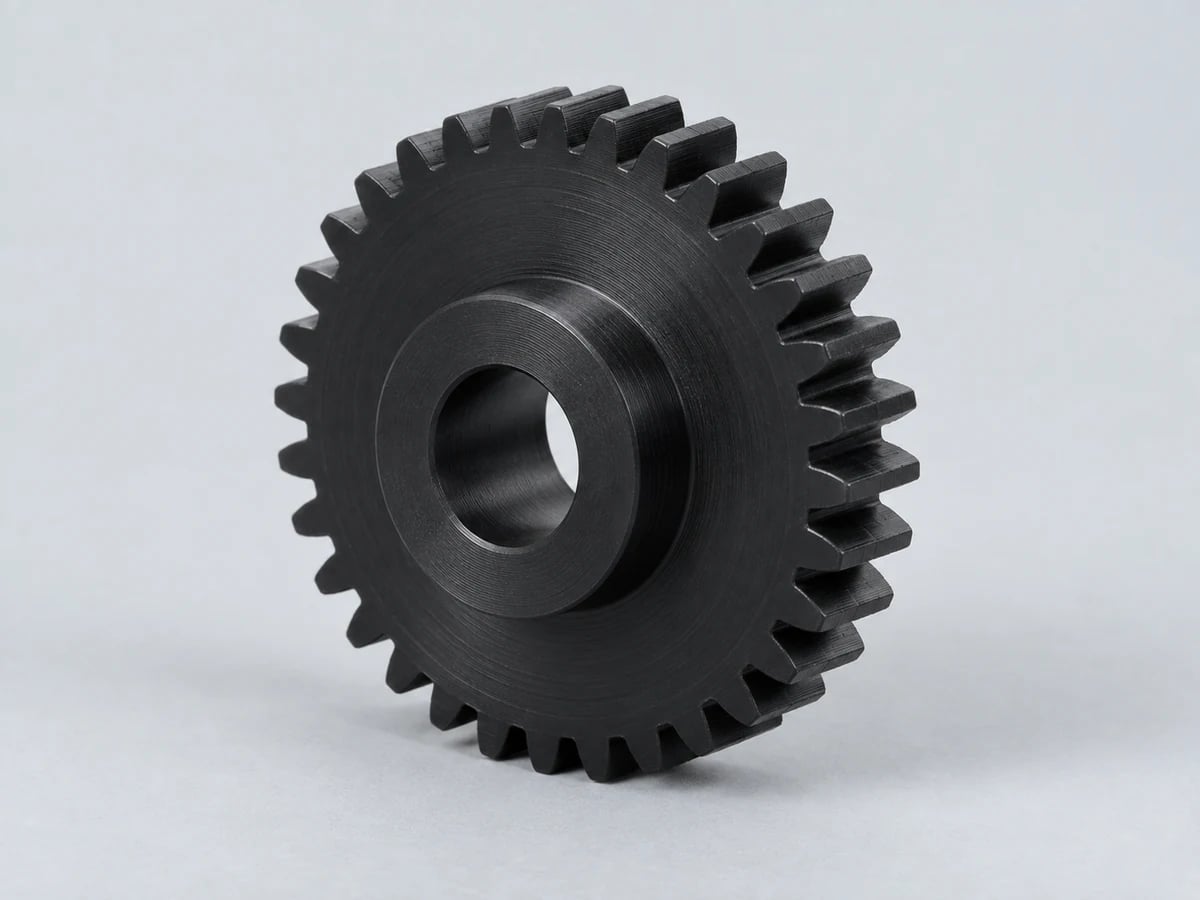
Specify tooth form, pitch, mating gear, backlash, load and speed; do not infer life from a fit test.
Learn more →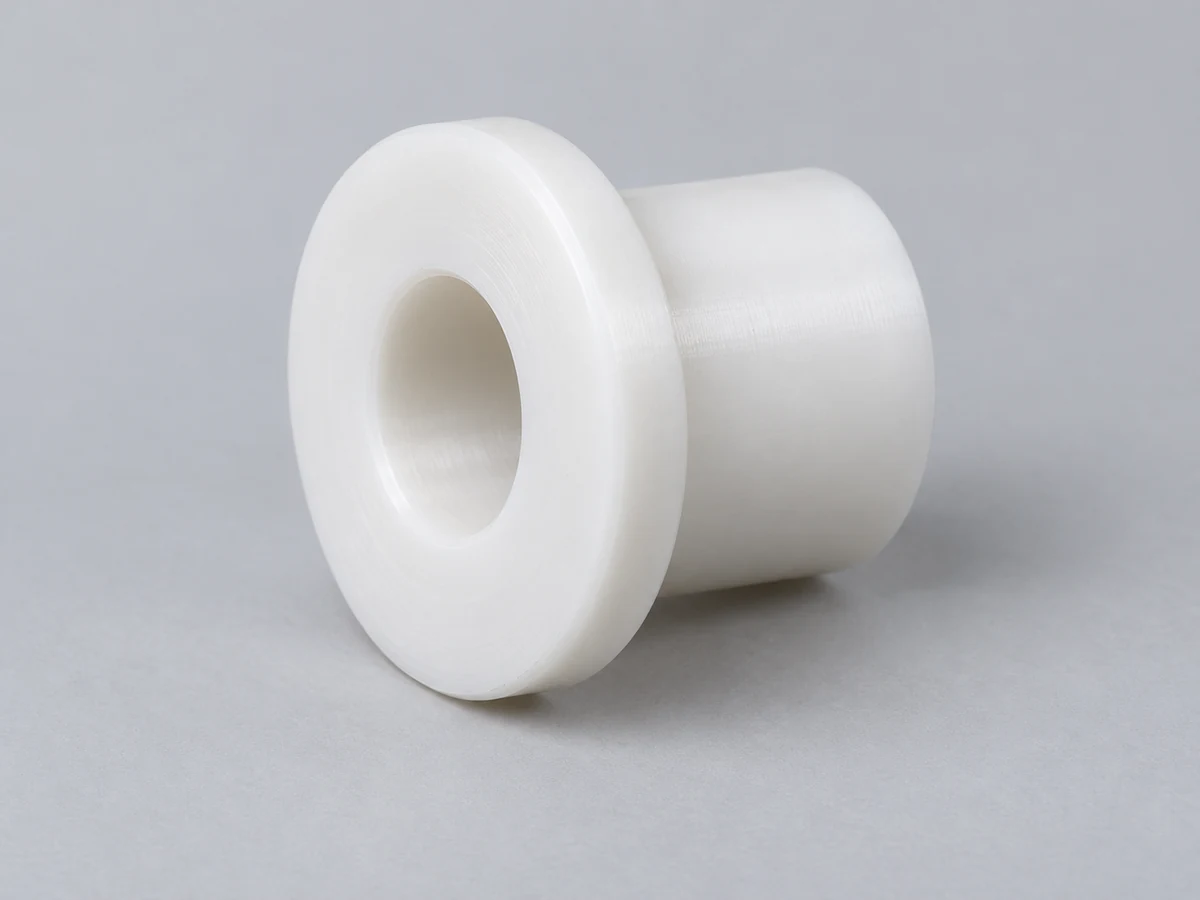
Define shaft and housing fits, bore, OD and temperature-dependent clearance.
Learn more →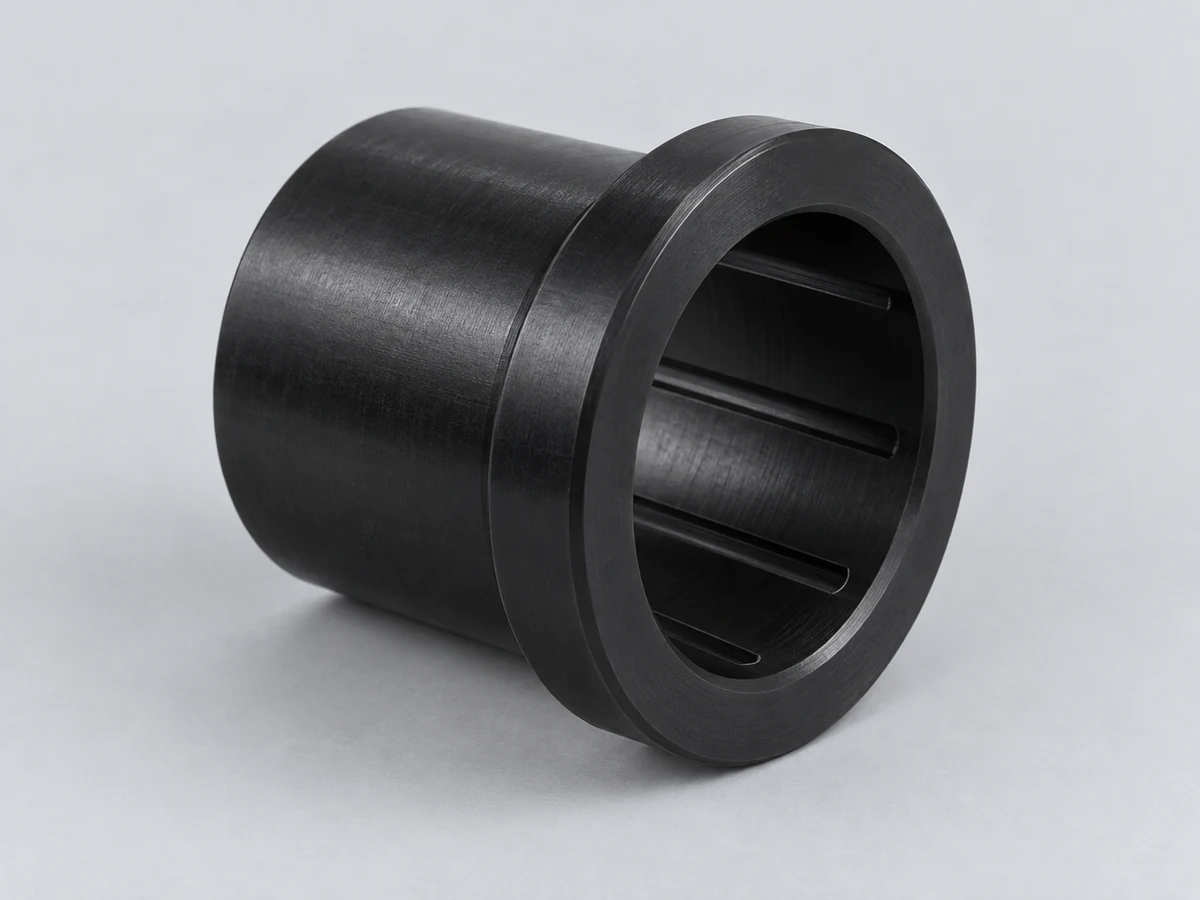
Review plain bearing clearance, load, speed, lubrication and counterface finish.
Learn more →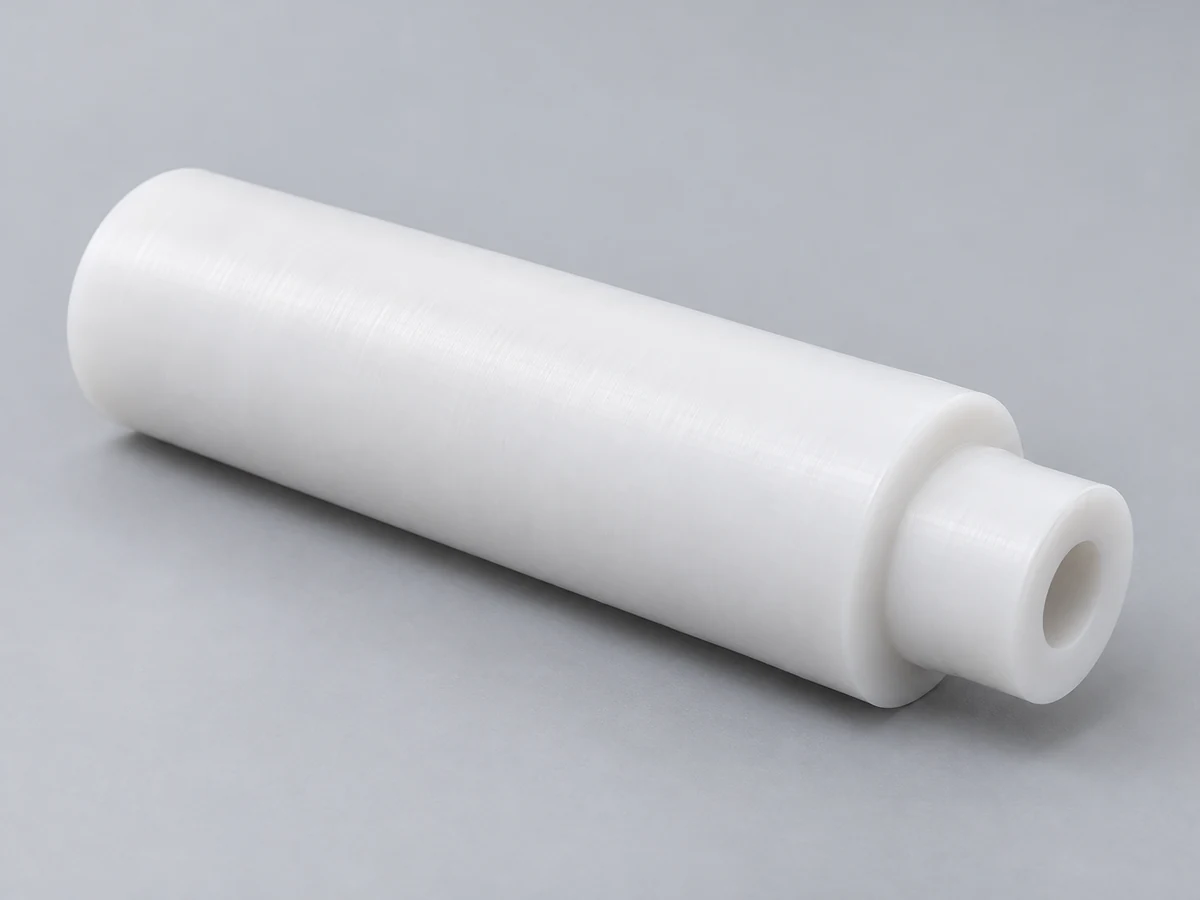
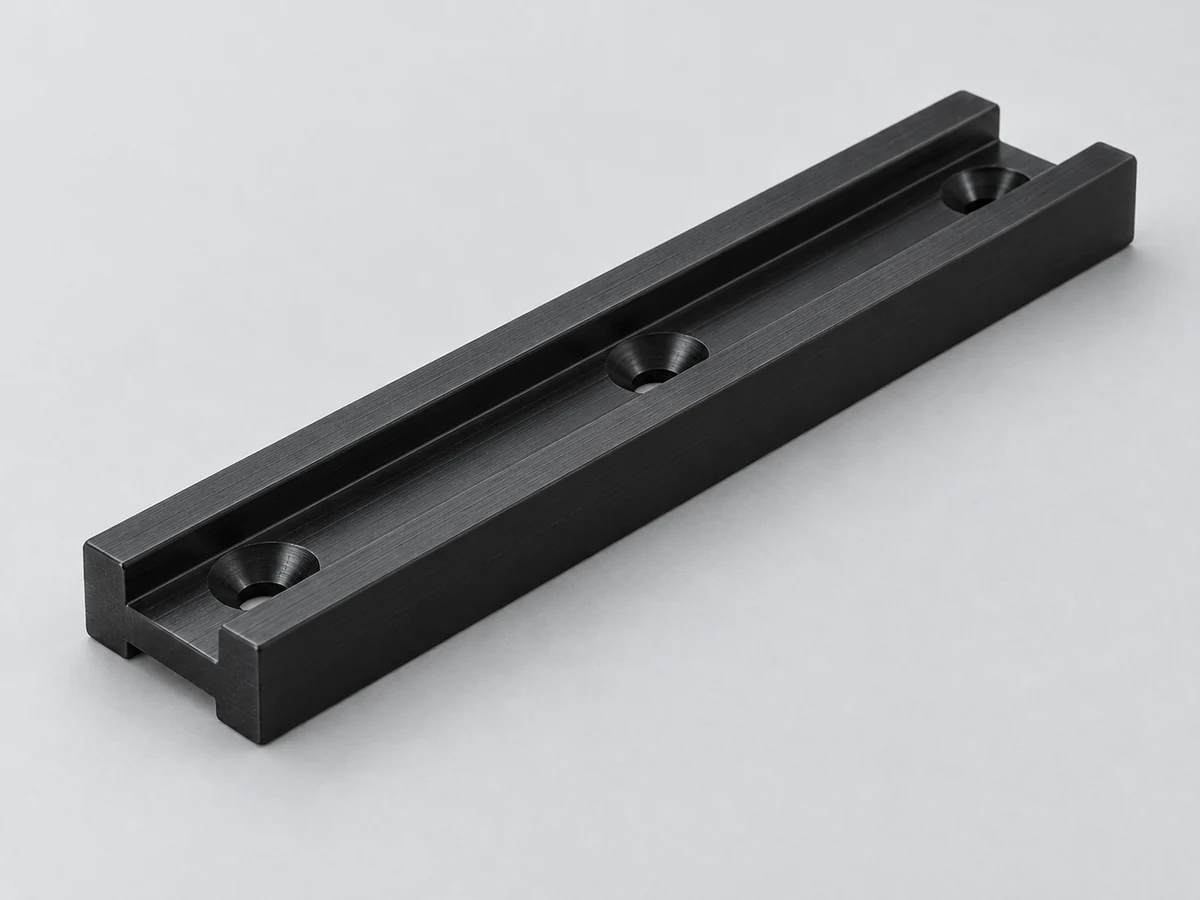
Define profile, mounting, wear allowance and thermal movement along the guide.
Learn more →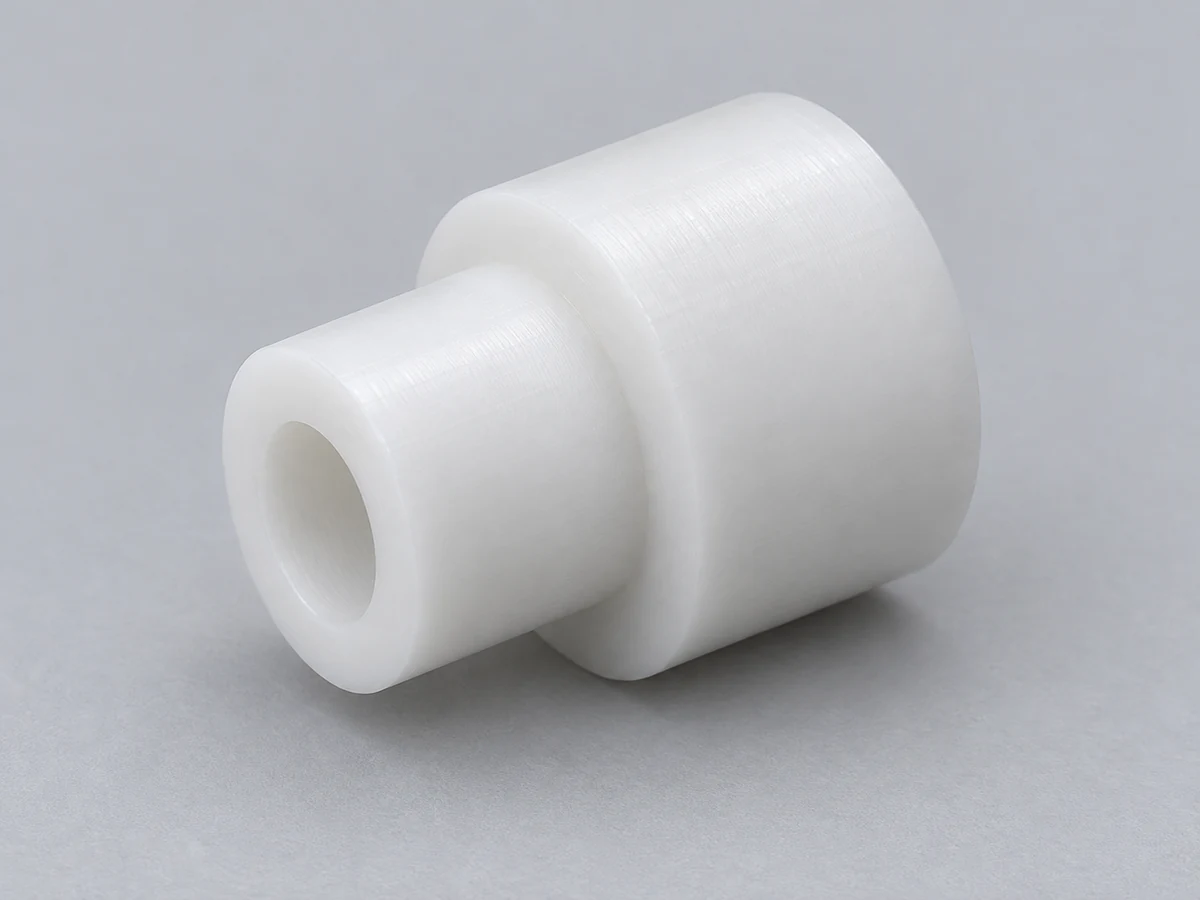
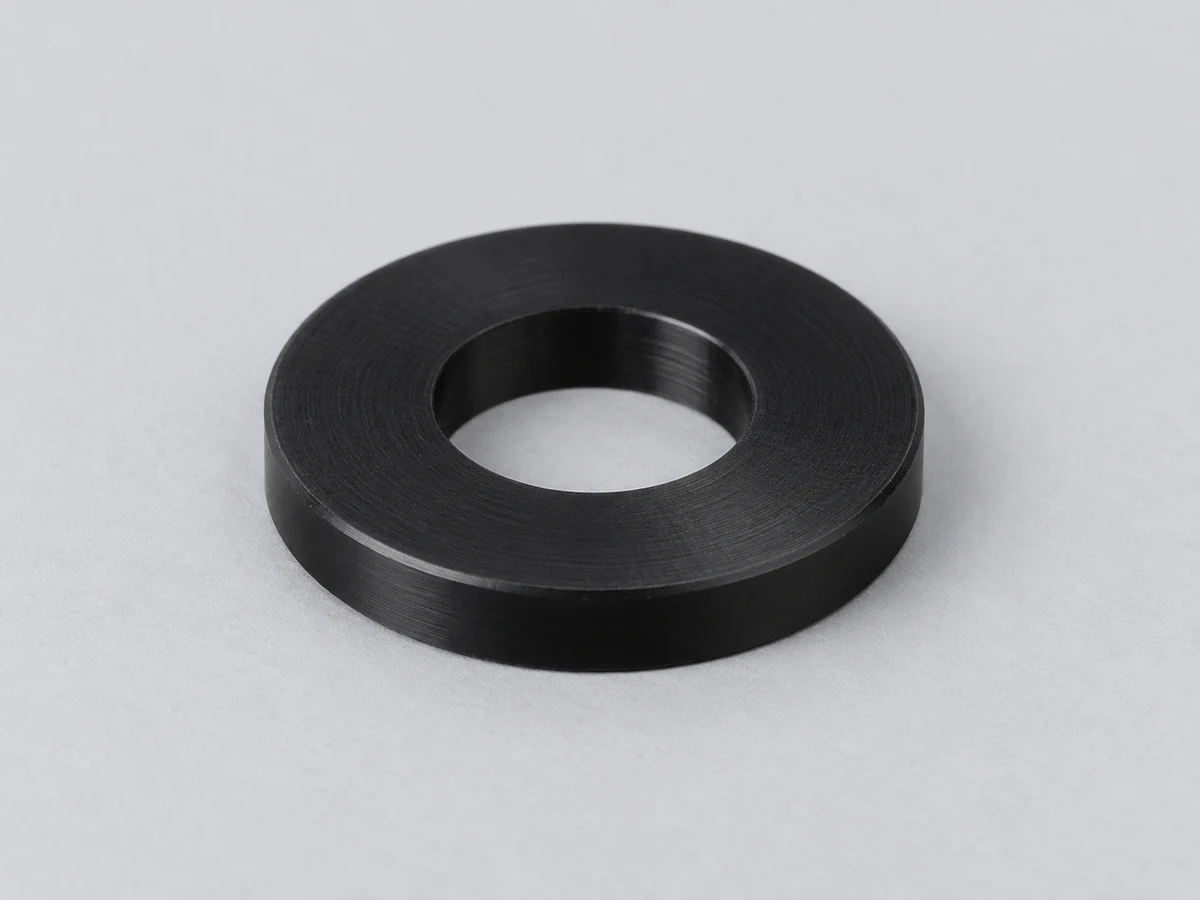
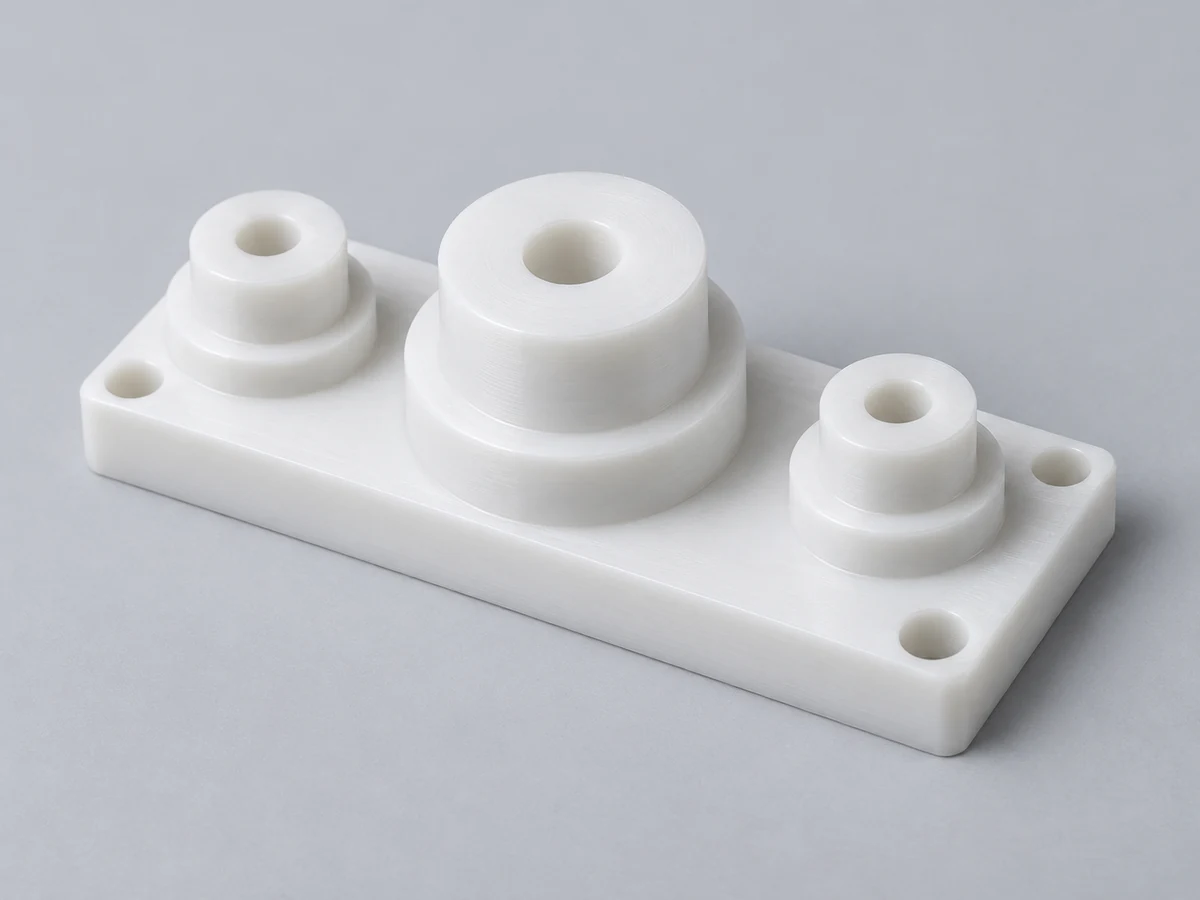
Confirm electrical requirements for the exact grade and any modified formulation.
Learn more →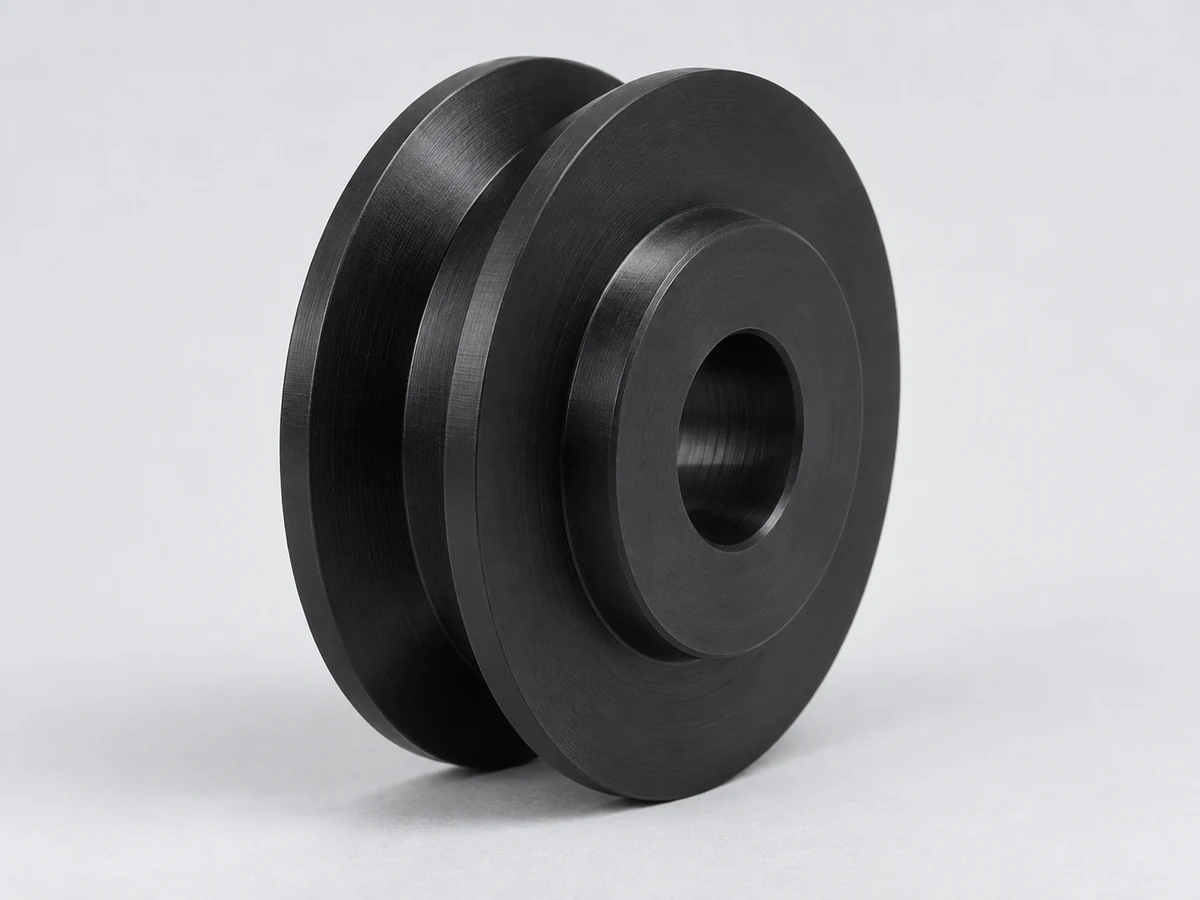
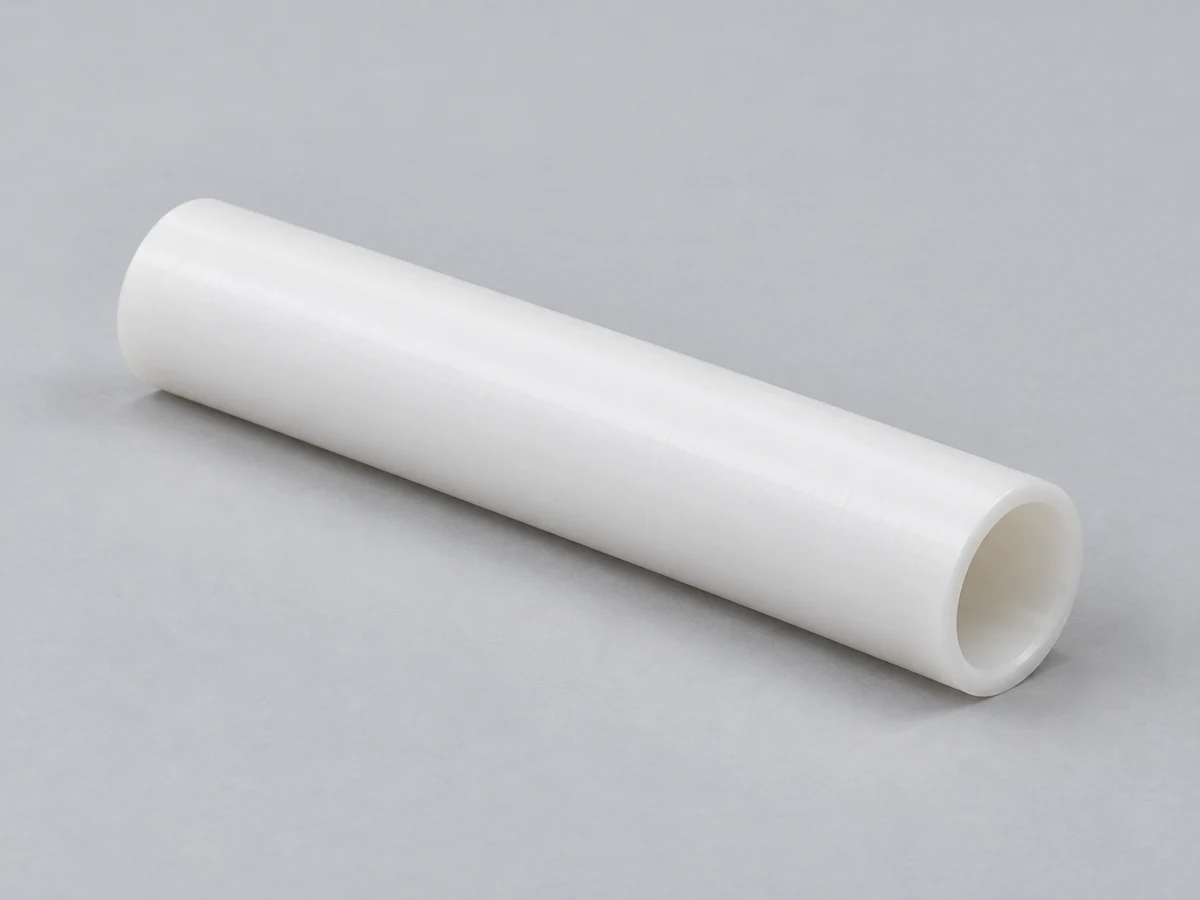
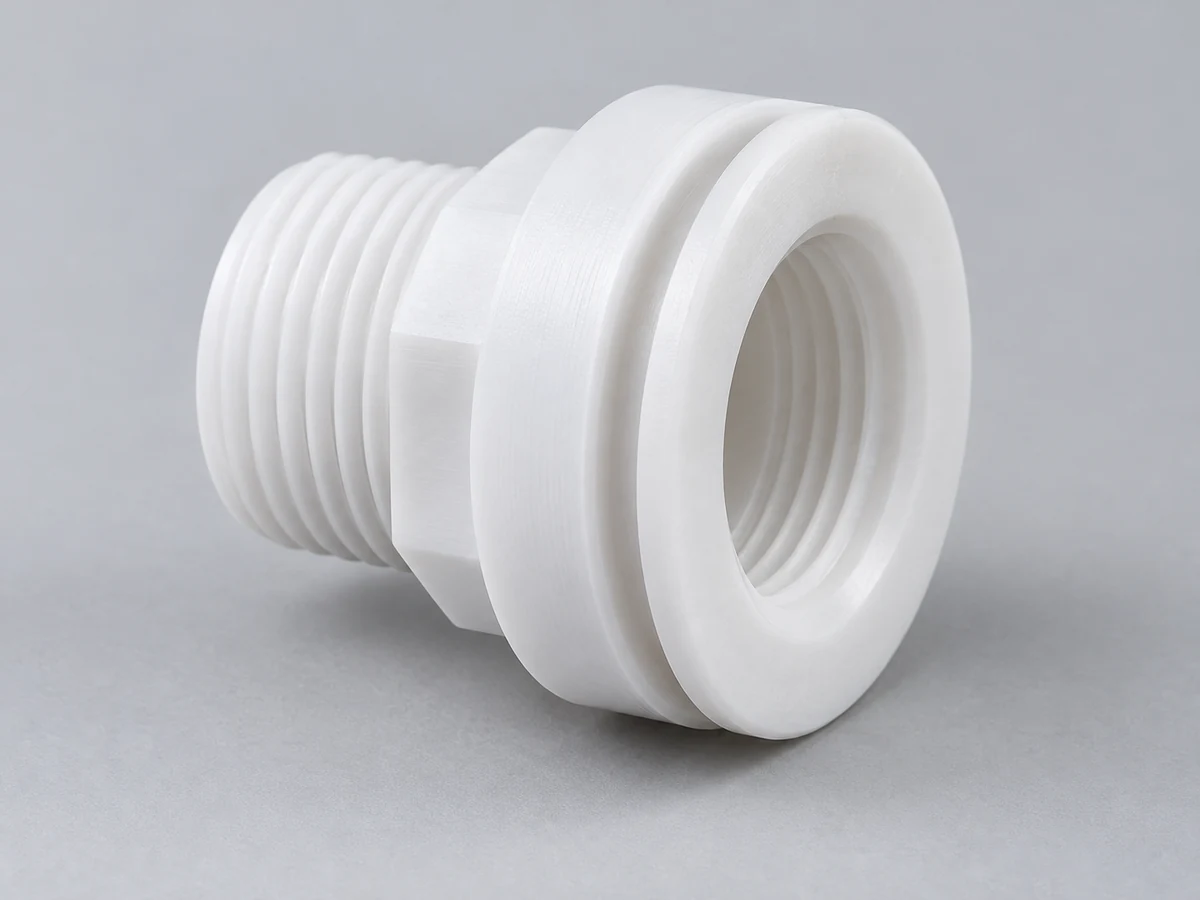
Review chemical exposure, sealing profile and separate pressure or leakage tests.
Learn more →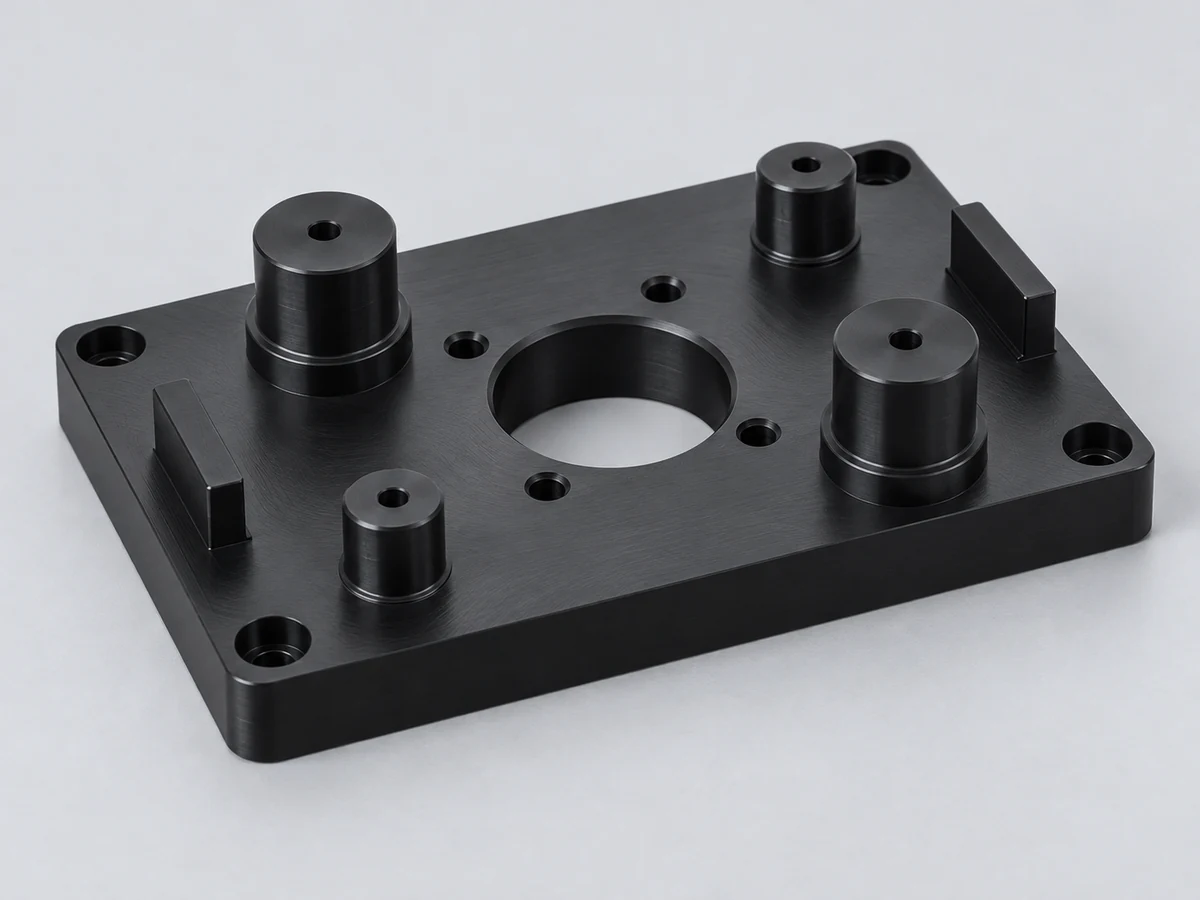
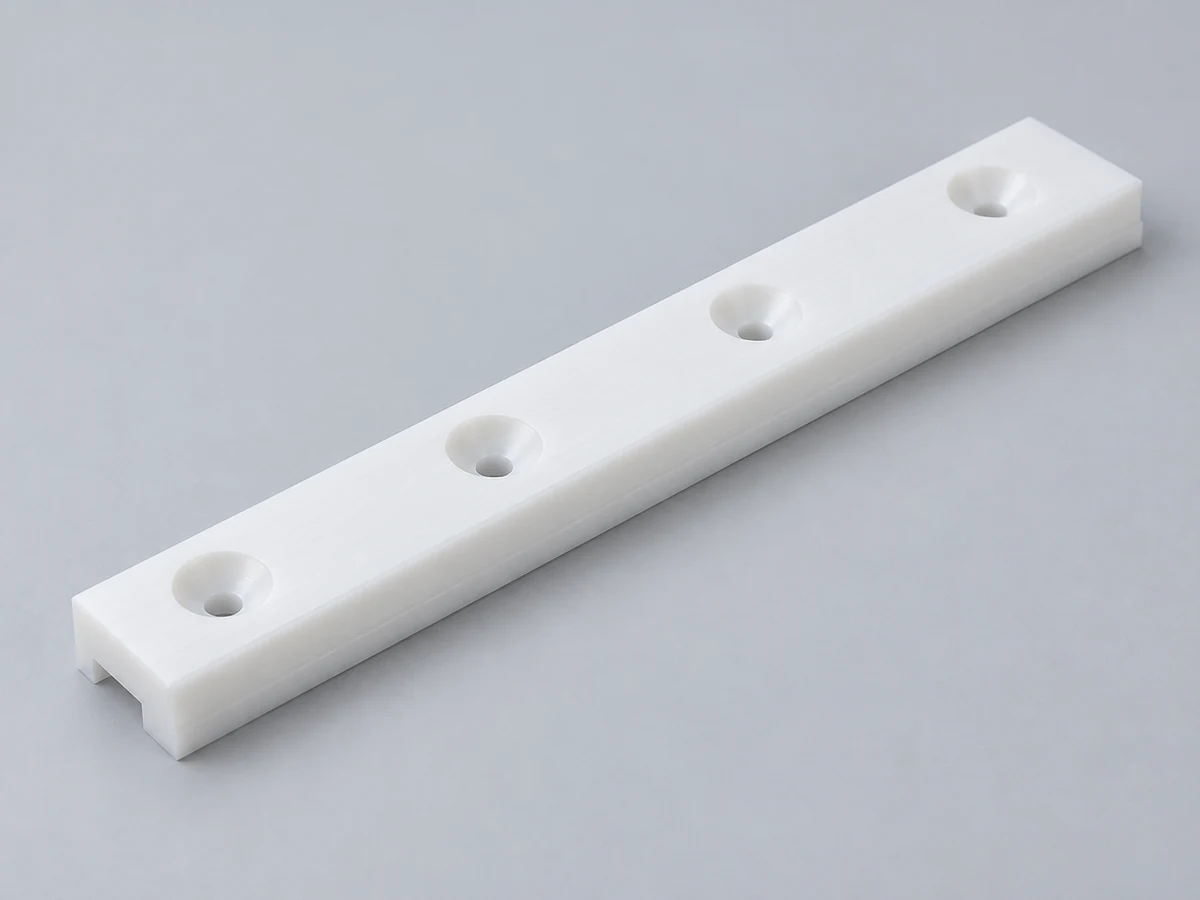
Select grade and geometry for wear, speed, load and replacement access.
Learn more →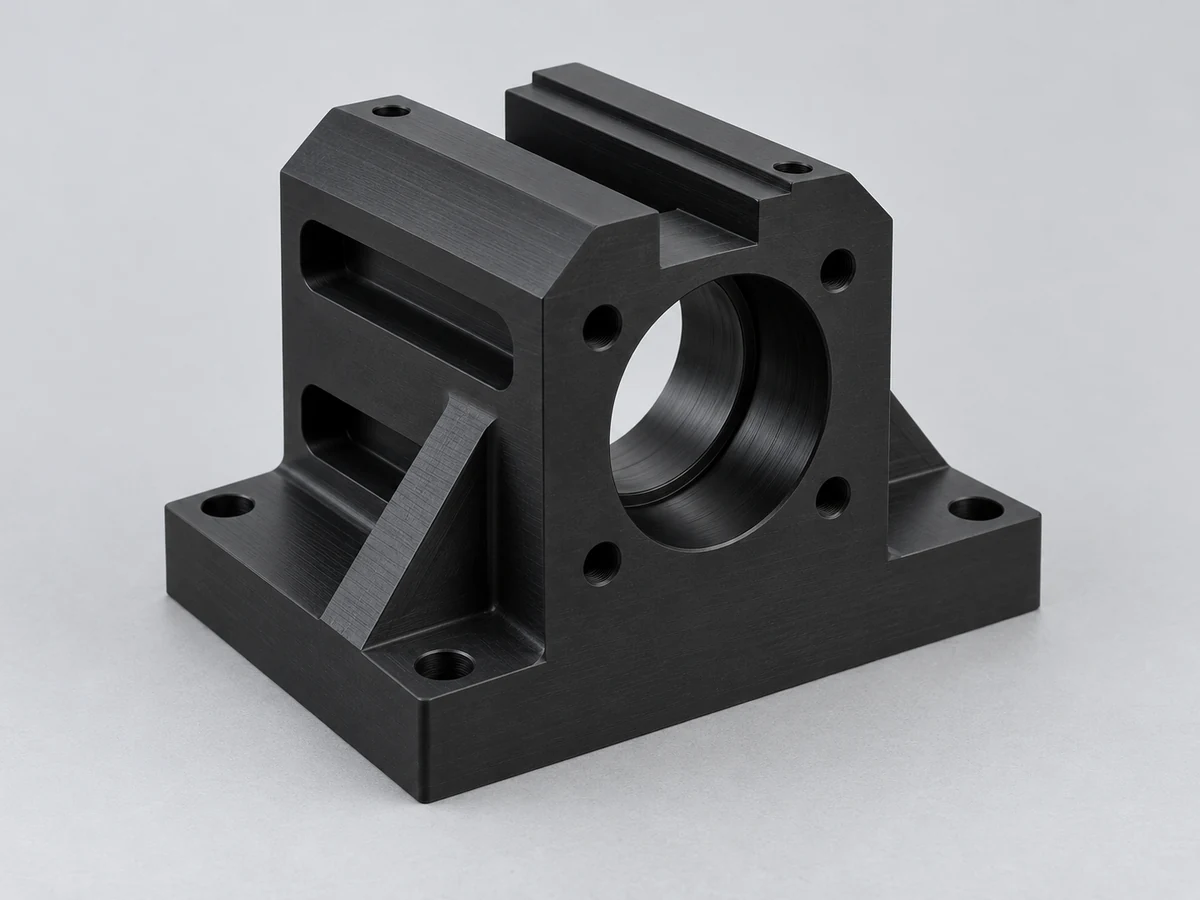
Define functional interfaces, locating surfaces and accepted dimensional relationships.
Learn more →Sharp tools, controlled cutting and effective chip evacuation can produce a clean machined surface. Define appearance and functional texture separately.
Often suitable as the final surface. Specify acceptable tool texture on visible, sliding and mating areas.
Review finishing strategy for controlled surfaces; no universal roughness capability is claimed.
Define a consistent chamfer or radius where assembly and handling require it.
Remove fine burrs without changing bores, seal lands or tooth geometry.
Specify marking position, depth and traceability while protecting functional features.
Confirm feasibility and acceptance for the grade. Polishing cannot correct a distorted part or unsuitable fit.
Acetal has relatively low surface energy, which can make paint, coatings and adhesive bonding difficult. Do not assume a conventional coating or glue will adhere reliably. Confirm a material-specific treatment and validation if the assembly requires adhesion; otherwise evaluate a natural machined finish or suitable mechanical joining.
Inspection conditions are part of the tolerance plan. Verify critical-to-quality features with suitable support, contact force and temperature.
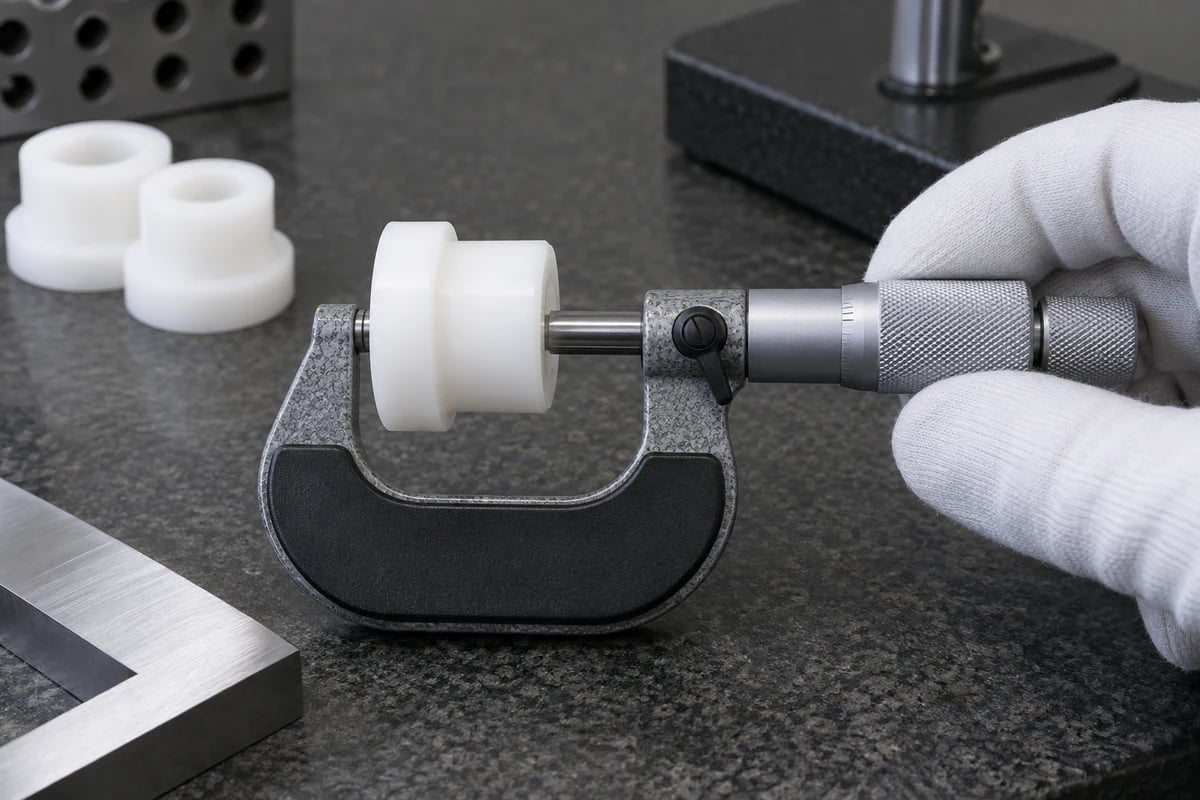
Check local dimensions using suitable methods and measurement force in the agreed released state.
Relate measurements to drawing datums and define support and restraint.
Inspect the specified tooth geometry, bore and mounting relationship with an appropriate method.
Verify thread requirements and critical fits; define any separate assembled fit check.
Use the drawing-defined datum axis and control method. Clarify ambiguous legacy concentricity requirements before inspection.
Check sharp edges, passages and functional surfaces before protecting them for shipment.
Agree grade identification, lot traceability and report scope before ordering. First-article and in-process checks can identify movement or tool wear before repeating a setup. Do not assume full reporting, special certification or functional life testing is included without confirmation.
Shipment inspection should confirm burr control and protection of bores, gear teeth, seal surfaces and thin sections. Packaging supports dimensional protection; it does not establish food-contact, medical or cleanliness compliance.
Choose the material for the operating requirement, not solely for machinability. Grade-specific data and testing control the decision.
| Material | Known strengths | Compared with POM |
|---|---|---|
| POM / Delrin | Machinability, low friction and dimensional control. | Baseline candidate for many moderate-condition mechanical parts. |
| Nylon | Toughness and wear behavior. | Generally more moisture-sensitive; conditioning can change fit. |
| PEEK | Combined thermal, chemical and mechanical performance. | Often higher-cost for more demanding conditions; compare exact grades. |
| PTFE | Low friction and chemical resistance. | Softer and less rigid; creep and loaded fits need attention. |
| UHMW | Abrasion and impact performance. | Flexibility, expansion and long sections can complicate tight dimensional control. |
| Polycarbonate | Impact resistance and transparency. | A different role for guards, housings and transparent components; sliding use needs review. |
Nylon versus POM is particularly relevant for gears, bushings and rollers. Humidity, counterface, loading, impact and service temperature may matter more than a generic strength comparison. Confirm both candidate grades and the conditioning state for a meaningful test.
Compare engineering plastic selection →Examples show where acetal mechanical parts may fit. Industry labels alone do not establish grade suitability or approval.
Gears, guides, rollers and spacers require motion, load, cycle and installation review.
Bushings, pulleys, guides and replaceable wear parts need clearance, load and service-access information.
Insulators, spacers and fixtures require grade-specific electrical and thermal review.
Mechanical equipment parts require suitable grade documentation and defined device requirements; no implant suitability is assumed.
Gears, guides, clips and mechanical interfaces require temperature, load and customer acceptance review.
Use only a selected grade with appropriate food-contact documentation for the intended conditions. Generic POM is not automatically compliant.
Guides and rollers can support transport and sliding applications; review speed, contact, cleaning and wear.
Valve and mechanical parts need actual chemical medium, concentration, pressure and temperature review.
Approved geometry, material and inspection data can guide pilot and repeat orders. Changes in grade or process require review.
Validate dimensions, fit and function using defined test conditions. Record any deviations from the intended production grade or route.
Machine specialized parts without an injection mold. Programming, fixtures and stock preparation still have setup cost.
Control grade, stock, revision, tooling and inspection for recurring OEM gears, bushings, rollers and other parts.
Share current quantity and anticipated repeat demand. Review batch inspection, stock availability and packaging before scaling. A successful prototype does not automatically qualify every later lot or a change to injection molding.
Review functional prototype requirements →Our quotation review connects material identity, functional fit and manufacturing acceptance before production.
Review thermal movement, clamping, creep and polymer-specific inspection issues.
Confirm actual supplier grade, brand requirement and approved substitutes.
Select operations for rotational or prismatic geometry and related features.
Focus on gears, bushings, rollers, guides and interfaces that control function.
Discuss walls, radii, bores, threads and temperature-aware fits.
Use approved development evidence to plan pilot and repeat batches.
Agree CTQ measurements, conditions and reporting scope.
Controlled customer revisions and acceptance notes govern the supplied component.
Adapt the route to the grade, stock, geometry and critical fits. Stabilization and additional reporting are agreed where needed.
Provide model, annotated drawing, revision and units.
Identify POM-H, POM-C or another formulation; confirm whether Delrin brand is mandatory.
Specify mating parts, clearance, datums and service temperature.
Resolve access, thin walls, radii, bores, threads and edge breaks.
Confirm approved stock and required grade or lot records.
Machine with suitable support, tooling and chip evacuation.
Remove fine burrs while protecting functional dimensions and surfaces.
Allow the part to reach the agreed condition and assess movement where necessary; no universal treatment cycle is assumed.
Verify CTQ dimensions and agreed finish at the specified measurement conditions.
Protect teeth, bores, sliding surfaces and thin sections for shipment.
Direct answers to acetal identity, POM-H versus POM-C, precision fits and machining questions.
Delrin is an acetal homopolymer brand within the POM family. POM also includes copolymer and modified grades. Specify the actual grade and brand requirement rather than treating every acetal as interchangeable.
POM-H is homopolymer acetal and POM-C is copolymer acetal. Comparable unfilled homopolymers often have higher stiffness and strength, while copolymers can offer advantages in selected chemical and stock-integrity requirements. Compare actual supplier grades.
Delrin is generally readily machinable with suitable tools and support. Heat, chip recutting, burrs, clamping and stock stress can still affect the result, especially for thin sections or tight fits.
There is no universal tolerance. Size, grade, geometry, stock condition, workholding and inspection temperature determine feasible control. Send the drawing and critical fits for a project-specific review.
POM is often attractive when lower moisture uptake matters for fit. Nylon can be suitable where toughness or other grade-specific properties are more important. Compare humidity, load, wear and temperature rather than choosing by polymer name alone.
Yes. Milling suits pockets, guides, plates and fixtures; turning suits bushings, sleeves, rollers and other rotational parts. Some designs combine operations after access and datum review.
Examples include gears, bushings, rollers, spacers, guides, washers, sleeves, pulleys and wear components. Confirm actual Delrin-branded stock when that brand is required and review the service conditions.
Yes, but generally less than Nylon. Uptake depends on grade and exposure. Tight fits should still consider conditioning, temperature and the agreed inspection state.
Yes. Its thermal expansion is typically greater than common metals, so a metal-to-POM fit can change with temperature. Use the actual grade data and service range when defining clearance or interference.
There is no single best grade. Load, speed, lubrication, counterface, wear, humidity and temperature determine suitability. Specify POM-H, POM-C or a modified formulation after reviewing supplier data and representative test requirements.
YOUR POM GRADE. YOUR FUNCTIONAL FITS.
Upload your CAD file or engineering drawing and specify the required POM grade, quantity, critical fits, dimensional tolerances, operating temperature and application. Our team can review material selection, machinability and critical features before quotation.
Include brand requirements, color, mating-part dimensions and load or wear conditions. Company, name, email and phone are required; project details and both uploads are optional.
info@tops-precision.comSTEP / STP / IGES / X_T / DWG / DXF / PDF or ZIP, maximum 10 MB. Larger files can be shared by email. Please agree confidential-file handling before sending sensitive drawings.