High Temperature Performance
Consider PEI where standard engineering plastics lose useful stiffness or strength. Confirm continuous and peak conditions against the selected stock grade.
ENGINEERED FOR THE DEMANDING DETAILS.
TOPS Plastics manufactures custom Ultem and PEI components using CNC milling, turning and multi-axis machining. We review high-temperature, electrically insulating and dimensionally stable parts from your CAD files and engineering drawings.
Specify Ultem 1000, glass-filled PEI or another exact grade. Reinforcement, service temperature, electrical requirements and material documentation help define a practical machining and inspection route.
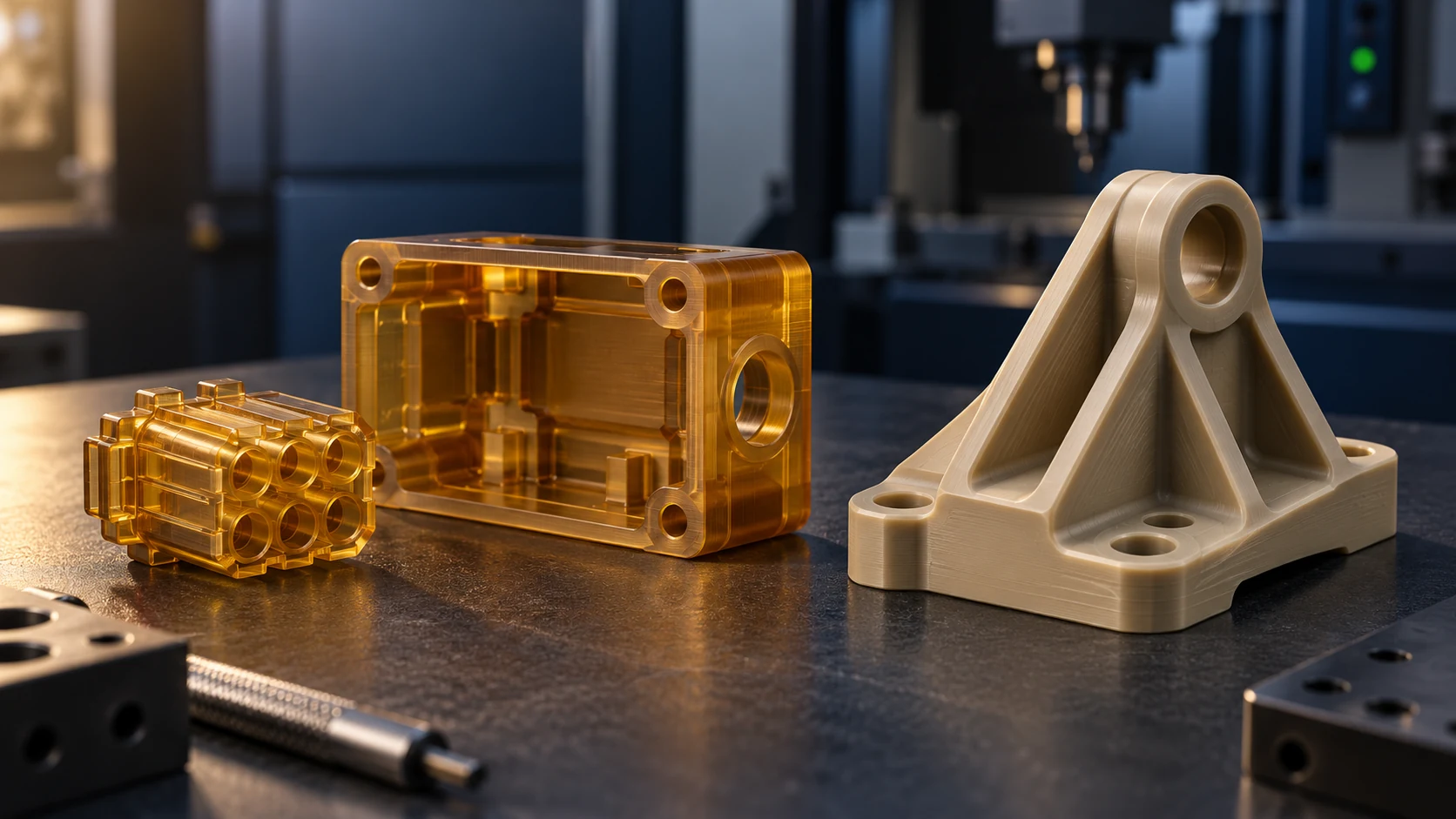
The application and drawing define the quotation. Grade availability, feature feasibility and required documents are confirmed for the actual project.
| Capability | TOPS Plastics project review |
|---|---|
| Material | PEI / polyetherimide; ULTEM is a SABIC trade name and material family. |
| Processes | CNC milling, turning, drilling, tapping, boring and suitable 5-axis operations. |
| Common grades | Ultem 1000, Ultem 2300 and other specifically requested PEI grades, subject to machinable-stock availability. |
| Typical parts | Insulators, brackets, housings, manifolds, fixtures and precision structural components. |
| Production | Prototype, low-volume and repeat orders with agreed acceptance criteria. |
| Input | CAD, engineering drawings and reference samples; samples alone may not define all tolerances. |
| Files | STEP / STP, IGES, X_T, DWG, DXF and PDF with units and drawing revision. |
| Inspection | Dimensional inspection to drawing plus agreed material and documentation checks. |
PEI, or polyetherimide, is an amorphous high-performance thermoplastic selected for heat resistance, strength, electrical insulation and dimensional stability. ULTEM is a SABIC trade name for a family of PEI resins and related blends.
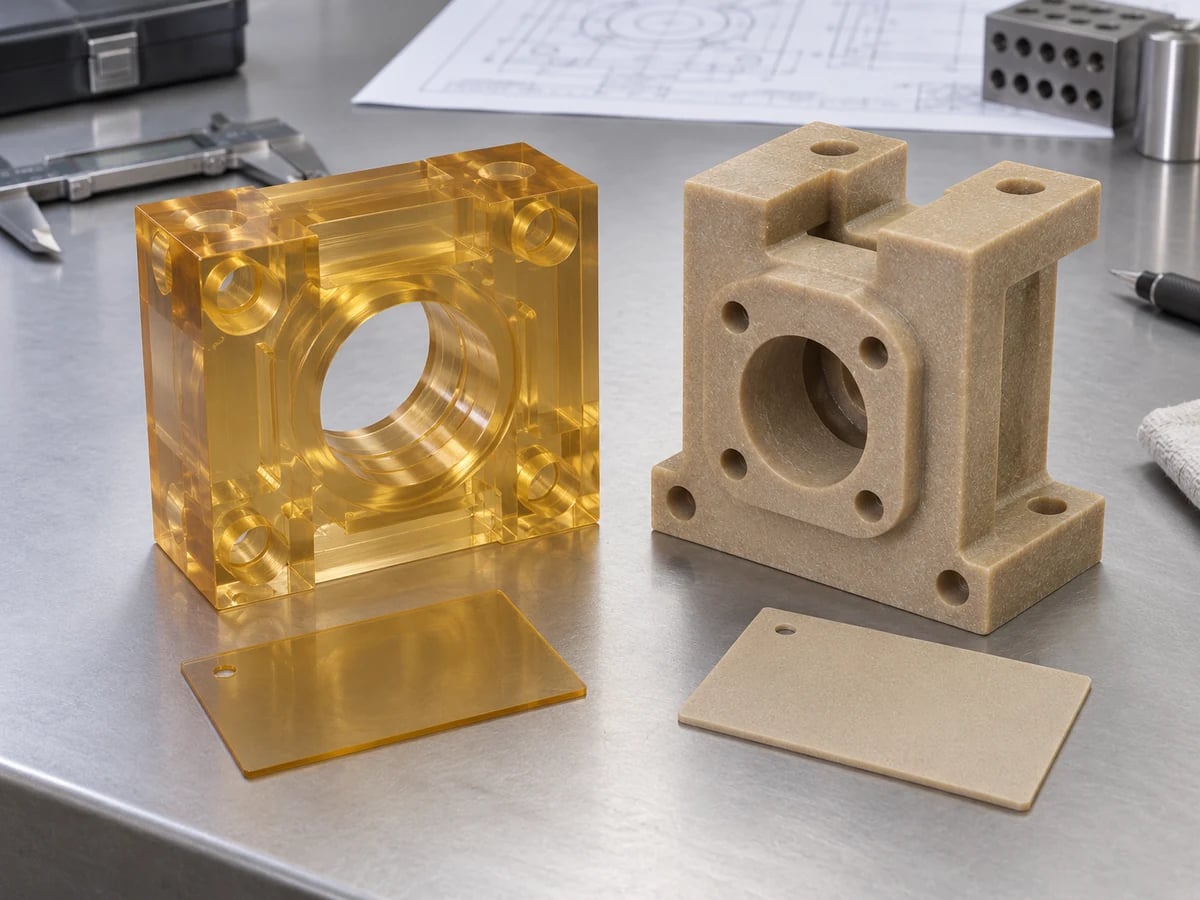
PEI can be CNC machined into insulators, connector components, semiconductor fixtures, equipment housings and structural brackets. Unfilled material commonly has a natural amber appearance; reinforced formulations may be opaque and have different mechanical and surface behavior. Color alone does not identify a grade.
A grade designation is essential. The resin, reinforcement, stock-shape manufacturing history and intended exposure all matter. Resin data should be checked against the supplied semi-finished stock and the finished component’s requirements.
Technical references: Ensinger PEI material guidance · SABIC ULTEM resin portfolio
PEI offers a useful balance of thermal, electrical and structural properties. Match those properties to the loading, exposure and documentation your component needs.
Consider PEI where standard engineering plastics lose useful stiffness or strength. Confirm continuous and peak conditions against the selected stock grade.
Useful for insulating supports, connectors and test fixtures. Define voltage, environment and critical isolation geometry.
Stiffness and low movement can help maintain interfaces, but thermal expansion and stock stress still require review.
Many grades provide useful flame performance without treating all formulations, colors or thicknesses as equivalent.
A candidate for load-bearing plastic components. Use grade-specific strength and stiffness values at the service temperature.
Helpful for sustained loads; assess duration, temperature, stress and reinforcement before approving a long-term fit.
Technical references: Ensinger PEI material guidance
Select the exact grade before evaluating the machining route. The following families guide the review; specialty formulations are not assumed to be stocked.
Unfilled PEI is a common starting point for high-temperature electrical insulators and general precision parts. Natural amber stock provides a relatively clean machined surface; exact stock designation and traceability remain important.
A 30% glass-fiber-reinforced PEI resin grade. Reinforcement generally increases stiffness and reduces thermal movement, while adding tool abrasion and directional effects. Confirm the matching semi-finished stock and supplier data.
If your drawing specifies 10%, 20% or another reinforcement level, supply the exact designation. We confirm stock form, availability and documentation before quoting that grade.
A formulation such as Ultem 9085 must be requested explicitly. It is a PEI blend; resin or additive-manufacturing availability does not prove machinable stock availability or finished-part compliance.
Healthcare, ESD and other specialty formulations require the exact grade, source and supporting documents. Biocompatibility, sterilization compatibility and electrical behavior must be evaluated for the actual application.
ULTEM is a trademark of SABIC. TOPS Plastics does not imply authorization by the trademark owner, automatic aerospace approval or blanket medical qualification. Documents and tests are agreed before purchase, and substitutions require customer approval.
Technical references: Ensinger PEI machining and stock grades · SABIC ULTEM resin portfolio
Ultem 1000 is unfilled; Ultem 2300 contains 30% glass fiber. Choose the reinforced option for a justified stiffness and stability requirement, after reviewing toughness, surface condition and tooling.
| Factor | Ultem 1000 | Ultem 2300 |
|---|---|---|
| Reinforcement | Unfilled PEI. | 30% glass-fiber-reinforced PEI. |
| Stiffness | Useful stiffness for general high-performance parts. | Typically higher modulus; confirm stock data and direction. |
| Dimensional stability | Good dimensional stability with proper machining. | Reduced thermal movement and higher stiffness can help; fiber orientation matters. |
| Toughness | Generally greater elongation than the reinforced grade. | Typically lower elongation; thin sections and notches need care. |
| Tool wear | Review cutter condition and heat generation. | Greater abrasion from glass reinforcement. |
| Electrical applications | A common insulator candidate; verify isolation and exposure. | Useful in suitable electrical designs; confirm grade-specific data. |
| Precision structural parts | Consider where the load and deflection are acceptable. | Consider for stiffness-driven components and reduced deflection. |
| Surface finish | Usually a cleaner, more uniform visible surface. | Filler can influence texture and exposed fibers. |
Start with 1000 when insulation, heat resistance and the balance of toughness and appearance suit the part. Consider 2300 when reduced deflection or thermal movement warrants reinforcement. Do not select the stronger-sounding grade without reviewing assembly loads and stress concentrations.
Technical references: Ensinger PEI machining and stock grades
Discuss Your PEI Grade →Match the process to the functional interfaces. Plan access, support and the datum strategy before specifying the final machining sequence.
Brackets, housings, fixtures, manifolds, insulating blocks and structural components with pockets, profiles and mounting details.
Explore this service →Bushings, spacers, sleeves, rings, insulating components and threaded parts with concentric diameters and controlled faces.
Explore this service →Multi-face features, compound angles, complex aerospace concepts and semiconductor fixtures where tool access supports the geometry.
Explore this service →Precision holes, mounting features, threads and related bores. Review breakout, engagement, support and inspection access.
Milling and turning can be combined where necessary. Extra axes do not automatically improve accuracy: cutter reach, part support, temperature and consistent datum references control the result.
Technical references: Ensinger PEI machining and stock grades
Define the required performance separately from the material name. A grade rating and a compliant finished component are different stages of the review.
Specify voltage, clearances, creepage paths, contact spacing and the operating environment. Dimensional checks verify isolation geometry; dielectric testing must be agreed separately.
State the applicable test or specification, required thickness, color and documentation. Do not transfer a resin rating to every stock form, geometry or assembly.
Identify the approved material designation, traceability and any flame, smoke, toxicity or heat-release requirements. Confirm what evidence is needed for the finished part.
Conductive or ESD modifications may change insulating behavior. Sterilization and chemical exposure may also affect application suitability.
For an RFQ, send the specification alongside the drawing. We review the material source and required records before quotation. Claims such as “aviation approved,” “medical grade” or a universal flame rating are not inferred from the word Ultem.
Technical references: SABIC ULTEM resin portfolio
Send Your Electrical and Material Requirements →PEI can be machined effectively, but heat, tool condition, workholding and stock stress determine surface quality and dimensional accuracy. Reinforced grades also demand attention to abrasive filler.
Cutting heat is not dissipated as efficiently as in metals. Review chip evacuation, cutting conditions and compatible cooling for the stock.
Large or uneven material removal can release stock stress and move faces or bores after unclamping.
Dull edges can increase heat and damage the surface. Tool condition matters throughout a batch, especially at critical features.
Reinforced grades and thin unsupported sections can chip or crack when cutting or clamping loads concentrate at an edge.
Glass reinforcement accelerates abrasion. Plan suitable tooling and checks before wear changes size or surface condition.
For a first article, compare the critical dimensions after release from the fixture and at agreed measurement conditions. A reading taken on a restrained or warm part may not describe the installed fit.
Achievable tolerance depends on grade, reinforcement, part size, geometry, wall thickness, stock condition, temperature and the inspection method. We review each critical feature rather than publish an unverified universal limit.
| Feature | Main consideration |
|---|---|
| Precision bore | Local heat, wall thickness, mating fit and a suitable measuring method. |
| Thin wall | Deflection, concentrated clamping pressure and cracking risk. |
| Large part | Thermal expansion, support and uniform measurement conditions. |
| Flatness | Stock stress, material-removal balance and condition after release. |
| Multi-face geometry | Datum strategy and the relationship between setups. |
| Thread | Stiffness, engagement length, tightening loads and insert selection. |
| Glass-filled PEI | Tool wear, fiber direction and surface condition. |
| Tight fit | Inspection temperature, installed temperature and the mating material. |
PEI is dimensionally stable compared with many standard plastics, but it still expands with temperature and can move as machining releases internal stress. Large parts, thin sections and tight fits need particular care.
Review the fit across the service temperature range, especially when PEI mates with metal. Reinforcement can change movement and its direction.
Localized heat can influence measured size and surface condition. Control the process and avoid approving dimensions only while the part is warm.
Balance significant stock removal and assess movement after unclamping. Stock manufacture and previous conditioning can affect the result.
Agree the measurement environment and any stabilization time or qualified stress-relief procedure before final acceptance.
If annealing or another thermal procedure is needed, confirm it for the exact grade and stock supplier’s instructions. No fixed temperature, cycle or soak time is claimed as a universal TOPS capability. Reinspect critical dimensions after any operation that can change the part.
Give the drawing enough context to control the installed function. Grade, electrical surfaces, thermal exposure and documentation can be as important as a tolerance.
Include resin or stock designation and reinforcement. “Ultem” alone cannot control an application that depends on a specific formulation.
Review span, load, cutter access and support. Stiff material can still crack at a thin or notched feature.
Provide usable radii to reduce stress concentrations and avoid unnecessarily slender cutters.
Identify mating, locating and sealing interfaces. Leave noncritical geometry with practical requirements.
Review deep pockets and difficult edges where cutter wear or access may degrade a reinforced surface.
Identify contact separation, creepage paths and areas where burrs or damage could impair isolation.
Supply continuous and peak temperatures, duty cycle and mating materials for fits and mounts.
State flame, aviation, medical or electrical requirements and the evidence needed. Confirm approved substitutions before manufacture.
Fourteen distinct component concepts illustrate the range of drawing-based geometry. These are AI-generated examples, not fixed catalog products or verified customer projects.
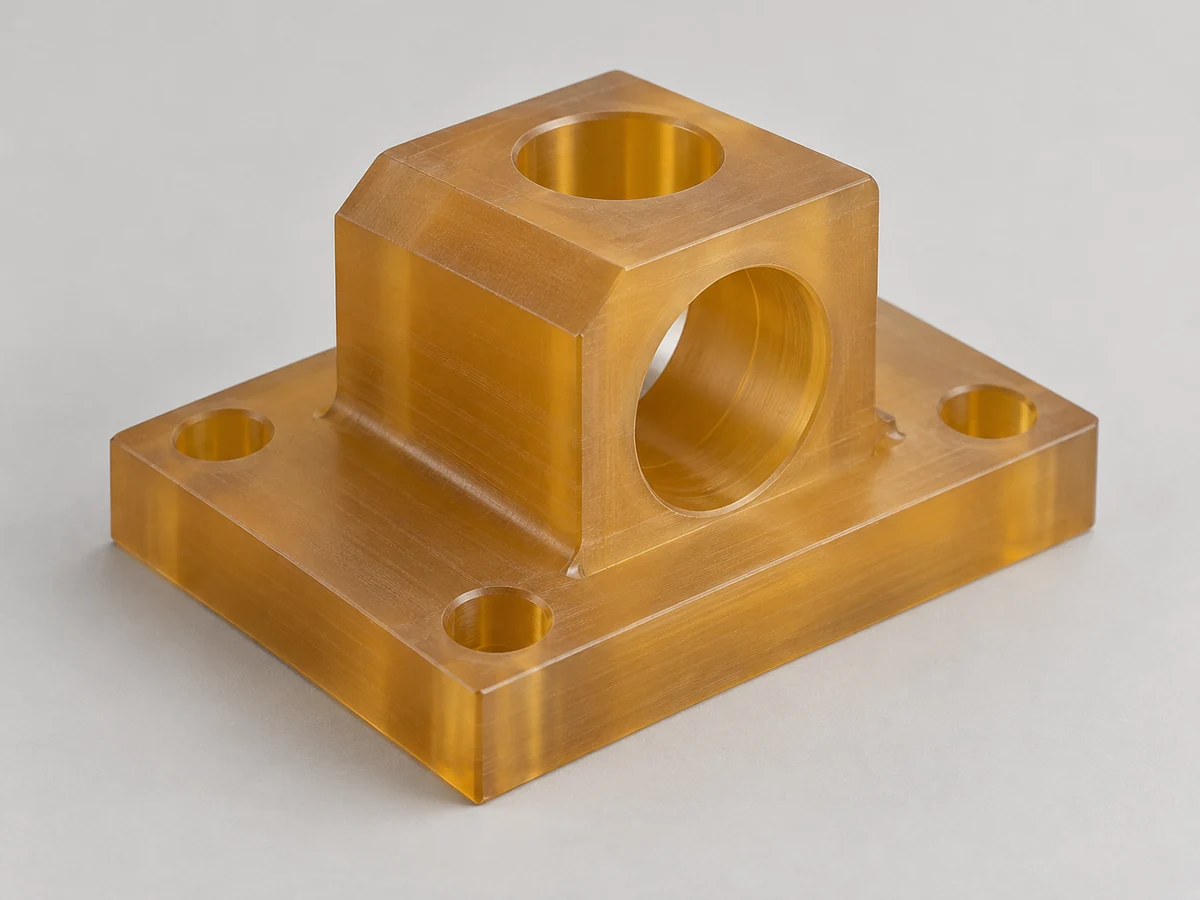
Insulating blocks with controlled clearances and mounting interfaces.
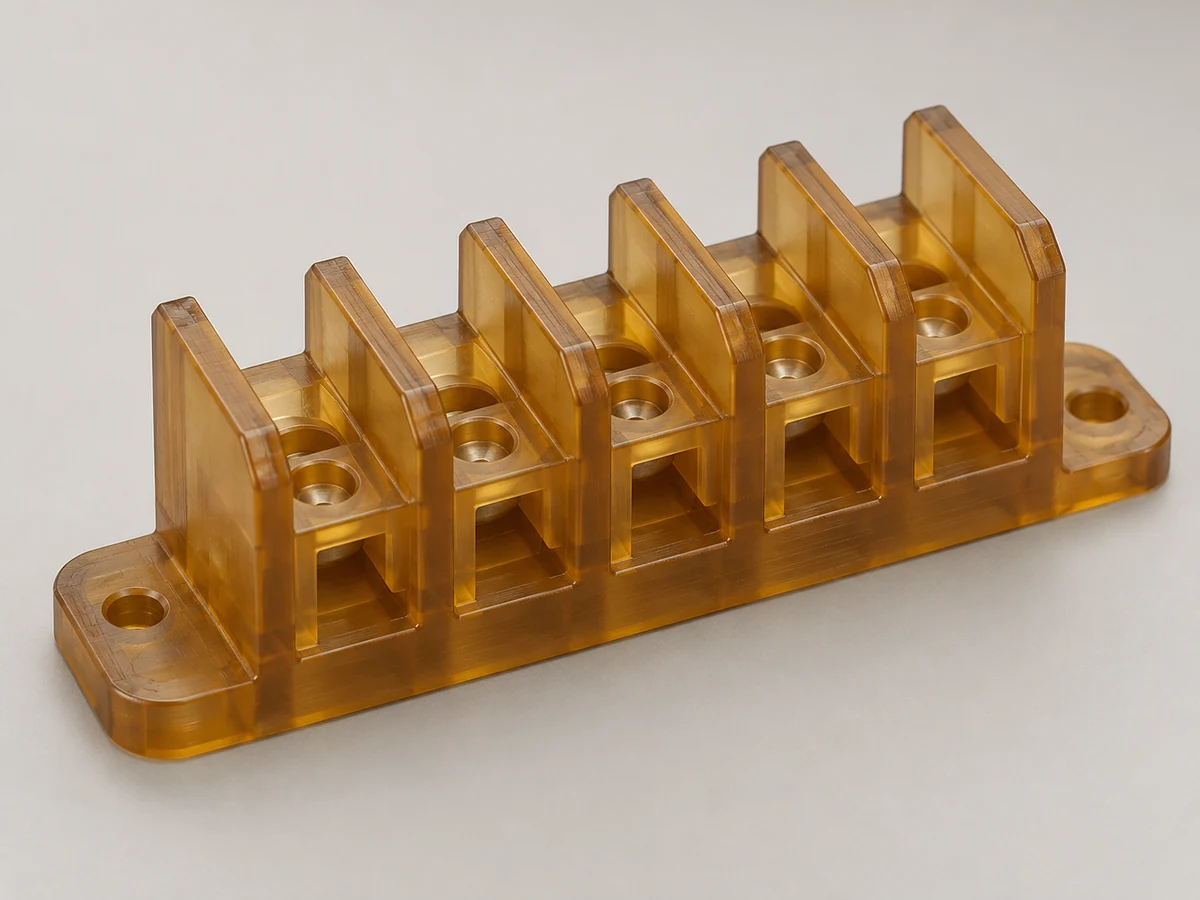
Terminal supports and insulating barriers with specified isolation geometry.
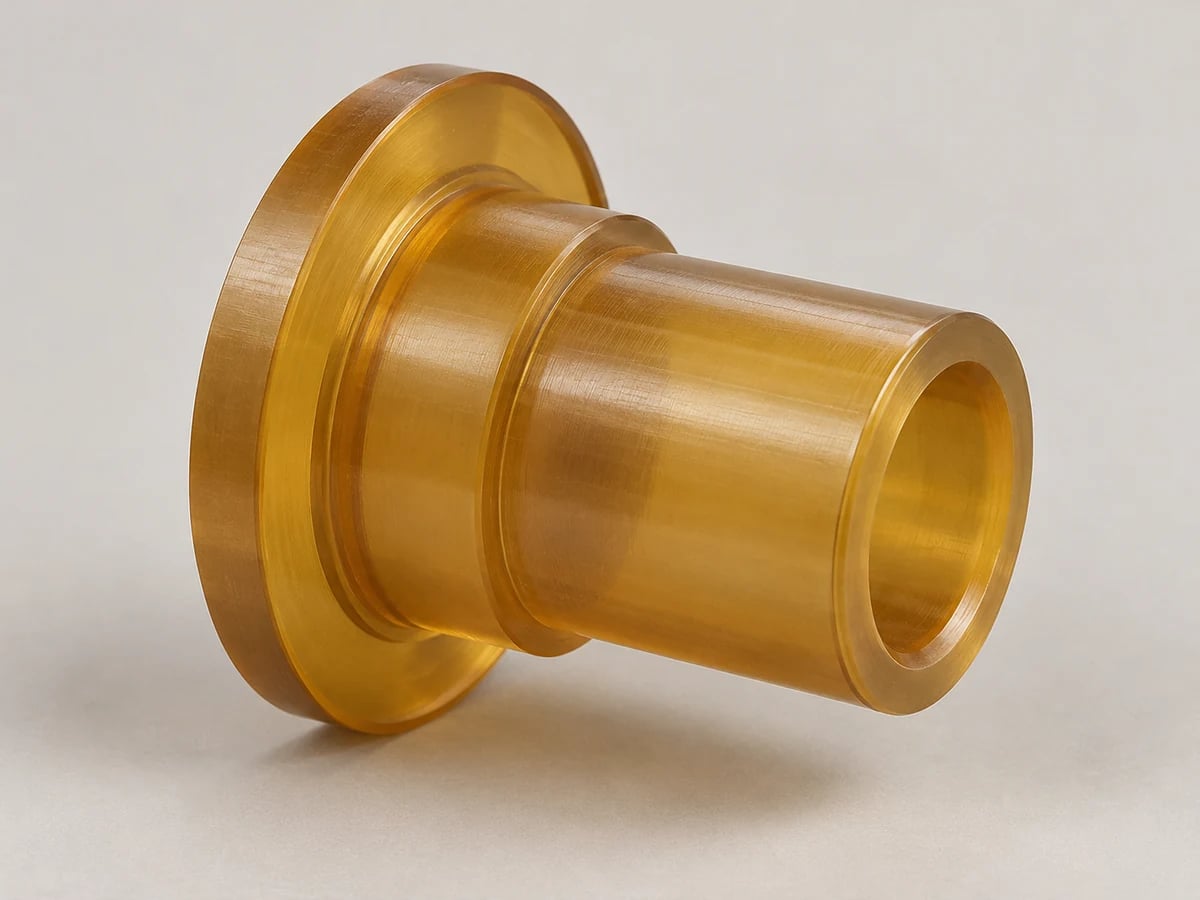
Concentric sleeves and flange interfaces reviewed for fit and temperature.
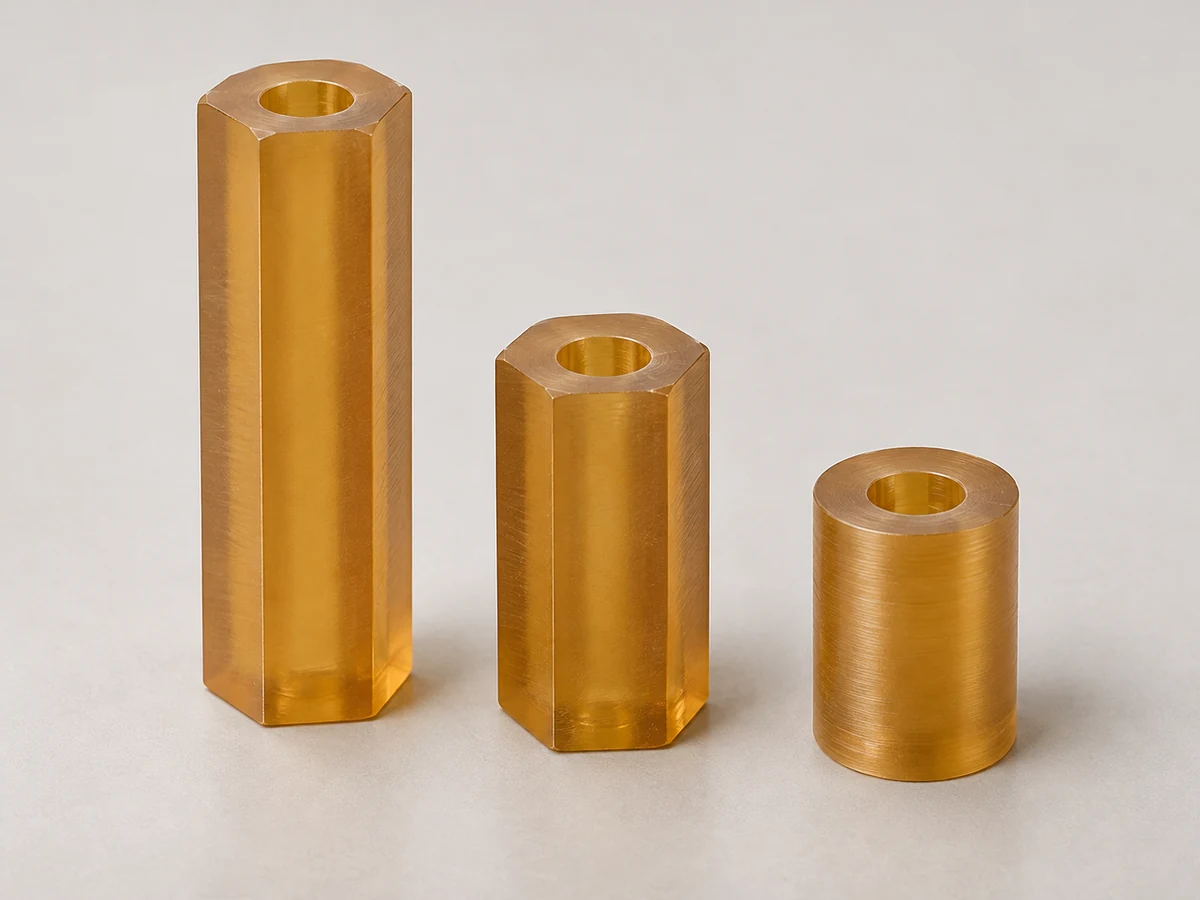
Separation components with defined length, faces and bores.
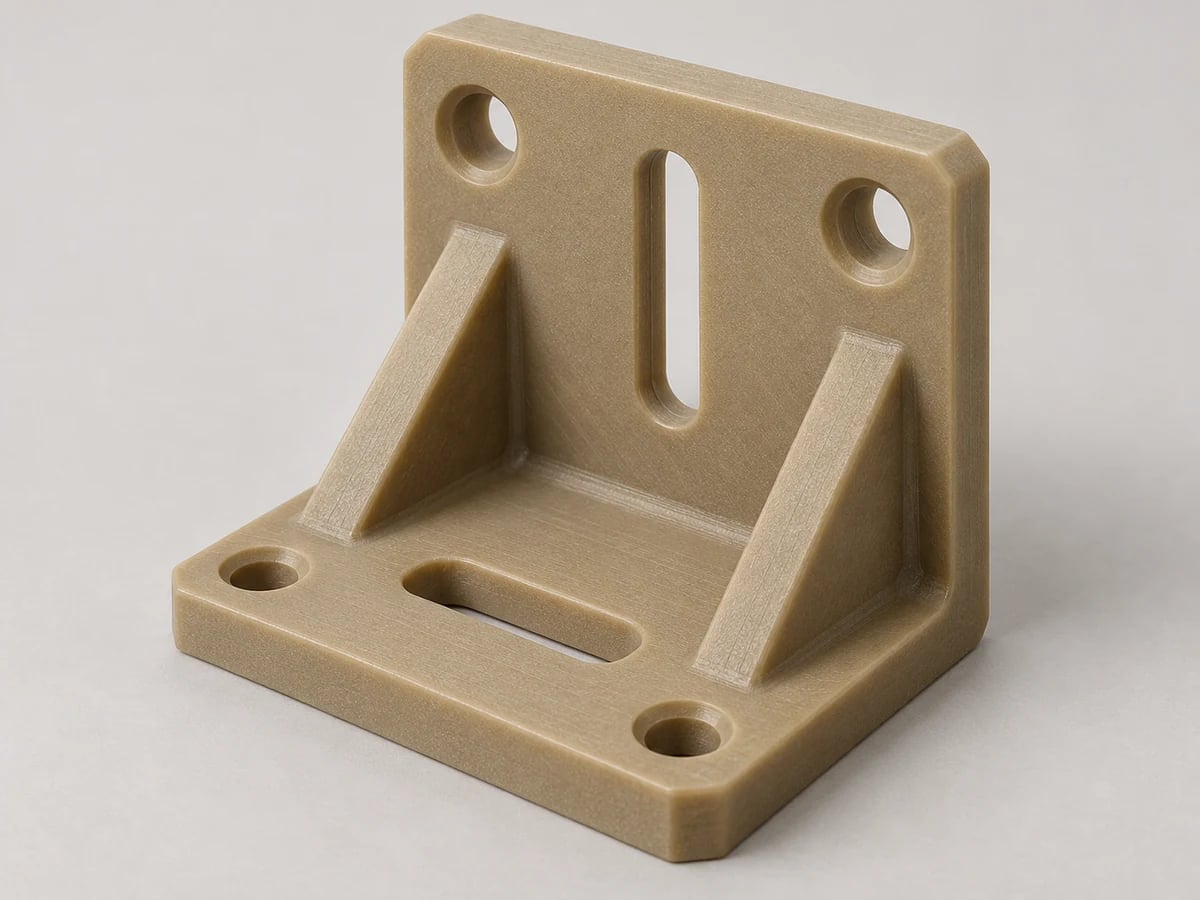
Reinforced mounting geometry with stiffness and load-path review.
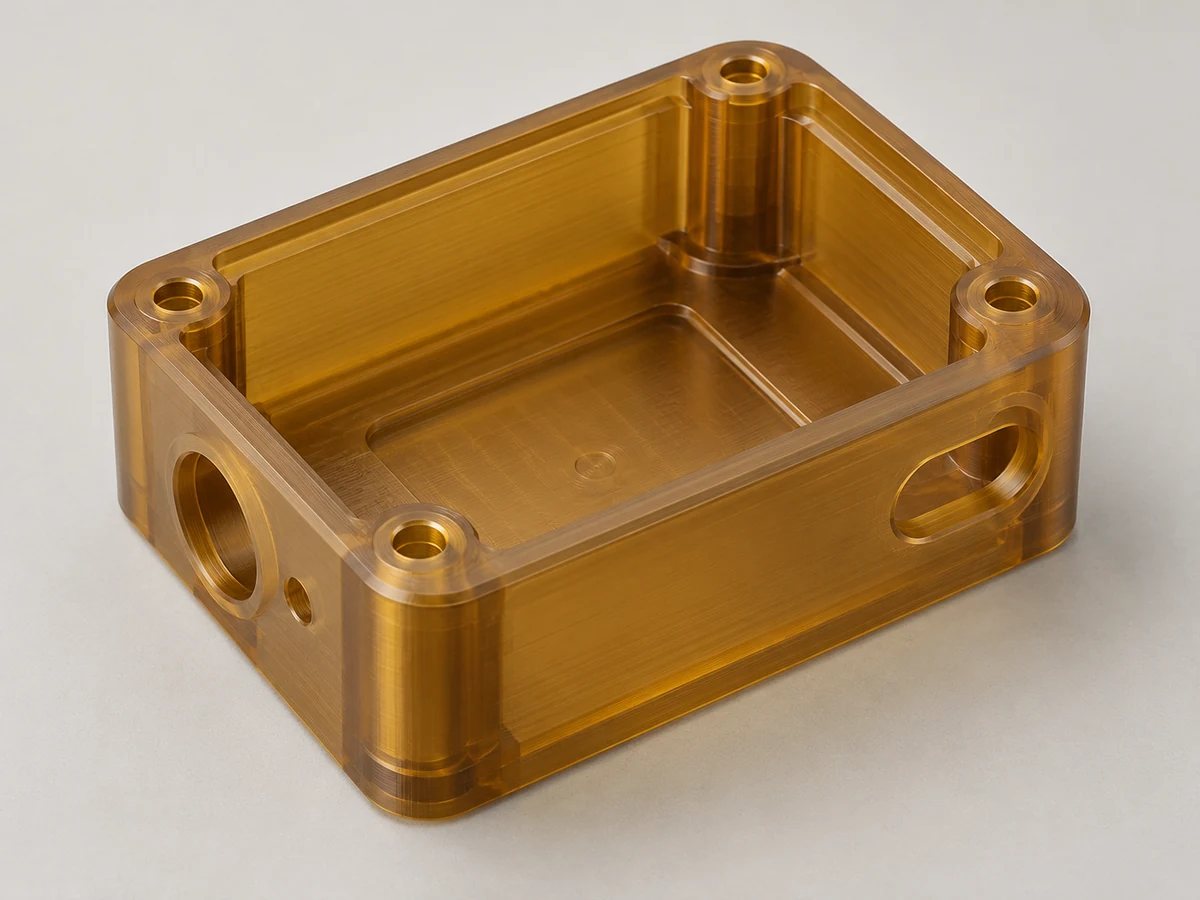
Pocketed bodies with bosses, interfaces and assembly clearances.
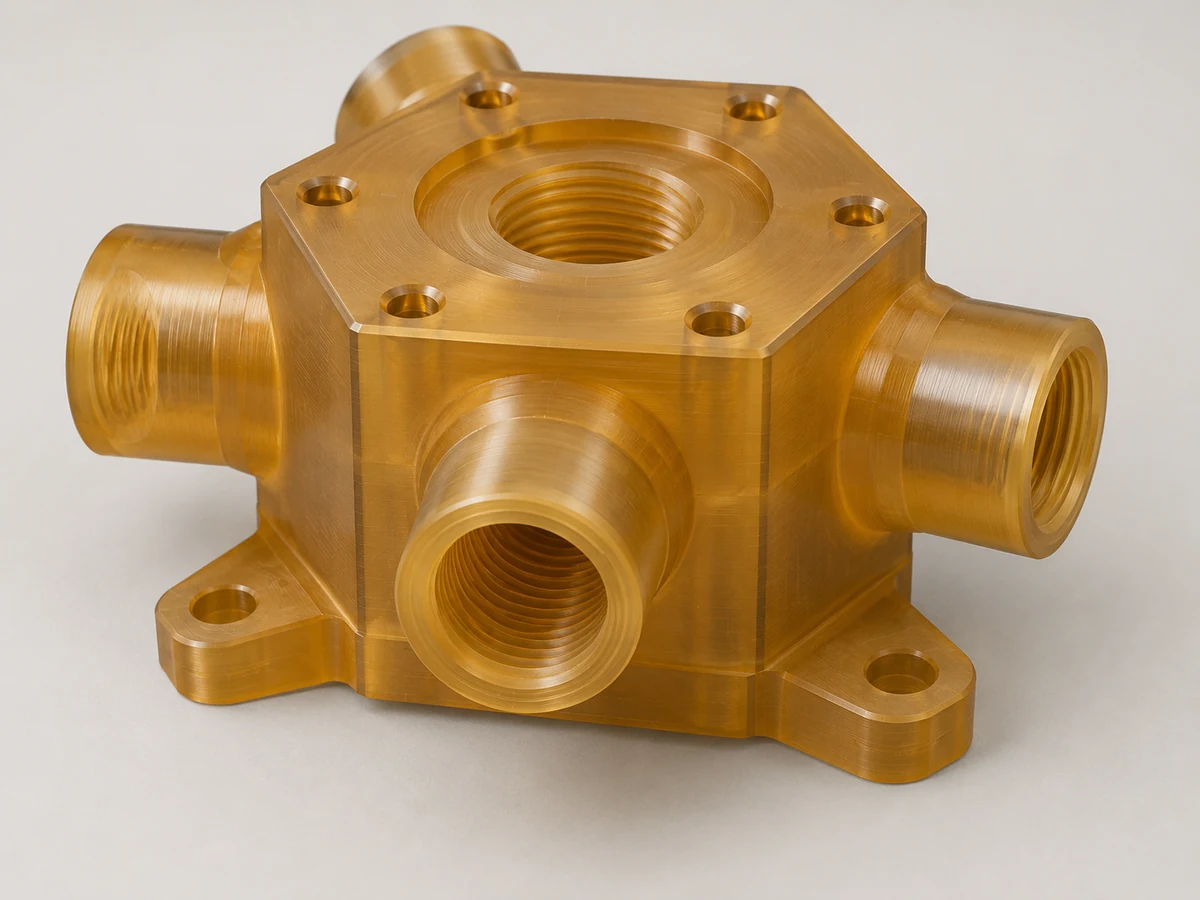
Ports and passages for specified media, temperatures and test conditions.
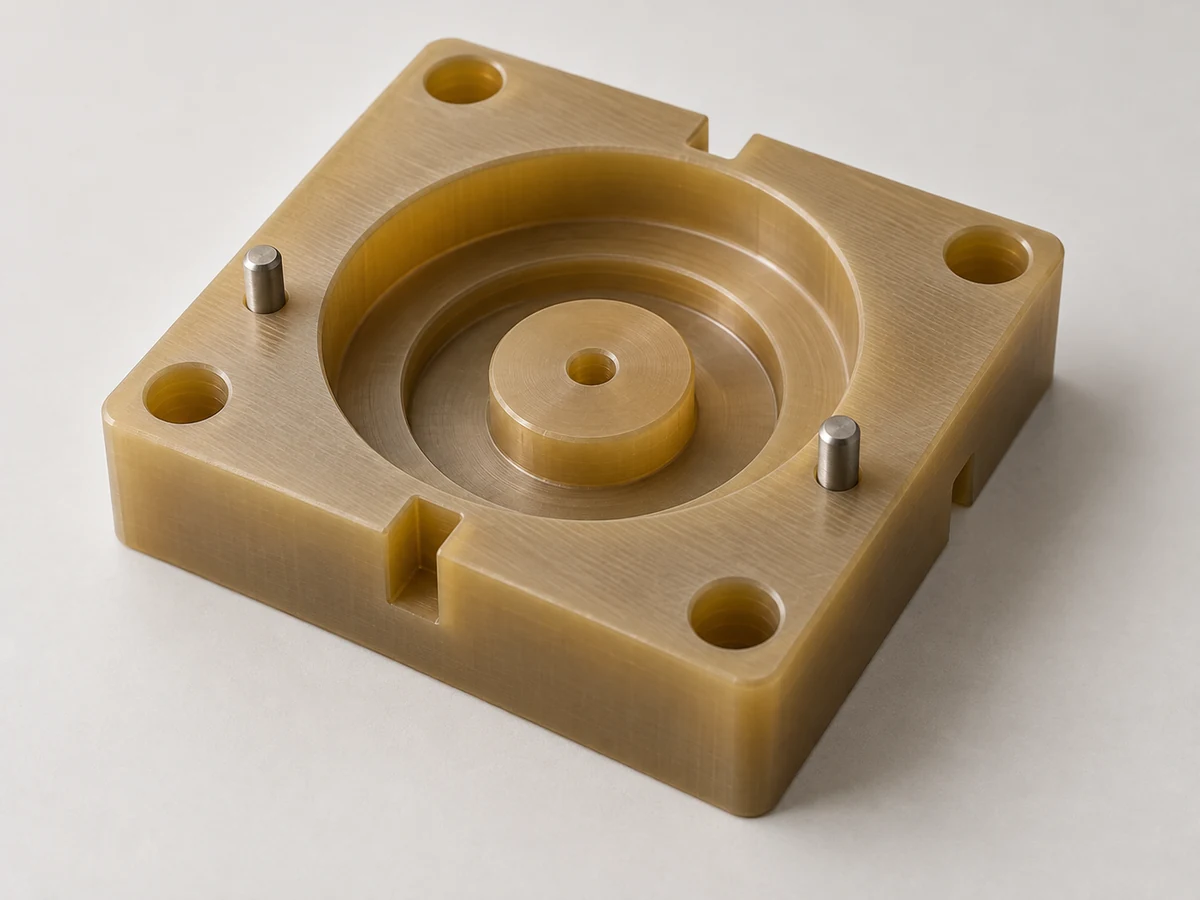
Locating components with cleanliness, grade and dimensional requirements.
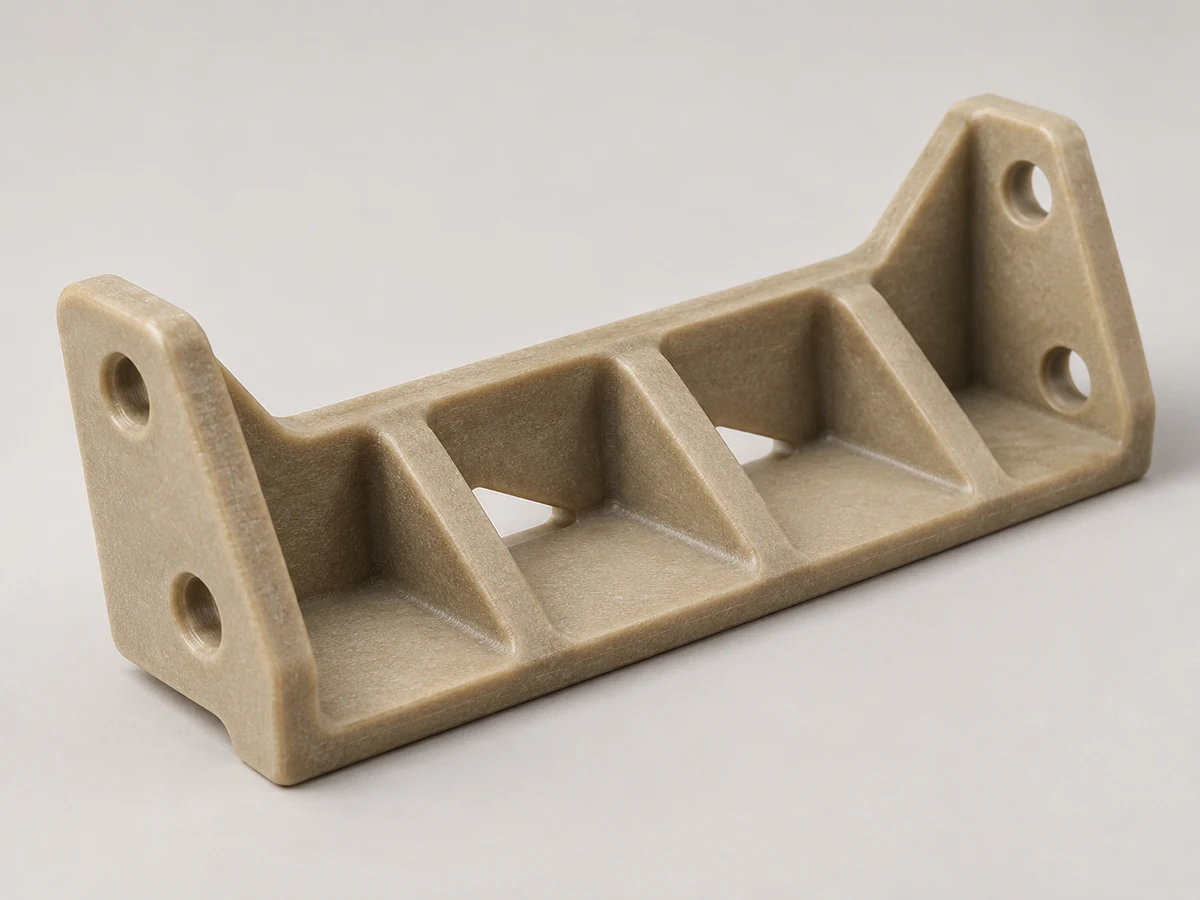
Interior mounting concepts subject to the approved material and aviation specification.
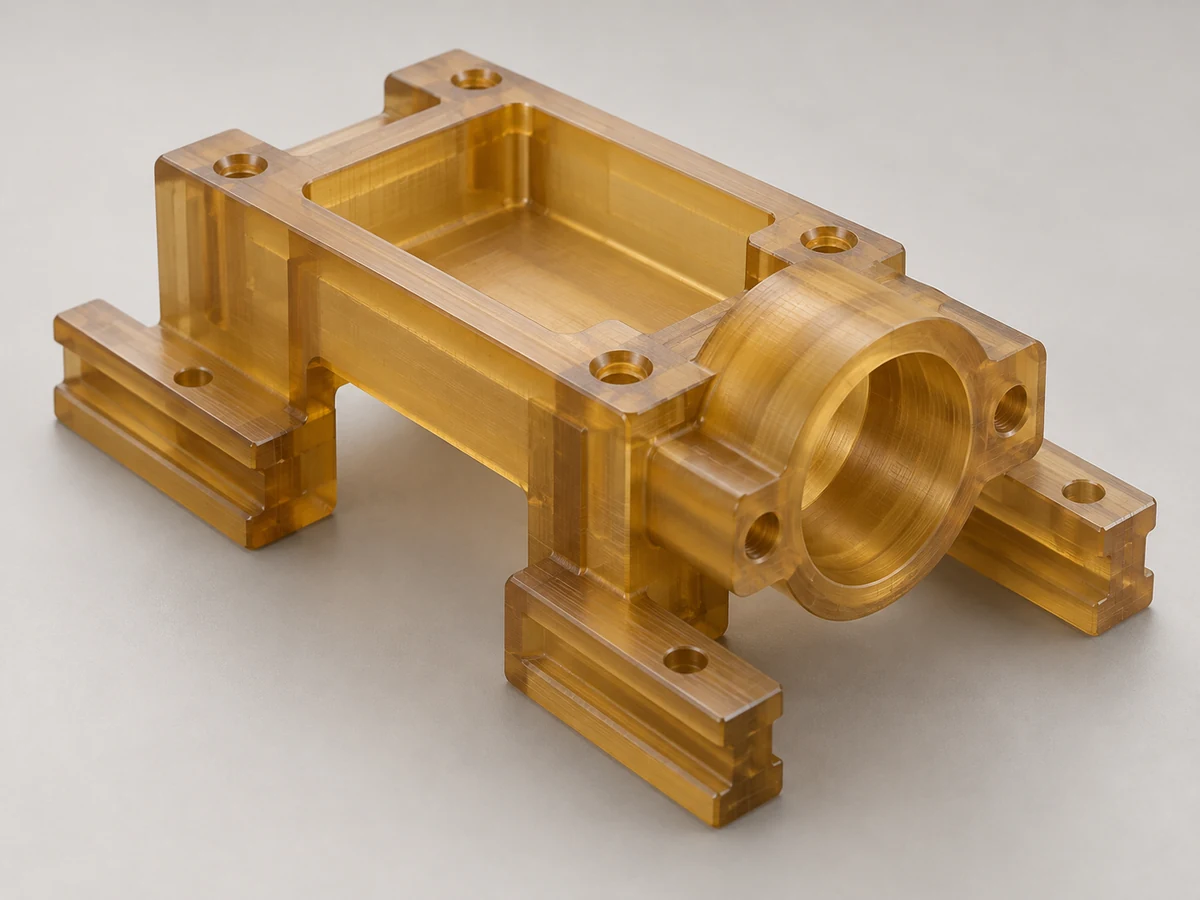
Equipment interfaces with grade documentation and cleaning or sterilization review.
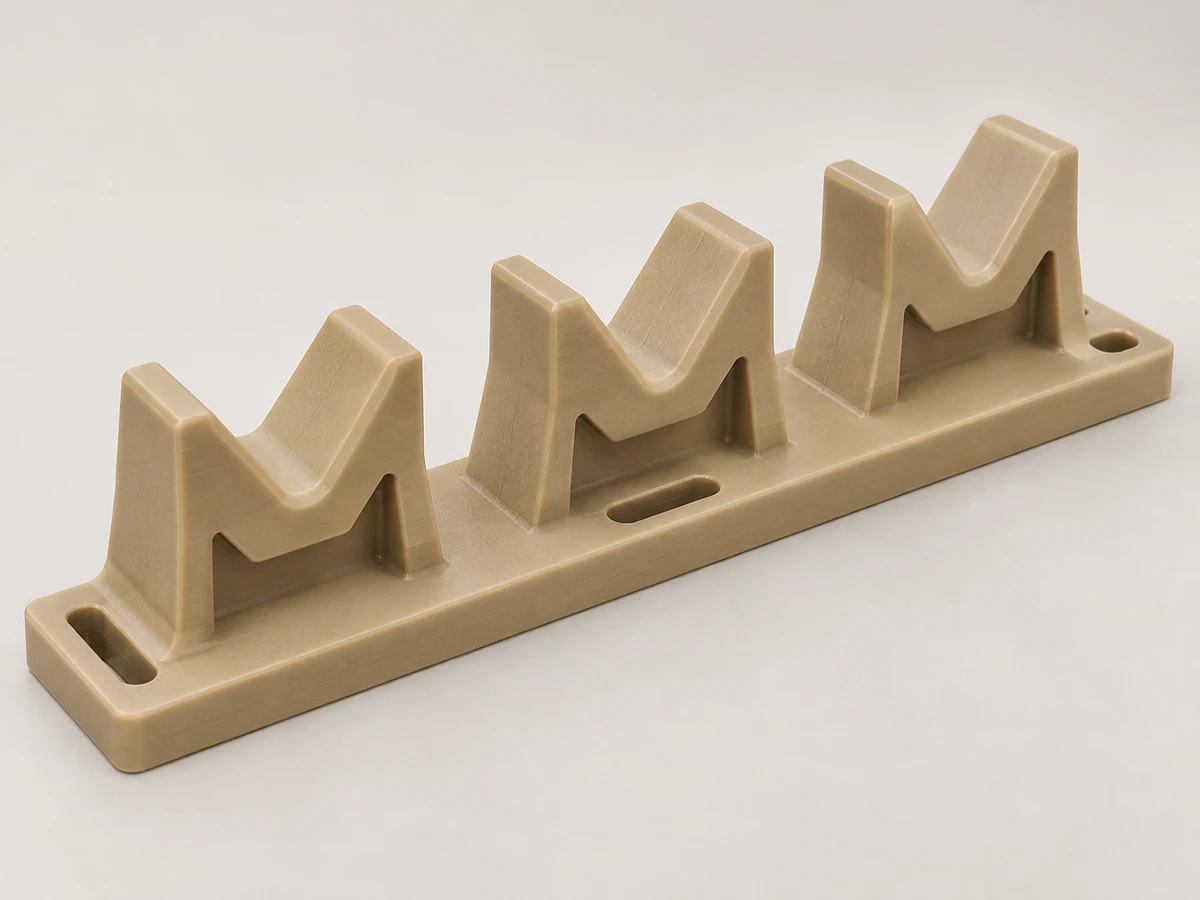
Supported cradles and locating bases for defined loads and thermal cycles.
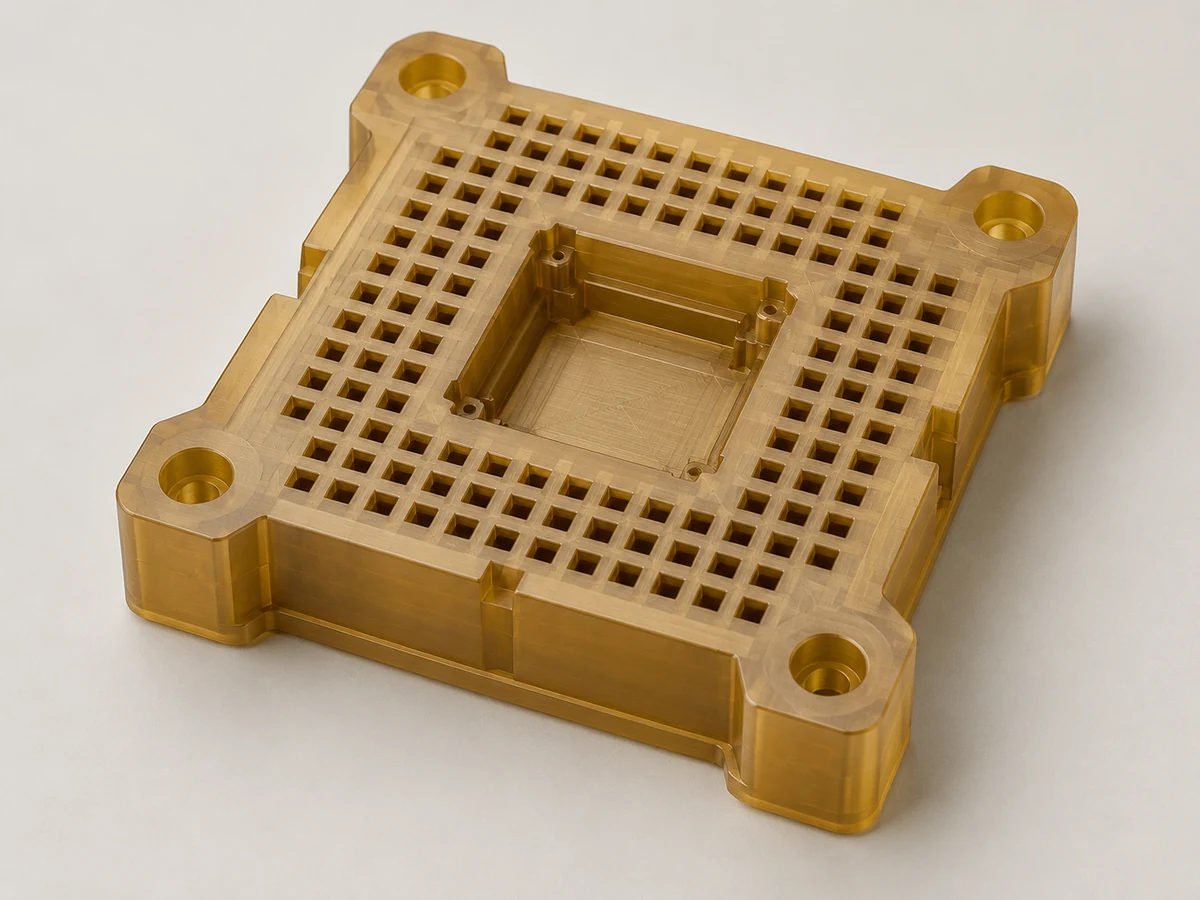
Contact carriers with hole patterns and electrical isolation requirements.
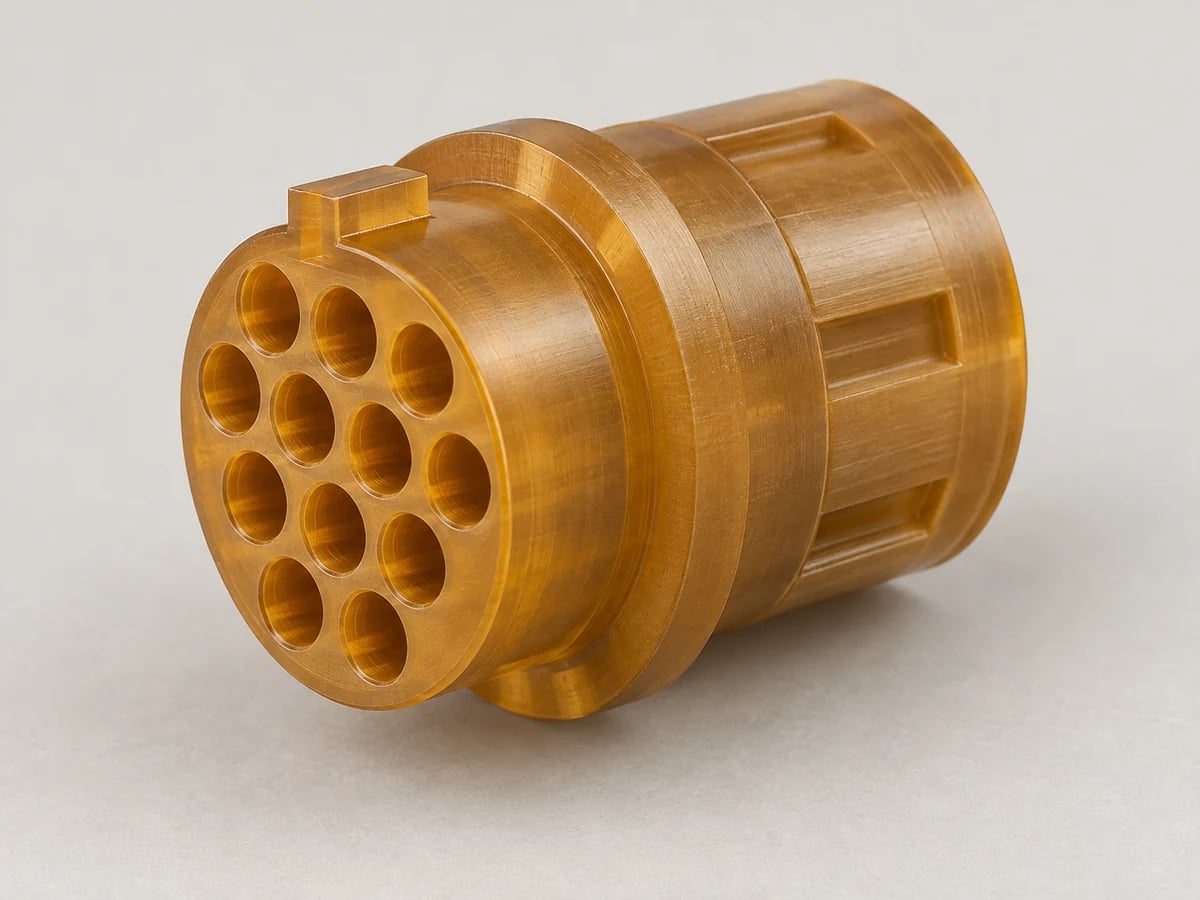
Keyed inserts with specified pin spacing, bore geometry and documentation.
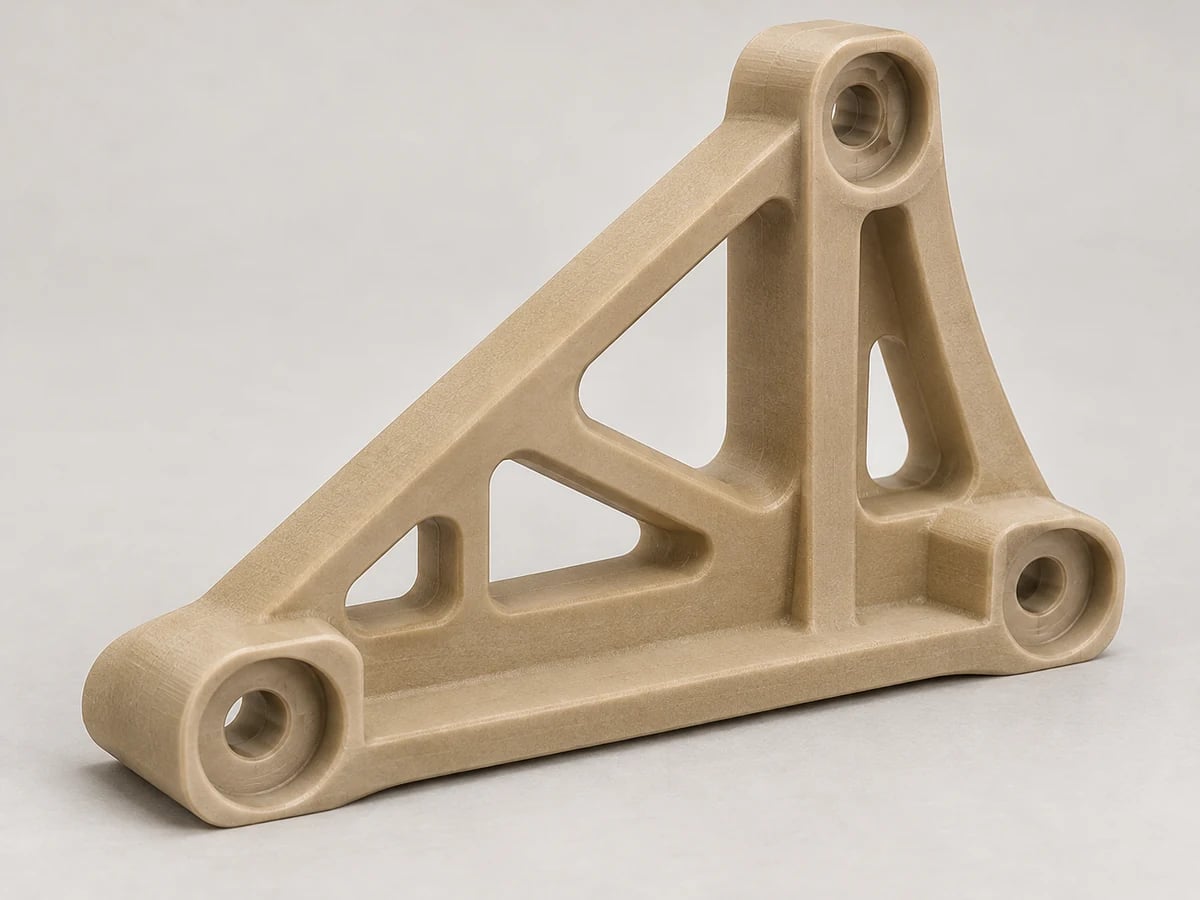
Lightweight support geometry with datums, loads and deformation limits.
Specify the surface according to its function. PEI is commonly selected for engineering performance, so dimensional quality and clean features usually take priority over optical polishing.
A practical finish for functional parts where controlled tool marks are acceptable. Define edge condition and burr limits.
Review critical mating or visible faces and agree a suitable surface requirement or reference sample.
Check holes, threads, pockets and thin edges without damaging isolation features or changing critical dimensions.
Specify identification location, depth and any legibility requirement, while avoiding critical stressed or electrical surfaces.
Review thread retention, installation loads, hardware compatibility and the complete assembly’s required inspection.
Glass-filled stock may show texture or exposed fibers even after a fine machining pass. Agree appearance where it matters, and keep cosmetic requirements separate from insulation and dimensional acceptance.
Material identity deserves early attention on a high-value PEI component. Agree the inspection plan, records and acceptance conditions before the first article.
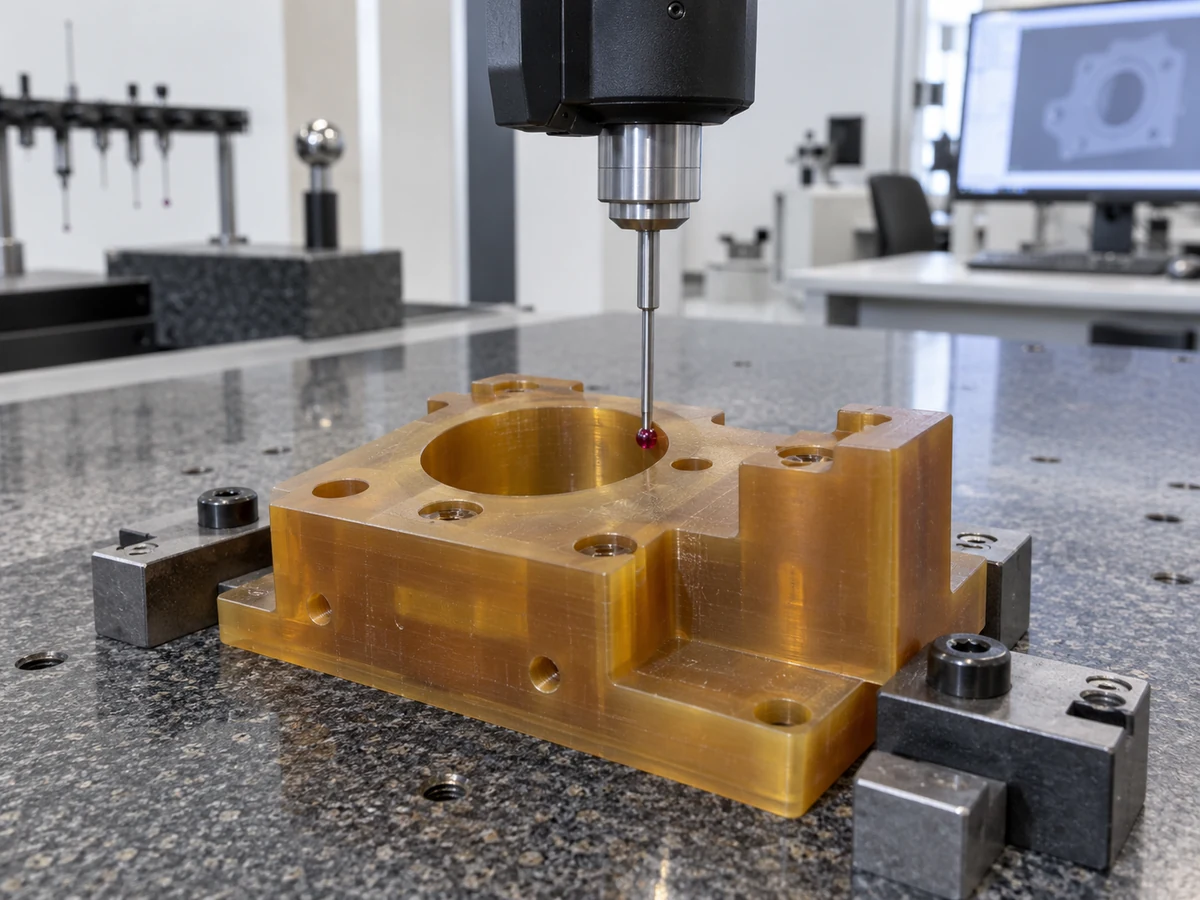
Checks may include hole position, bore size, flatness, perpendicularity, threads, mating features and multi-face relationships. Isolation dimensions are inspected where specified; electrical or flame testing is a separate agreed scope. Material records are not replaced by a color check.
Shipment inspection should confirm the approved grade and revision, part identification, agreed records and packaging protection. A reference sample can help clarify finish, but the engineering drawing and acceptance criteria control release.
Consider PEI when thermal, electrical, flame and stiffness requirements fit the selected grade. Consider PEEK for more demanding chemical or thermal exposure; verify the full grade-specific comparison rather than assume one polymer always wins.
| Factor | Ultem / PEI | PEEK |
|---|---|---|
| Temperature capability | High-temperature option; verify load and long-term conditions. | Often selected for more severe thermal service, depending on grade. |
| Strength | High strength; reinforcement substantially changes stiffness and elongation. | High strength; filled and unfilled grades cannot be compared as one value. |
| Electrical insulation | Useful insulating grades; check formulation and environment. | Useful insulating grades; filled formulations may behave differently. |
| Dimensional stability | Good, with stock stress and thermal movement controlled. | Good; crystallinity, grade and processing history influence behavior. |
| Chemical resistance | Confirm medium, concentration, temperature and stress. | Generally broader chemical resistance; compatibility still requires checking. |
| Flame resistance | A key selection factor for suitable grades and test conditions. | Available grade-specific flame performance; verify thickness and records. |
| Machining cost | May be lower for a suitable straightforward part. | Geometry, grade, tooling and inspection can raise or change cost. |
| Material cost | Often lower than comparable PEEK stock; confirm actual quote. | Frequently higher stock cost; grade, size and availability matter. |
| Aerospace interiors | Useful where the approved formulation and required evidence fit. | Used where its properties and the approved specification justify it. |
| Extreme chemical / thermal service | Assess against actual exposure; do not infer a universal limit. | Often a stronger candidate, subject to grade and application qualification. |
Use PEI when its approved thermal, electrical and flame properties meet the requirement at an acceptable cost. Move to PEEK when the exposure or mechanical demand justifies it. Compare equivalent stock grades and operating conditions, not unrelated resin-sheet headline numbers.
Technical references: Ensinger PEEK material guidance
Explore PEEK Machining →Compare the job requirements first: operating temperature, loads, wear, chemicals, moisture, electrical behavior and evidence needed for approval.
| Material | Main strength | Compared with PEI |
|---|---|---|
| PEI / Ultem | Heat, electrical properties and grade-specific flame behavior. | Baseline for this material review. |
| PEEK | Demanding chemical and thermal applications. | Often a higher-cost option for more severe service. |
| POM / Delrin | Machinability and precision mechanical components. | Usually a lower-temperature choice. |
| Nylon | Toughness, wear and many sliding applications. | Typically more moisture-sensitive; condition for the installed fit. |
| Polycarbonate | Transparency and impact resistance. | Usually a lower-temperature transparent component option. |
| PPS | Chemical and thermal performance. | A different stiffness, toughness and reinforcement balance; review exact grade. |
PPS is included as an engineering comparison, not a claim of stocked TOPS grades. If you specify PPS or another alternative, we confirm supply and capability for that project before quotation.
Application requirements establish the grade, inspection and evidence. A material family name alone does not qualify a finished part for regulated or safety-critical use.
Interior brackets and insulating components where the specified formulation, traceability and flame/smoke requirements are met.
Insulators, connector inserts, sockets and structural supports with controlled isolation and mounting features.
Fixtures and test components with defined temperature, cleanliness and electrical behavior.
High-performance equipment parts with exact grade documentation and qualified cleaning or sterilization conditions.
High-temperature fixtures and structural interfaces reviewed for load, creep and thermal cycling.
Electrical and thermal interfaces where the approved material and flame requirements fit the application.
Supply exposure duration and temperature, not only an industry label. Medical use requires application-specific evaluation; aircraft interior use requires the specified formulation and evidence, not a generic declaration that all PEI is suitable.
Use prototypes to establish the functional and inspection baseline, then retain grade, drawing and acceptance control for repeat orders.
Validate fit and dimensions, then perform agreed thermal, electrical and structural application tests. A machined prototype does not establish a molding or additive route automatically.
Explore this service →Approve the grade, first article, program and inspection scope for specialized equipment parts.
Control stock source, reinforcement, drawing revision, machining changes and records for recurring OEM components.
A change in grade, stock supplier or reinforcement can require a fresh review. Confirm substitutions and documentation before producing the next batch.
For PEI parts, material grade, reinforcement, temperature, electrical requirements and documentation can be as important as dimensional tolerance. Our review starts with the application and drawing together.
Review polymer-specific support, cutting and installed-fit requirements.
Assess the unfilled or reinforced route against load, finish and source data.
Plan profiles, rotational features and multi-face geometry around tool access.
Include temperature and thermal movement in tolerance and application review.
Focus on functional datums and practical geometry before quoting.
Build recurring supply around an approved first article and controlled revision.
Confirm exact documentation and source requirements rather than infer compliance.
Agree dimensional acceptance and records for the actual component.
Stock availability, numerical capability, testing, certifications and delivery commitments are confirmed in the quotation. Illustrations do not represent verified TOPS test results or documented customer projects.
Keep grade selection and application requirements visible through each approval point. Conditional thermal treatment and additional tests are defined before manufacture.
Direct answers to PEI grades, reinforcement, thermal service and precision machining.
Ultem is a SABIC trade name for a family of PEI resins and related blends; PEI is the polymer name, polyetherimide. Specify the exact grade and stock designation rather than using the trade name alone.
Ultem 1000 is unfilled PEI; Ultem 2300 has 30% glass fiber. The reinforced grade generally has greater stiffness and reduced thermal movement, but lower elongation, more abrasive machining and a different surface texture.
PEI is machinable with appropriate tooling and support. Accurate parts still require heat, stock stress and clamping control; reinforced grades add tool-wear considerations.
Yes. Milling supports pockets, housings and fixtures; turning supports concentric sleeves, bushings and rings. The actual route depends on geometry, grade, access and the inspection requirements.
Tolerances are reviewed feature by feature. Grade, size, wall thickness, stock stress, temperature and inspection method determine feasibility. Send the drawing with critical fits and measurement conditions.
PEI is generally selected for higher-temperature applications than standard polycarbonate. The allowable operating condition still depends on the exact grade, load, duration and required properties.
PEI stock is often less expensive than comparable PEEK stock, but the final part price is project-specific. Grade, blank size, material yield, geometry, finish and inspection all affect the quote.
Unfilled Ultem 1000 is a common starting point for insulating components. The best grade depends on voltage, temperature, environment, stiffness and required approvals. Reinforced or ESD grades require separate electrical-property review.
Specific PEI grades can suit aerospace applications when the approved formulation and required evidence are met. Ultem 9085 is a PEI blend; its resin rating does not prove machinable-stock availability or qualify every finished component.
Yes. Reinforced PEI can be machined with suitable tools, support and wear control. Review thin edges, fiber direction, surface condition and acceptance after the part is released and stabilized.
YOUR GRADE. YOUR APPLICATION. YOUR DRAWING.
Upload your CAD model or engineering drawing and specify the PEI grade, reinforcement, quantity, critical tolerances, operating temperature, electrical requirements and applicable material or flame specifications. Our team will review the material and machining strategy before quotation.
Include the chemical environment, mechanical loads and documentation required for approval. Company, name, email and phone are required; every project detail and both CAD and 2D drawing uploads are optional.
info@tops-precision.comCAD and 2D drawing uploads: combined maximum 10 MB. Larger files can be shared by email. Agree confidential-file handling before sending sensitive drawings.